Britainupdated 38m ago2 min read
Archive photo · 3 April 2018PLO Denounces Balfour Declaration’s Lasting Land Confiscation, House Demolitions, Settlement Expansion
2 Other2 West Asian1 Asian1 Latin AmericanPhoto: יעקב, CC BY-SA 4.0 · Cropped for layout
This article is an automated aggregation of coverage from news outlets. Our editorials offer in-depth analysis curated by the NewsCord team.
Balfour Declaration's consequences include land confiscation and house demolitions. Expansion of settlements and annexation plans result from the declaration.
Save coverage image
Balfour, 67 words
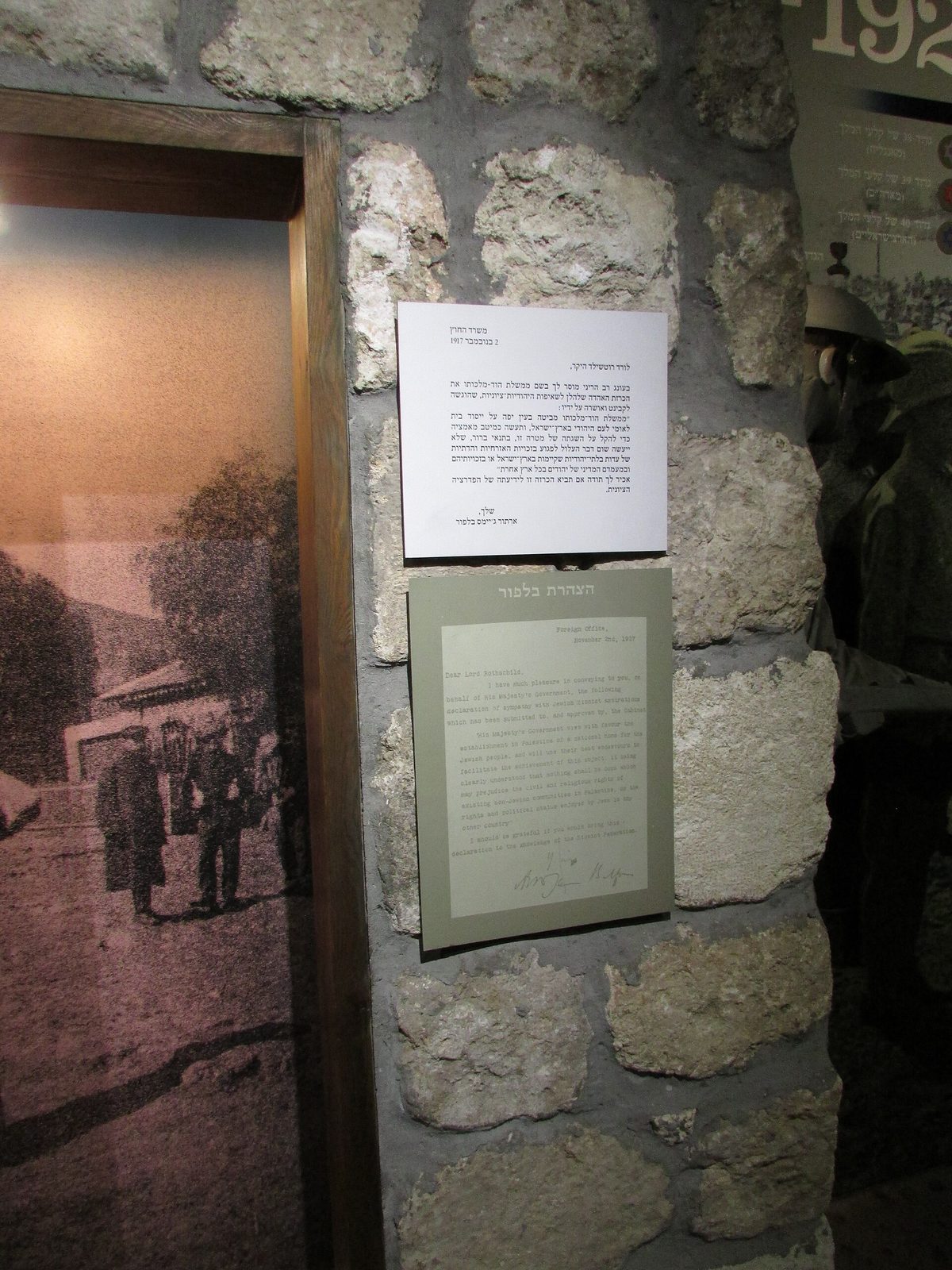
Britain’s 1917 Balfour Declaration, a 67-word letter issued by then British Foreign Secretary Arthur James Balfour, pledged support for the establishment of a "national home for the Jewish people" in Palestine. The letter was addressed to Zionist leader Lord Rothschild, and it linked British diplomacy to the aspirations of a movement seeking a Jewish homeland. The Ilke Haber Ajansı account said the declaration disregarded the political rights and aspirations of the indigenous Palestinian Arab population, who it described as the overwhelming majority at the time.
The Ilke Haber Ajansı account also said that in 1917 Palestine had an estimated population of 660,000, including approximately 600,000 Muslims and Christians and 60,000 Jews. The Prensa Latina account said the PLO Department of Refugee Affairs described the declaration’s consequences as including land confiscation, demolition of houses, and expansion of settlements.
Mandate and displacement
The Ilke Haber Ajansı account said the League of Nations formally approved the British Mandate in 1922, and it said the mandate incorporated the principles of the Balfour Declaration. The WAFA account said the League of Nations approved the mandate in July 1922 and it entered into force in September 1923, framing the declaration as supported by wider Western powers. The Ilke Haber Ajansı account said that on May 14, 1948, Zionist leaders proclaimed the establishment of Israel as British forces completed their withdrawal from Palestine.
The Prensa Latina account said that in 1948, after the end of the British Mandate, the State of Israel was proclaimed and around 750,000 Palestinians were expelled or fled from their towns and cities, a process Palestinians call the Nakba. The WAFA account said the declaration sparked widespread anger and condemnation throughout the Arab world, and it said Britain sent a letter to Sharif Hussein assuring him that Jewish settlement would not exceed what was compatible with Arab interests.
PLO demands repair
The Prensa Latina account said the PLO Department of Refugee Affairs, in a statement released on the anniversary of the Balfour Declaration, asserted that the practices it listed aimed to uproot the Palestinian people from their land. The Prensa Latina account quoted Ahmed Abu Holi, head of the Department of Refugee Affairs, describing the Balfour Declaration as a “historic colonial crime against the Palestinian people.” The Prensa Latina account said Abu Holi held Britain responsible, and it said he considered Britain’s recognition of the State of Palestine insufficient unless accompanied by concrete measures to repair the injustices it caused.
The Ilke Haber Ajansı account said the 109th anniversary served as a reminder of the role played by British colonial policy in the dispossession of the Palestinian people and the creation of the conditions that enabled the establishment of Israel. The Prensa Latina account said the statement rejected displacement, uprooting, resettlement, and judaization projects, and it emphasized that “Attempts to impose faits accomplis by force and erase the Palestinian presence will not deprive our people of their identity or of their right to their land.”