Technology and Science25 May, 20263 min read
Pope Leo XIV Warns AI Left Unchecked Can Create New Forms Of Slavery
Pope Leo XIV issues his first encyclical on artificial intelligence. Calls for government regulation and guardrails to curb AI risks.
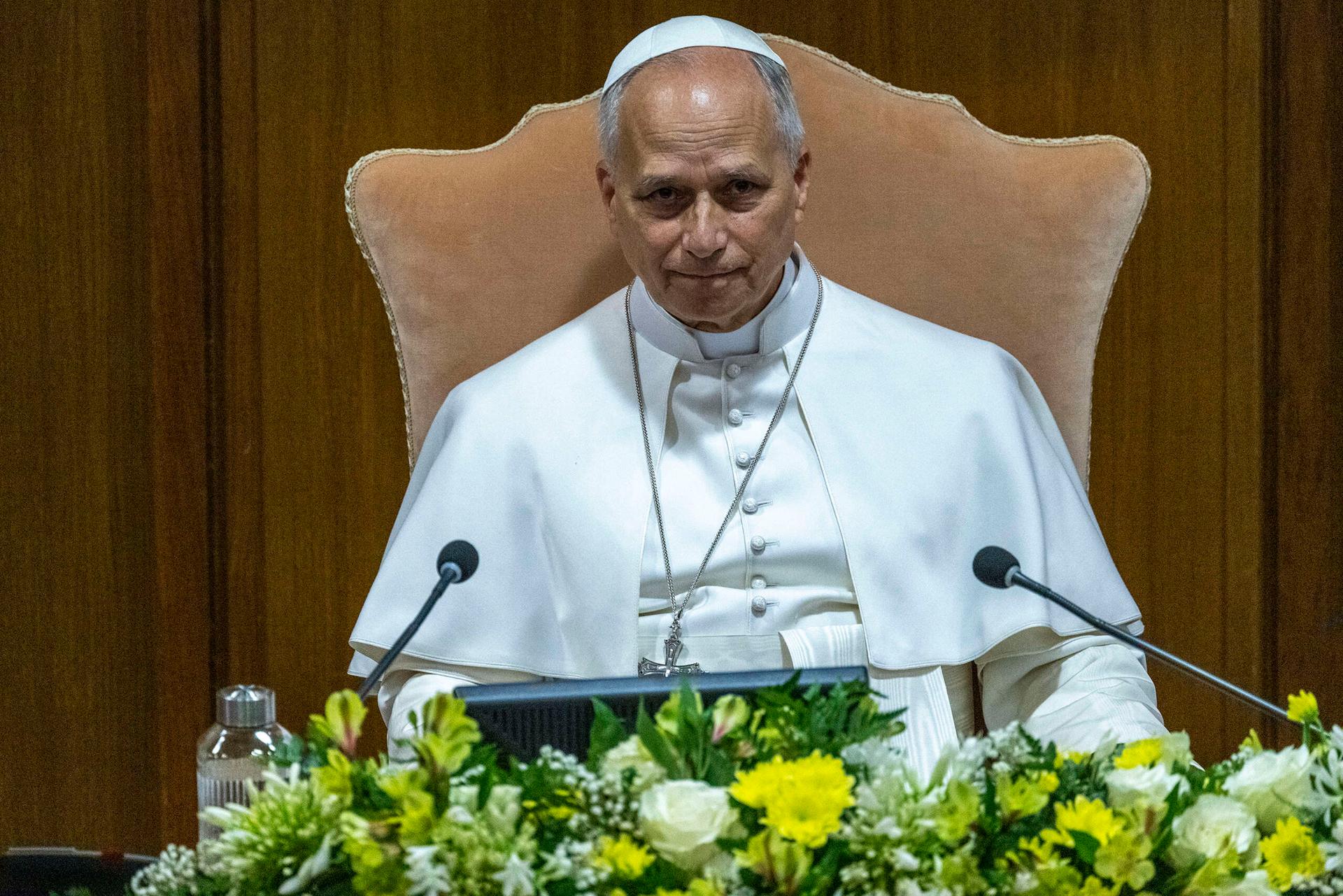
Pope’s AI encyclical
Pope Leo XIV released his first encyclical, “Magnifica Humanitas,” on Monday, warning that artificial intelligence’s impact on society, the economy and human dignity requires protection and retraining for workers whose jobs are threatened by automation and AI technologies. The encyclical, titled “Magnifica humanitas: on safeguarding the human person in the time of artificial intelligence,” spans 245 paragraphs and is presented as a continuation of Catholic social teaching tied to the 135th anniversary of “Rerum Novarum.”
“He titled the letter: ‘Magnifica humanitas: on safeguarding the human person in the time of artificial intelligence.’”
At the Vatican presentation, the document was delivered alongside Christopher Olah, co-founder of Anthropic, as the pope’s message set out “new collaborative efforts” across governments, businesses, labor organizations, and the scientific community, including rapid development of international regulations and protections. In the encyclical’s framing of risk, Pope Leo XIV warned that AI left unchecked can create “new forms of slavery,” pointing to labor conditions including low-wage data processing jobs and content moderation work that exposes workers to traumatic material.
Voices split on AI
Reactions to Pope Leo XIV’s encyclical split across tech and politics, with David Sacks arguing on X that the pope is right that AI should be a tool that helps humans, not one that leads to “domination or exclusion.”
Sacks also warned that if governments gain “sweeping power over AI development in the name of safety,” it could be used to “censor, surveil, and control citizens — as Orwell foretold in 1984,” framing the pope’s call for regulation as a potential alignment problem.
Blake Scholl, founder and CEO of Boom Technology, disagreed on X, writing: "Bad take from the Pope. Tech revolutions tend to eliminate some jobs while creating others."
Yoshua Bengio, a professor and AI researcher, said on X that “The Vatican and other global institutions can and must play a role in the global dialogue on AI to raise public awareness and mobilize society for the challenges ahead,” aligning with the pope’s emphasis on broader participation.
In the same debate, Sen. Chris Murphy said on X that “AI threatens to undermine the basic building blocks of humanity,” adding that it seeks to replace functions like “creativity, friendship, and critical thinking.”
What’s at stake next
The encyclical’s warnings extend beyond employment to the concentration of AI power among private entities and the deployment of AI in military applications, particularly autonomous weapons systems, as it argues that unchecked development risks dehumanization and a “risk of dehumanization.” Pope Leo XIV also called for “disarming” AI, writing that “Disarming AI means freeing it from the mentality of 'armed' competition,” and that “merely regulating it is insufficient; it must be disarmed, welcoming and accessible,” positioning the next steps as both ethical and structural. In the Vatican event coverage, NPR said the pope framed AI as the new industrial revolution and urged stricter state and international regulations while inviting “broad participation of individuals and communities in shaping the future” of the technology.
The stakes described in the encyclical include inequality and democracy, with Pope Leo XIV warning that “AI tends to amplify the power of those who already possess economic resources, expertise and access to data,” and that “Small but highly influential groups can shape information and consumption patterns, influence democratic processes and steer economic dynamics.” The encyclical also ties its labor focus to Catholic social teaching, with the Vatican event and subsequent coverage emphasizing that Pope Leo XIV signed “Magnifica Humanitas” on May 15 and released it on May 25, as the document’s social teaching is situated within the tradition from “Rerum Novarum” through “Centesimus Annus” and “Laudato Si'.”