
President Dennis Sassou N'Guesso seeks fifth term as Republic of Congo votes
Key Takeaways
- Dennis Sassou Nguesso is running for a fifth consecutive term.
- The election could extend his decades-long rule by five years.
- Limited opposition to challenge the incumbent is reported.
Election Overview
The Republic of Congo is holding presidential elections with incumbent President Dennis Sassou N'Guesso seeking to extend his 42-year rule by securing a fifth consecutive term.
“The Republic of Congo is voting in a presidential election widely expected to extend Denis Sassou Nguesso’s decades-long rule by another five years, with limited active opposition and little uncertainty about the result”
The election features seven candidates competing in a contest marked by limited competition and widespread expectations of Sassou N'Guesso's victory.

Three million Congolese citizens are registered to vote in this oil-rich Central African nation, where the incumbent remains the frontrunner despite calls for boycott by major opposition parties.
The voting process opened at 7am local time and is scheduled to close by 7pm, with analysts predicting a turnout potentially lower than the 68% recorded in 2021.
Political Dynamics
Political dynamics in the Republic of Congo reveal a significant power imbalance, with Sassou N'Guesso dominating the campaign landscape while major opposition parties have withdrawn from the electoral process entirely.
The incumbent's Congolese Party of Labor has conducted extensive nationwide canvassing, making him the only candidate to travel throughout the country, while his opponents remain largely confined to limited activities.
Two major parties have announced a complete boycott of the elections, citing allegations of unfair electoral practices and systemic advantages enjoyed by the ruling party.
This political asymmetry has created an environment where electoral competition appears largely symbolic, with analysts noting that none of the six other candidates can mount a serious challenge to the incumbent's decades-long dominance.
Economic Struggles
The Republic of Congo faces severe economic challenges despite being one of the largest oil producers in sub-Saharan Africa, with high debt levels and persistent unemployment plaguing the nation's development prospects.
“Congo's Longest Rule: Sassou N'Guesso's Fifth Term Pursuit The Republic of Congo votes to elect a new leader amidst a call for a boycott”
Young voters in particular exhibit a lethargic attitude toward the electoral process, reflecting widespread disillusionment with the political system and limited expectations for meaningful change under continued Sassou N'Guesso rule.
The country's vast oil wealth has not translated into improved living conditions for most citizens, creating a stark contrast between the nation's natural resource wealth and the economic struggles faced by ordinary Congolese.
This economic discontent, combined with the predictable electoral outcome, has contributed to what observers describe as a general sense of political apathy among the electorate.
Historical Context
President Dennis Sassou N'Guesso's political career spans an extraordinary four decades, having first seized power in 1979 and maintaining control for most of the intervening period with the exception of a five-year hiatus during the 1990s.
The incumbent's return to power came through forceful means in 1997, when he defeated opponents as a militia leader following a four-month civil war, demonstrating his willingness to use military strength to maintain political dominance.
Despite organizing the country's first multi-party elections in 1992, which temporarily ended his rule, Sassou N'Guesso has consistently adapted political strategies to ensure his continued leadership, making him one of Africa's longest-serving rulers.
This extended period in power has deeply shaped Congo's political landscape, creating a system where the incumbent's authority remains largely unchallenged by traditional democratic mechanisms.
International Rating
The Republic of Congo is recognized internationally as one of the most politically repressive countries globally, receiving a remarkably low freedom rating of just 17 out of 100 from Freedom House, indicating severe limitations on democratic rights and civil liberties.
“The Republic of Congo votes in election that could extend incumbent president’s 42-year rule BRAZZAVILLE, Republic of Congo (AP) — The Republic of Congo is voting to elect a new leader Sunday as incumbent President Dennis Sassou N’Guesso runs for a fifth consecutive term”
This poor democratic performance contrasts sharply with the country's status as the third-largest oil producer in sub-Saharan Africa and a significant producer of liquefied natural gas (LNG), highlighting the disconnect between economic resources and political freedom.
International observers have consistently criticized the electoral environment in Congo, noting the lack of genuine competition and the dominance of the ruling party in all aspects of the political process.
The combination of resource wealth, political repression, and electoral predictability has positioned Congo as a case study in the challenges of democratic consolidation in resource-rich but politically constrained African nations.
More on Africa

Somaliland Offers US Exclusive Access to Minerals and Military Bases to Win Recognition
10 sources compared
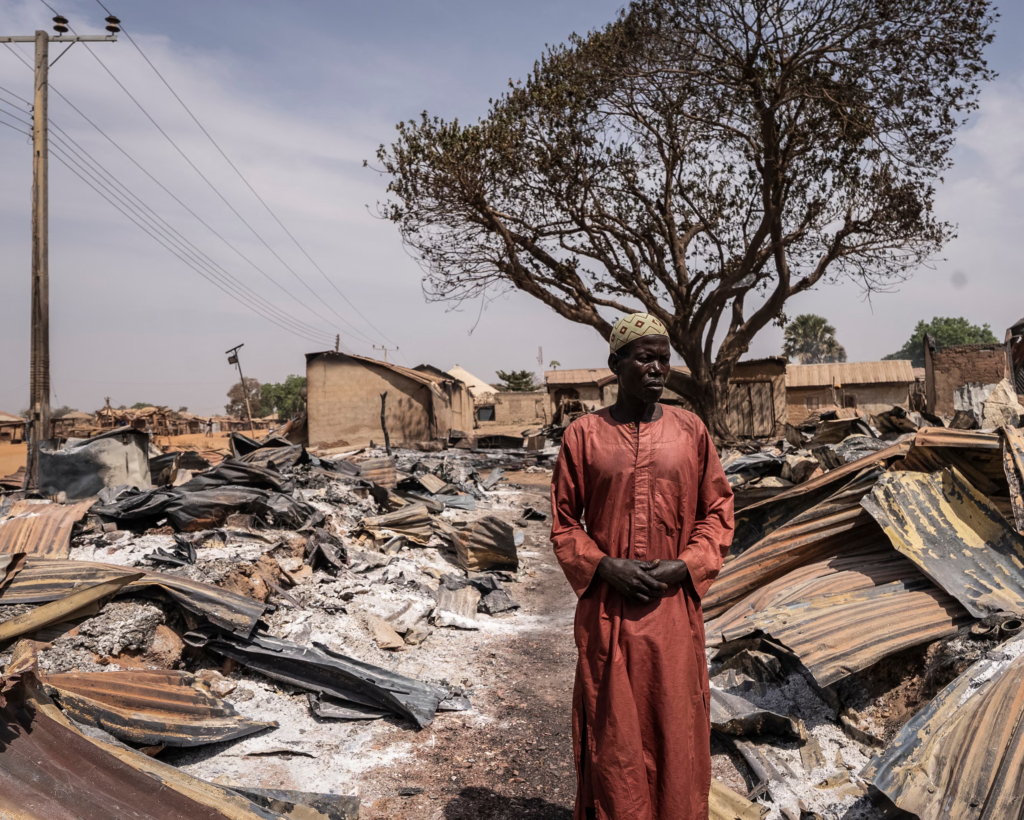
Boko Haram Gunmen Massacre Scores of Villagers in Kwara and Katsina After Sending Letter Asking to Preach
19 sources compared
Boko Haram Gunmen Massacre Villagers in Kwara After Sending Letter Asking to Preach
20 sources compared
Four Masked Gunmen Assassinate Saif al‑Islam Gaddafi at Zintan Residence
30 sources compared