USA19 September, 20262 min read
President Donald Trump Extends Medicaid Most Favored Nation Drug Pricing To All 50 States
This article is an automated aggregation of coverage from news outlets. Our editorials offer in-depth analysis curated by the NewsCord team.
All 50 states join Medicaid most-favored-nation drug pricing program. Most-favored-nation pricing reduces net prices for selected Medicaid drugs.

All 50 States Opt In
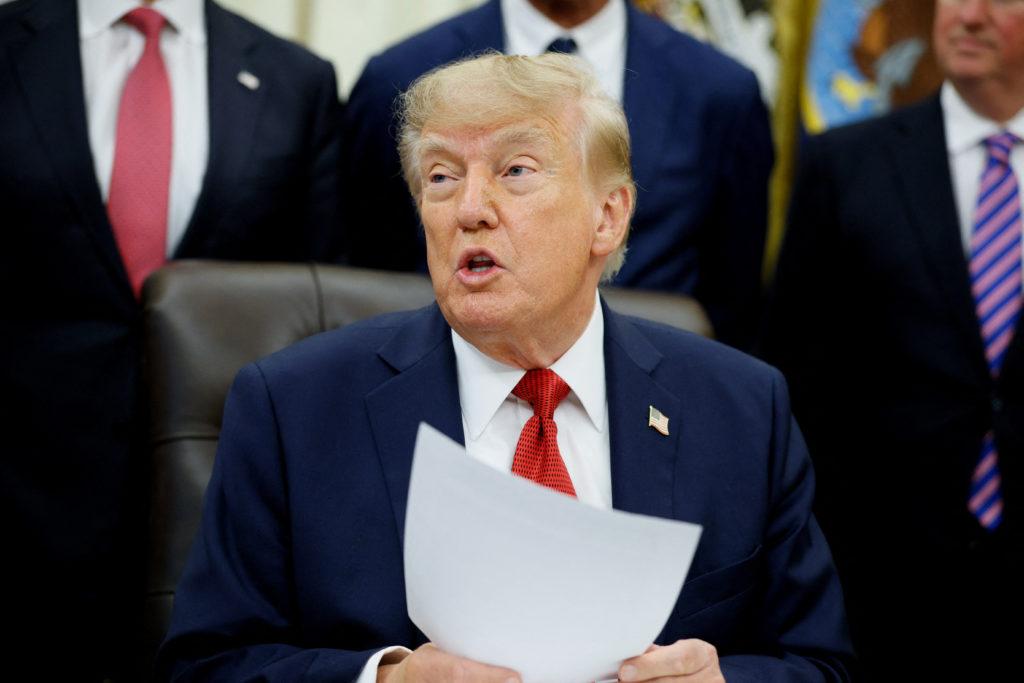
President Donald Trump announced Friday that all 50 states will join a Medicaid program set to provide Most Favored Nation pricing to some drugs within the Medicaid program, bringing the net price of selected drugs down to prices paid in certain other countries.
The plan is dubbed the Medicaid "GENEROUS" model, and Trump said, "Every state will have the ability to use those extra billions of dollars to invest in other healthcare improvements or something else."
The Associated Press reported that Trump was flanked in the Oval Office by Health and Human Services Secretary Robert F. Kennedy Jr., Centers for Medicare & Medicaid Services Administrator Mehmet Oz and others.
The White House said the administration claims Medicaid will save billions on prescription drug costs, while experts told the Associated Press that the savings are unclear since the content of the deals isn't public.
Watchdogs Call It a Mirage
Watchdog groups challenged the administration’s secrecy around the deals, with Public Citizen’s Access to Medicines Director Peter Maybarduk calling them a "mirage." Maybarduk said, "Trump’s drug pricing deals are a mirage, designed to convince Americans that he’s taken significant action on drug pricing while creating minimal if any downside for Big Pharma," in comments reported alongside documents obtained through Freedom of Information Act lawsuits.
The Raw Story reported that Sarah Karlin-Smith, research director for Public Citizen’s Access to Medicines Program, told the Washington Post, "There’s a lot missing where we can’t get a great sense of how good these deals might be for the American people." Representatives for the Trump administration, Pfizer and Lilly told the Post that contracts cannot be released because they contain commercially sensitive information, and White House spokesman Kush Desai reportedly said, "The Administration cannot release contracts with drugmakers that contain commercially sensitive information and would undermine ongoing negotiations with other companies."
Savings Claims and Uncertainty
The Associated Press said the White House in May estimated that Trump’s deals with pharmaceutical companies to lower some U.S. prescription drug prices to levels charged in other countries could save $529 billion over the next 10 years. The Hill reported that the administration suggested state Medicaid programs could save more than $64 billion, but it’s not clear how they arrived at that figure, and Medicaid drugs are already subject to steep discounts.
The New York Times reported that the program, called Generous, is a regulatory experiment intended for Medicaid to achieve Trump’s goal of equalizing drug prices paid by the United States with those paid by other wealthy countries, but it was not clear what effect the program would have. The White House (.gov) said the effort would unlock nearly $65 billion in Medicaid drug savings over the next decade, while also asserting that "Every state Medicaid program in the nation now gets Most Favored Nation drug prices" and that 26 drugmakers covering 90% of the branded U.S. market have agreed to bring U.S. prices in line with the lowest paid by comparable developed nations.