
Trump Threatens to Obliterate Iran's Power Plants Over Strait of Hormuz
Key Takeaways
- Trump threatens to obliterate Iran's power plants if Hormuz remains closed 48 hours.
- The ultimatum aims to reopen the Strait of Hormuz within 48 hours.
- Iran threatens to strike US and Israeli infrastructure if attacked.
Trump's Ultimatum
US President Donald Trump dramatically escalated tensions with Iran on Saturday by issuing a 48-hour ultimatum demanding Tehran fully reopen the Strait of Hormuz.
“US says it has crippled Iranian threat in Strait of Hormuz United States President Donald Trump has threatened to attack Iran’s power plants if freedom of navigation is not fully restored at the Strait of Hormuz within 48 hours, a dramatic escalation as the US-Israeli war on Iran continues for a fourth week”
In a stark Truth Social post, Trump warned that if Iran doesn't 'FULLY OPEN, WITHOUT THREAT, the Strait of Hormuz, within 48 HOURS from this exact point in time, the United States of America will hit and obliterate their various POWER PLANTS, STARTING WITH THE BIGGEST ONE FIRST!'
The ultimatum came barely a day after Trump had suggested the US was 'getting very close to meeting our objectives as we consider winding down our great Military efforts in the Middle East,' creating whiplash in the administration's messaging.
The threat represents a significant escalation in the conflict that began on February 28 when the US and Israel launched strikes against Iran, marking a dangerous new phase in the region's instability.
Global Energy Impact
The strategic importance of the Strait of Hormuz cannot be overstated, as it serves as the primary transit corridor for roughly 20% of global crude oil and liquefied natural gas supplies.
Iran's effective blockade of this vital waterway has caused severe disruption to global energy markets, with European gas prices surging as much as 35% last week and US gas prices rising nearly 30% since the war began, now approaching $4 per gallon.

The closure has created a global energy shock, with international benchmark Brent crude soaring to over $100 per barrel, significantly impacting worldwide inflation and economic stability.
The economic fallout has become a political risk for Trump at home, particularly with midterm elections approaching, forcing the administration to address rising consumer costs while simultaneously maintaining pressure on Iran.
Iran's Response
Iran responded swiftly and forcefully to Trump's threat, with the country's military vowing to retaliate against US and allied infrastructure across the region.
The Iranian military's operational command Khatam Al-Anbiya issued a stark warning that 'if Iran's fuel and energy infrastructure is violated by the enemy, all energy, information technology and desalination infrastructure belonging to the US and the regime in the region will be targeted.'
Iranian Foreign Minister Abbas Araghchi further escalated rhetoric by warning that Iran would show 'zero restraint' if its infrastructure came under attack.
This came amid reports that Iran had successfully launched long-range ballistic missiles targeting the US-UK military base at Diego Garcia in the Indian Ocean, demonstrating an expanded capability that raised concerns about the conflict's potential spread beyond the Middle East to European capitals.
Human Cost
The conflict has already taken a devastating human toll, with casualty figures continuing to climb across the region.
More than 2,000 people have been killed in Iran since US and Israeli strikes began, while Iranian attacks have claimed at least 15 lives in Israel, including four in the occupied West Bank.

Iranian missile strikes on Saturday night injured dozens of people in southern Israeli cities of Dimona and Arad, with Israeli authorities reporting at least 64 people taken to hospitals, including seven in serious condition.
These strikes marked the first time Iranian missiles penetrated Israel's air defense systems in the area around the nuclear site, raising serious operational concerns.
The violence has also extended to other Gulf nations, with Saudi Arabia reporting it downed 20 drones, and Iran's death toll surpassing 1,500 according to state broadcaster reports.
International Response
The international community has responded with mixed reactions and increasing concern over the escalating conflict.
“A fresh warning from Iran’s military has sharpened tensions in the region, signalling that any strike on its energy network could trigger a wider retaliation targeting US-linked infrastructure”
G7 foreign ministers issued a statement condemning Iran's 'reckless attacks against civilians and civilian infrastructure' and declared they are 'ready to take necessary measures to support global supply of energy.'
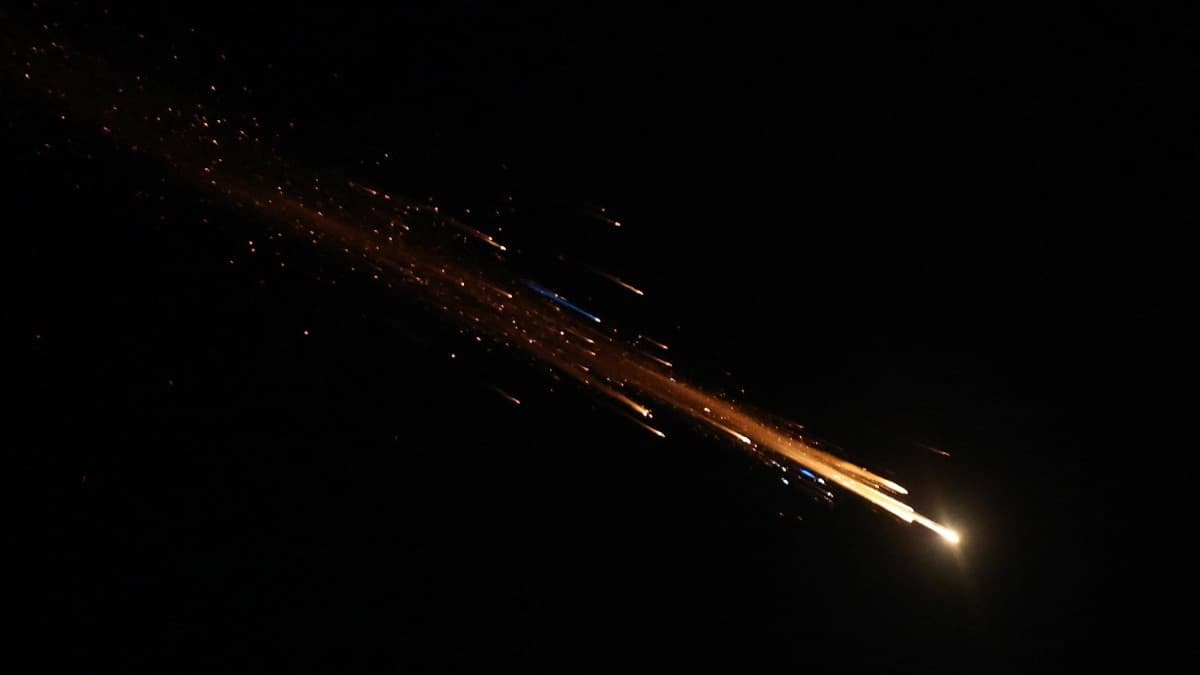
The European Council formally condemned Iran's military strikes and called for 'a moratorium on strikes against energy and water facilities.'
Meanwhile, the US military has been reinforcing its presence in the region, with the Pentagon deploying three additional amphibious assault ships and roughly 2,500 additional Marines to the Middle East.
The contradictory messaging from the Trump administration has created uncertainty, with the president simultaneously discussing winding down military operations while escalating rhetoric and increasing troop deployments, leaving allies and markets scrambling to understand the US strategy.
More on Iran

Iran strikes Dimona and Arad near Israel's main nuclear facility
43 sources compared

Trump threatens to obliterate Iran's power plants over a 48-hour Hormuz ultimatum
13 sources compared
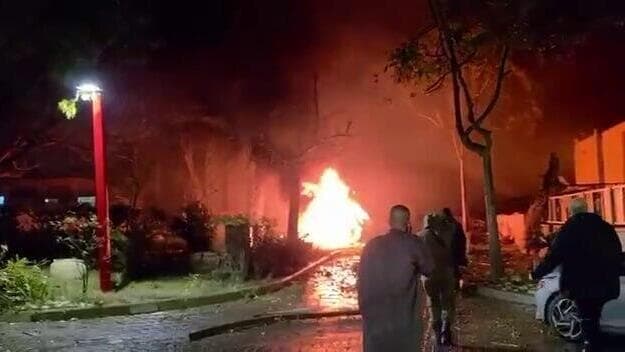
US and Israel Strike Iran's Natanz Enrichment Site; No Radioactive Leaks Reported.
81 sources compared

Iran Attacks Diego Garcia with Ballistic Missiles in Longest Strike Yet
128 sources compared