
Britain · 19 August, 2026 · 3 min read
RAIB Says Track Geometry Irregularity Existed Before Lewes Train Derailed, Injuring 30
RAIB initial report found a track geometry irregularity on the approach to derailment The irregularity existed before the incident near the track where rear carriages derailed
Accident recap timing vs operational timeline emphasis.
9 of 10 outlets skipped it: RAIB evidence includes marks consistent with wheels climbing rails.
12outlets compared
Same story, two versions
tap a side to read it in full
BBC
“The derailment left two people seriously injured, and 18 were taken to hospital with less serious injuries.”Read the original ↗
GOV.UK
“RAIB was notified of the accident at 16:02 and immediately deployed a team of inspectors”Read the original ↗
BBC leads with injuries and scene effects; GOV.UK leads with formal RAIB response timeline.
Lewes derailment defect
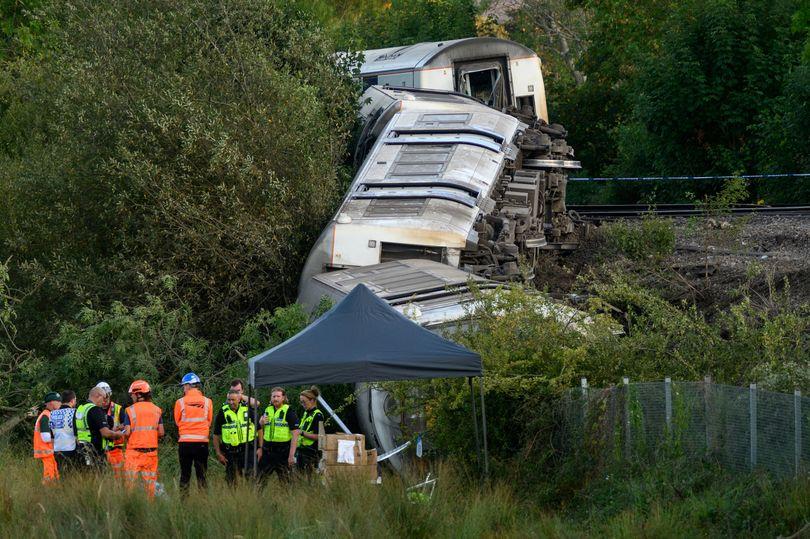
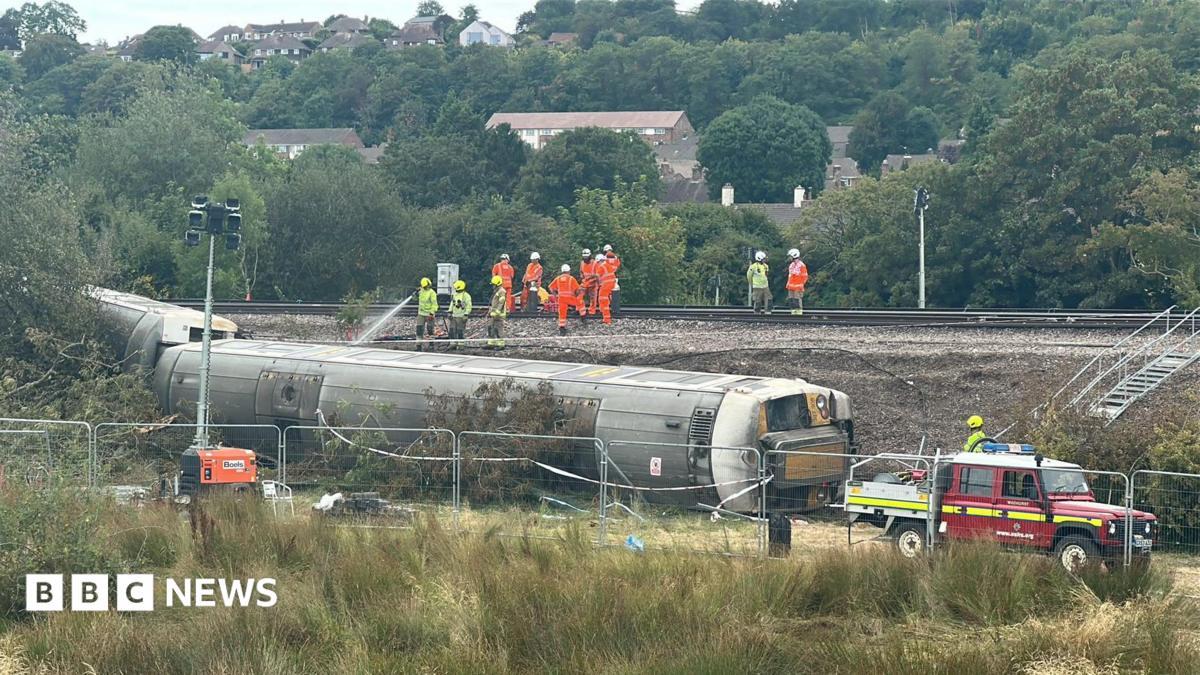
A passenger train, train 1F34, derailed at Lewes in East Sussex at around 15:54 on Thursday 13 August 2026, with the derailment taking place around 1 mile north of Lewes station. The UK Rail Accident Investigation Branch (RAIB) said the train was formed of eight vehicles and that the rear three vehicles derailed and subsequently overturned during the accident, coming to rest on their sides on the railway’s embankment. RAIB reported that forward-facing CCTV images and forward and rearward-facing CCTV images from preceding services showed that a track geometry irregularity existed on the immediate approach to the point of derailment prior to the accident occurring.
The derailment left 30 people injured, with 20 people requiring hospital treatment, and significant damage was caused to the train and to railway infrastructure. The RAIB said the ambient air temperature at the time of the derailment was recorded as being around 27 degrees Celsius by the nearest weather station to the accident, and that the accident took place during a sustained period of hot and dry weather.
RAIB, operators apologise
RAIB said it had received several reports of rough riding at the location of the derailment from passengers on other trains, and it continued to analyse evidence relating to the derailment sequence and the status of the track. In a joint statement, Lucy McAuliffe, Network Rail's route director for Sussex, and John Whitehurst, chief executive of Greater Thameslink Railway, apologised for the derailment and said, "We will carefully consider any recommendations arising from the investigation". The BBC reported that CCTV from a train which passed through the crash site at 14:04 BST showed the "irregularity" with the track geometry just before the point where the train came off the tracks.B
The BBC also said the 14:24 service from London Victoria to Eastbourne derailed in the Landport area of Lewes at about 15:54 BST, leaving two people seriously injured and 18 taken to hospital with less serious injuries. BThe Department for Transport said, "safety remains the absolute priority across our rail network," while the BBC noted the UK's railways remain among the safest in the world, with delays caused by track faults falling by 45% since the late 2000s.B
Closure, recovery, next steps
The Guardian said the stretch of railway between Lewes and Haywards Heath was scheduled to remain closed until at least the end of service on 26 August, to allow for the train to be recovered and for recovery teams to make sure evidence was preserved. The recovery described by the GOV.UK statement will be complex, including the derailed vehicles being lifted by rail crane and moved by road to secure storage, while RAIB worked alongside the British Transport Police, the Office of Rail and Road, and the railway companies involved to secure and recover evidence. GThe GOV.UK update said RAIB released the site of the accident to Network Rail at 14:09 on Saturday 15 August 2026 to allow for repair of the infrastructure and recovery of the train, and that RAIB inspectors and support staff continued to work at the site until Monday 17 August.G
The RAIB said marks observed on the rails near the point of derailment are consistent with the wheels of the derailed rear vehicles having climbed over the rails, and it said preliminary OTDR data analysis showed the driver applied the train’s brakes as it passed the point of derailment and that the train started to decelerate. The GOV.UK statement said the embankment on which the railway runs at this location is constructed of clay and sits on alluvial deposits, both sensitive to variations in water content and may undergo movement as moisture levels change, while it added that there is evidence that some movement had previously taken place.G