
Full story
Teacher’s 10-Minute Call
Rajendra Dawadi, head teacher at Tribhuvan Trishuli Secondary School in Nuwakot, told the BBC he received four calls at 09:10 local time warning about the Nepal floods and evacuated 900 pupils just 10 minutes before the waters hit.
“he received four calls at 09:10 local time (03:25 GMT) warning”
Dawadi said he ordered buses full of students to turn around to flee the area and told the children to run to higher ground, adding, "If we didn't make a quick decision, if it was 10 minutes later, we all - including the students and me - wouldn't be able to speak to you today."
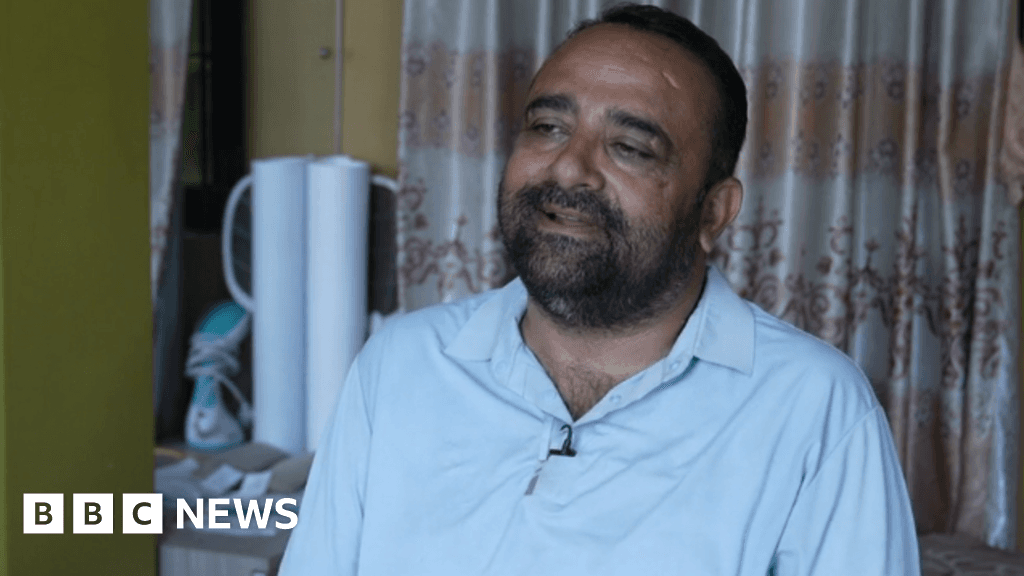
The BBC reported the warnings came from four different people in the space of minutes and that the disaster has now claimed at least 794 lives.
Hindustan Times said Dawadi, a 47-year-old teacher and principal, received a warning at 9.20 am on Wednesday from a friend who told him, "He said the village was gone: taken by the river. He told me to run," as the flash flood tore through Nepal’s Trishuli Valley.
Hindustan Times also said the flash flood was triggered by a glacier collapse and that it killed over 700 people in Nepal and 16 in Tibet.
Rescues, Missing, and Risk
As rescuers continued to search after the disaster, CBS News reported that five days after the glacier collapse near Nepal’s border with Tibet, rescuers were still searching Monday for reasons to hope amid a list of 4,200 people still missing.
CBS News said Nepal’s national disaster agency reported at least 903 people had been killed, and it described the danger as ongoing because the sacred Trishuli River was affected again by heavy monsoon rains.

NHK WORLD-JAPAN reported that Nepal’s Armed Police Force freed a 6-year-old girl from rubble after rescuers heard her cries and rescued her on Friday evening, more than 55 hours after the disaster struck.
NHK WORLD-JAPAN quoted APF spokesperson Netra Karki saying the rescue took place in an area accessible only by helicopter after roads were swept away, and he called the girl’s rescue a miracle.
El País reported that Nepal’s National Authority for Disaster Risk Reduction and Management (NDRRMA) tallied about 675 people dead and 2,498 missing, while Chinese authorities confirmed seven deaths and 554 missing in Tibet, bringing the provisional death toll to 682 and the missing to more than 3,000 in total.
International Aid and Tunnels
El País reported that Nepal’s Foreign Minister Shishir Janal told a press briefing from Kathmandu, “The level of devastation is substantial. We hope there will be international aid for recovery and reconstruction,” while saying Nepal has limited capacity and has asked foreign governments to provide things like refrigerated containers, forensic equipment, and other specialized materials.
““The level of devastation is substantial. We hope there will be international aid for recovery and reconstruction,””
El País also said Janal explained Nepal is even considering convening an international conference to raise funds and warned that it is still early to assess the extent of the disaster.
Meanwhile, Hindustan Times said more than 100 workers are believed to be trapped inside multiple hydropower tunnels and that the Nepali army inserted a pipe into one of the tunnels at the Trishuli 3A hydroelectric site late on Saturday and started sending air through it.
Hindustan Times reported that overnight rain and rising river waters hampered rescue efforts at that site and that Nepal’s disaster authorities urged rescue teams on Sunday to exercise caution.
Billie Parker Noticias said the disaster began on August 26 and was linked to the collapse of a section of a glacier in the Himalaya range, triggering an ice and rock avalanche and a huge surge of water and sediment that reached the Lhende Khola river.