USA21 August, 20262 min read
Ron Wyden, Greg Casar Seek GAO Review Of Federal Spyware Hacking Of Americans
This article is an automated aggregation of coverage from news outlets. Our editorials offer in-depth analysis curated by the NewsCord team.
Wyden and Casar urge GAO to audit use of hacking tools and spyware on Americans. Request includes an unclassified report on frequency, reasons, and controls.
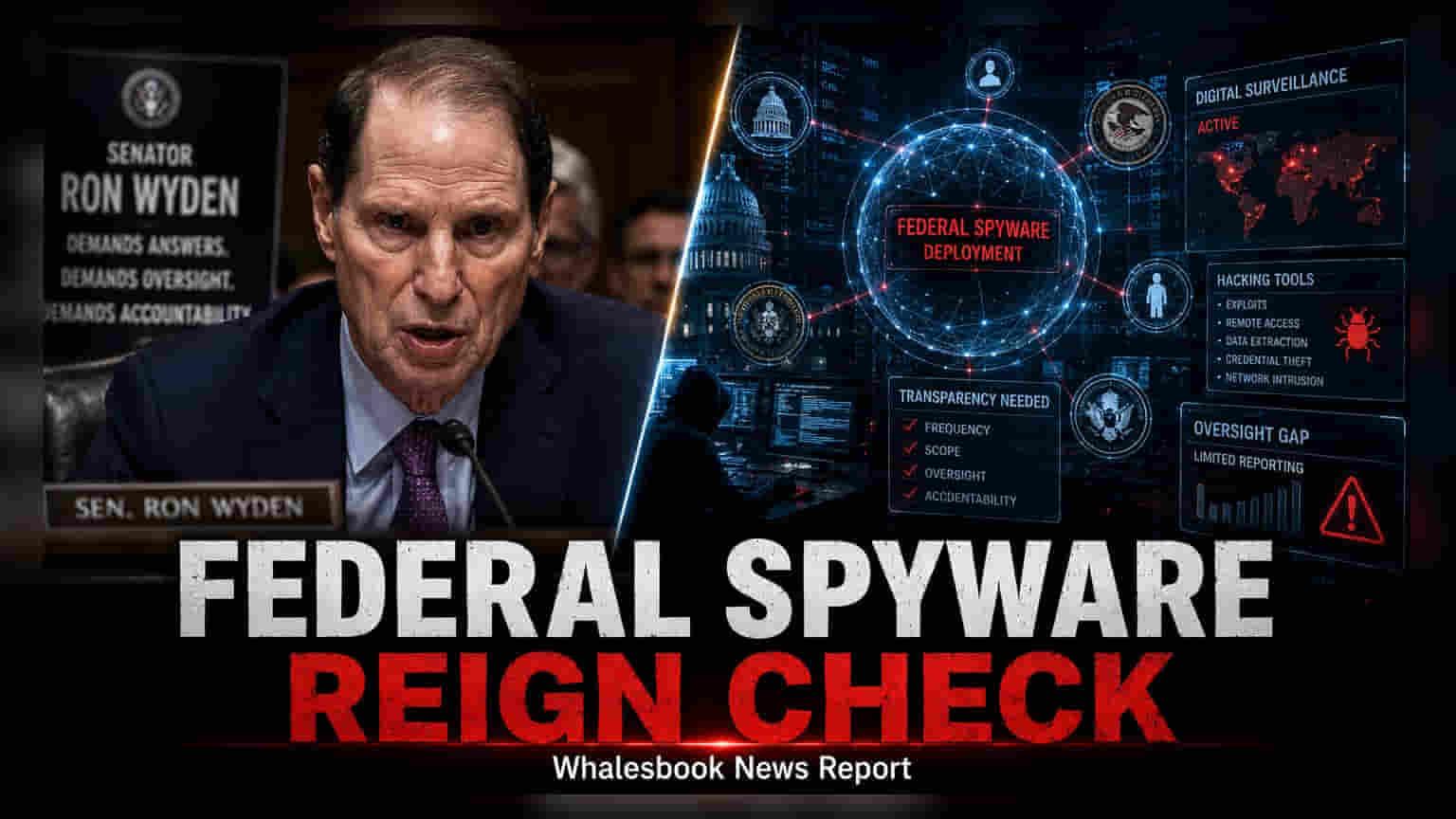
Wyden seeks GAO probe
Democratic Sen. Ron Wyden, D-Ore., and Rep. Greg Casar, D-Texas, wrote to the Government Accountability Office on Friday to request a watchdog review of how the federal government hacks Americans, including with the use of spyware.
In their letter, they said, “there exists little public information regarding its scope, frequency, or operational safeguards,” and they added that “the government does not publish annual reports for hacking operations.”

TechCrunch reported that Wyden sent a letter to the GAO asking for a comprehensive inquiry into how the FBI, the Drug Enforcement Administration, ICE’s Homeland Security Investigations, and the Secret Service employ hacking and spyware against Americans.
Wyden’s request, as described by TechCrunch, includes an unclassified report with findings and recommendations, and it frames the issue as one where tools have been used for more than two decades but remain opaque to the public.
Targets, safeguards, and courts
Wyden asked the GAO to investigate whether agents abused hacking tools and spyware for unauthorized or personal purposes, and to check what technical and oversight measures are in place to control and prevent misuse. TechCrunch said Wyden also requested the GAO review how agencies “acquire, store, and secure” these tools to avoid dangerous leaks, including whether they submit them to a program designed to determine if the U.S. government should report security flaws to help tech companies fix them.
In the CyberScoop account, Wyden and Casar said, “Spyware and other hacking tools grant expansive access to personal devices, including webcams, location data, stored files, and encrypted communications,” and they argued that unrestricted access invites abuse by rogue agency personnel. The TechCrunch report further said Wyden asked the GAO to assess how federal agencies inform courts when requesting warrants for the use of these tools, including whether they disclose the risk of affecting unknown or innocent targets.
L3Harris case and FBI history
To illustrate risks around acquisition, TechCrunch said Wyden specifically mentioned the case of Peter Williams, a former executive at the defense contractor L3Harris, who stole and sold advanced hacking tools to a Russian broker.
TechCrunch reported that the tools ended up being used by Russian spies against Ukraine, and Chinese cybercriminals against cryptocurrency owners, while Wyden’s letter also pointed to the earliest documented case of the FBI using spyware going back to 1999.
In that 1999 example, TechCrunch said federal agents discovered that Philadelphia mobster Nicodemo S. Scarfo used Pretty Good Privacy (PGP) to encrypt a file on his computer, and the FBI installed a rudimentary malware designed to record the keystrokes to decrypt it.
CyberScoop added that the Wyden and Casar letter also touches on the federal government’s acquisition of hacking tools, including “Rule 41 hacking powers,” and it asked GAO to review documented cases of federal law enforcement misusing hacking capabilities for personal or otherwise unauthorized reasons.