
Royal Concertgebouw and opera singer Maartje de Lint Launch Singing Sessions for Dementia Patients
Singing workshops for dementia
Amsterdam’s Royal Concertgebouw has launched weekly "singing circle" workshops for people with dementia and other neurological conditions, led by opera singer Maartje de Lint.
“Music program at Royal Concertgebouw brings patients and carers together as researchers explore the cognitive benefits of singing for people with Dementia and related neurological conditions”
The program takes place in the Concertgebouw’s ornate Mirror Hall.
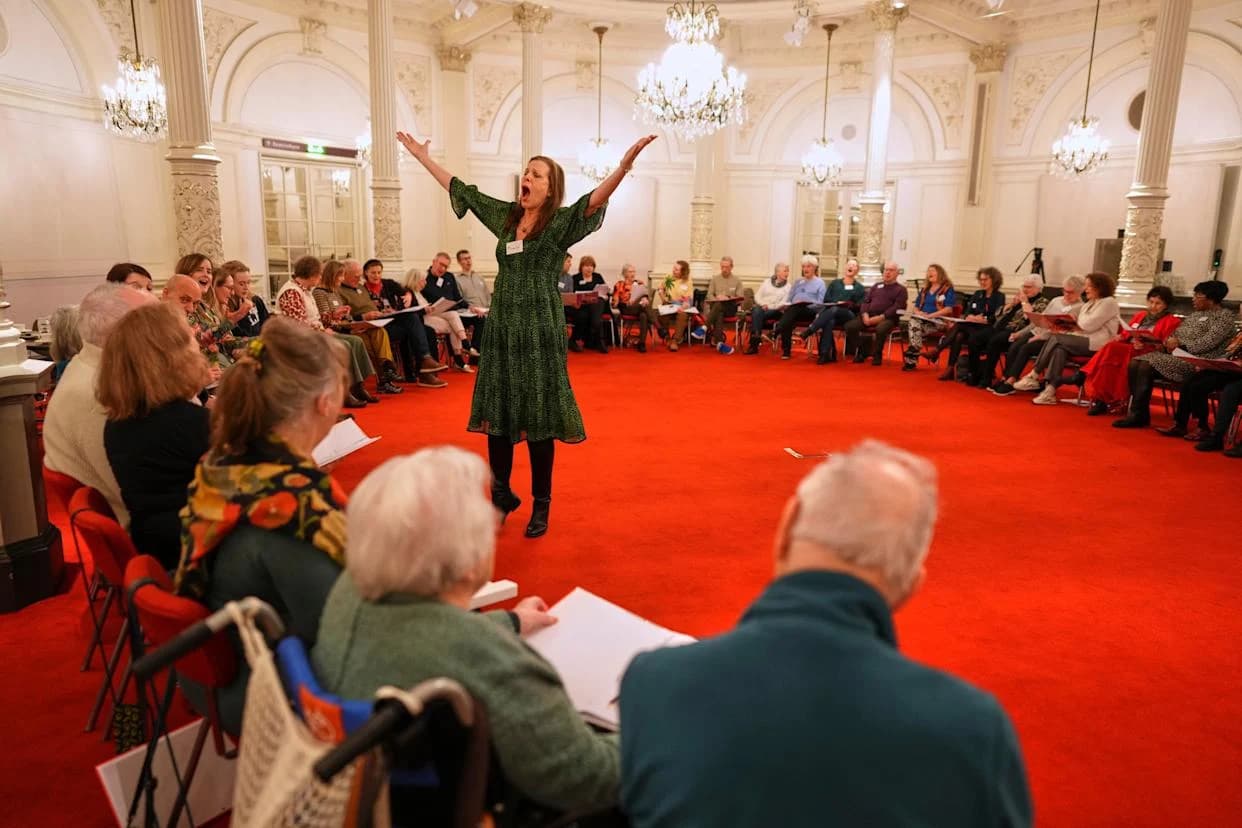
It is presented as a music program that brings patients and their carers together for shared sessions designed to stimulate memory and social connection.
Mirror Hall sessions
Sessions are hour-long gatherings held beneath the Mirror Hall’s chandeliers; attendees pay a participation fee (reported as €20).
The Mirror Hall setting and regular weekly rhythm are emphasised in coverage, underlining the initiative’s combination of high-cultural venue and recurring community activity.
Participants and dementia types
Participants include older adults with Alzheimer’s, Parkinson’s and other neurological diagnoses such as Posterior Cortical Atrophy.
“Music program at Royal Concertgebouw brings patients and carers together as researchers explore the cognitive benefits of singing for people with Dementia and related neurological conditions”
Individual cases mentioned in reporting include Megan Worthy.
Coverage notes the variety of dementia types, with Alzheimer’s described as the best-known form.
It also highlights vascular dementia—caused by small strokes that reduce brain blood flow—and other conditions that produce different symptoms and biology.
Memory-focused singing sessions
The sessions use familiar repertoire ranging from Elvis and Frank Sinatra to 'Amazing Grace', and organisers and participants report that singing can revive musical memories and strengthen emotional bonds between patients and carers.
Organisers frame the program both as a therapeutic activity aimed at memory stimulation and emotional connection and as a shared cultural experience that reconnects patients and carers.
Music therapy in dementia
Researchers and organisers point to growing scientific interest in music therapy.
“Music program at Royal Concertgebouw brings patients and carers together as researchers explore the cognitive benefits of singing for people with Dementia and related neurological conditions”
Neurobiologists such as Brankele Frank are quoted saying music can engage brain regions that remain relatively intact in Alzheimer’s and vascular dementia, supporting emotion and identity even as language declines.
Coverage emphasises both clinical interest and the non-clinical social benefits, presenting music’s ability to support emotion, identity and social bonding as complementary to formal therapies.
Key Takeaways
- Group singing sessions in Amsterdam support people with dementia and related neurological conditions.
- Researchers are studying the sessions' potential cognitive and emotional benefits for participants.
- Sessions involve people affected by dementia, traumatic brain injuries, Parkinson's disease, and stroke.
More on Techonology and Science

Vice President JD Vance Pauses $259 Million in Medicaid Funding to Minnesota
16 sources compared

Surgeon Yaser Jabbar Botched Surgeries and Harmed Nearly 100 Children at Great Ormond Street Hospital, Independent Review Finds
15 sources compared

Airports Across Asia Ramp Up Health Screenings After India Confirms Two Nipah Virus Cases
41 sources compared

Trump Unveils Vague 'Great Healthcare Plan', Replacing Subsidies With Direct Payments Critics Warn Will Harm Low-Income Americans
29 sources compared