Ukraine War24 February, 20265 min read
Russia Enters Fifth Year Of Full-Scale Invasion Of Ukraine
This article is an automated aggregation of coverage from news outlets. Our editorials offer in-depth analysis curated by the NewsCord team.
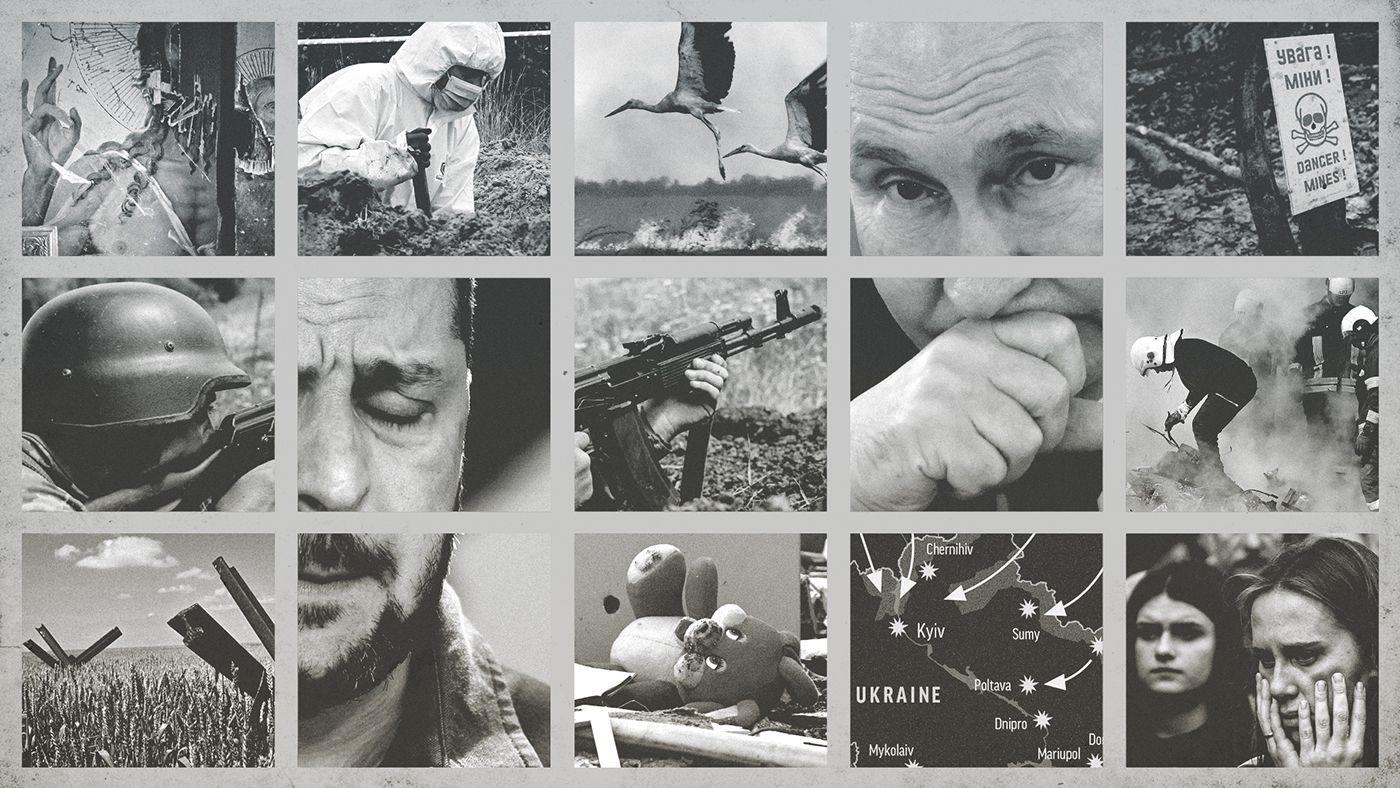
The war continued into a fifth year since February 24, 2022. Russia continues to occupy roughly 20% of Ukrainian territory.
15 outlets told this the same way.
Outlets did split on Russian Attack Kills At Least 33 On Two Buses In Kramatorsk →
Ukraine war overview
As the fighting enters its fifth year, the war has settled into a brutal war of attrition across a long, largely static front, with Moscow holding roughly a fifth of Ukraine’s territory. Reporting emphasizes slow, costly advances rather than decisive breakthroughs. Associated Press says Moscow has taken only limited ground since February 2022 and now holds roughly 20% of Ukraine (counting its 2014 annexation of Crimea and later claims), while the front has settled into brutal, attritional trench warfare along a roughly 1,200 km line.
“Moscow has taken only limited ground since February 2022 and now holds roughly 20% of Ukraine (counting its 2014 annexation of Crimea and later claims), while the front has settled into brutal, attritional trench warfare along a roughly 1,200 km line.”
NPR notes that early rapid shifts have slowed to a war of inches. NPR also says that at its 2022 peak Russia held more than 26% of Ukraine, and today it controls just over 19% (including Crimea and 2014-held areas). The BBC describes Russian and Ukrainian forces locked in a war of attrition along an active front of more than 1,000 km.

The Centre for European Reform frames the conflict four years after Russia’s full-scale invasion on February 24, 2022, as a largely conventional struggle that still demands European action. Some accounts describe the fighting as entering its fifth year, while others review the war four years after Russia’s full-scale invasion on February 24, 2022.
Casualty and displacement estimates
The human toll is large and reported figures vary across organizations and outlets, producing significant contradictions in counts of deaths and displacement. The BBC reports 'UN-recorded civilian deaths of more than 14,500' while The Independent cites the UN’s OHCHR saying '15,172 Ukrainian civilians have been killed since 2022 (including 739 children).' Displacement numbers diverge: the Council on Foreign Relations states 'about 3.7 million people are internally displaced, and 5.9 million are registered as refugees.'
The Times of India cites a Russia Matters estimate that '10.6 million Ukrainians — about 24% of the country’s pre-invasion population — have been displaced: 6.9 million internally displaced and 3.7 million refugees abroad,' and EL PAÍS reports 'nearly 4 million people are internally displaced and about 6.7 million are abroad.' On combat casualties, multiple outlets point to very high losses but differ in scale, with NPR and the Centre for European Reform referencing CSIS estimates of roughly 1.2 million Russian combat casualties and up to 600,000 Ukrainian casualties. Because the sources do not agree on single definitive totals, these differences should be read as conflicting estimates rather than settled facts.
Drones reshape battlefield tactics
Technology—especially drones—and positional, attritional tactics now shape the battlefield, expanding the reach and lethality of strikes while complicating logistics and civilian protection. EL PAÍS calls out that "Drones have become the dominant weapon, dictating the conflict’s tempo" and reports Ukrainian medical sources saying "over 90% of current casualties are caused by drones." The Independent documents that "Moscow has dramatically increased drone production and use (about a 200% rise), launching hundreds of strikes nightly."
“Drones have become the dominant weapon, dictating the conflict’s tempo. Ukrainian military medical sources tell the paper that over 90% of current casualties are caused by drones.”
NPR sketches the variety of new systems in use, saying "Drones have transformed the fighting: from reconnaissance to widespread use as explosive attack platforms by both sides…New innovations include Russian fiber-optic drones resilient to jamming, Ukrainian unmanned ground vehicles… and sea drones." Associated Press emphasizes how that technological shift has altered tactics, noting "Warfare has shifted to positional fighting, with small infantry raids, heavy artillery, glide bombs and extensive use of drones — including long‑range and fiber‑tethered drones that have expanded the ‘kill zone’ up to ~50 km from the front." Attacks on energy and infrastructure are a recurring theme across reporting.
Stalled Ukraine diplomacy
Diplomacy remains stalled and politically fraught, with U.S.-led mediation producing proposals but no agreement as core demands remain incompatible. EL PAÍS reports that 'Washington is pressing Kyiv toward a peace deal seen as favorable to Moscow, with the main sticking point being cession of the eastern Donbas region.' The Associated Press explains that talks have failed because 'Putin insists on Ukrainian withdrawal from annexed regions, restrictions on Kyiv's military and NATO aspirations and other political concessions…whereas Zelenskyy wants a ceasefire along the current line, security guarantees and no territorial concessions.'
NPR likewise says 'Diplomatic talks between Russian and Ukrainian envoys have happened but produced no agreement - major obstacles remain over territory, reparations and security guarantees.' Newsweek adds that Western officials believe 'Russia has misled U.S. mediators about its willingness to make peace.'

Some outlets link U.S. domestic politics into the equation, with The Independent noting reported cuts to U.S. aid after President Trump's 2025 return, factors that complicate mediation and Kyiv's bargaining space. Because sources present different emphases and describe evolving proposals, there is no single, agreed diplomatic path forward in the material provided.
Economic and humanitarian impact
The war’s economic and humanitarian fallout extends beyond the battlefield and is reshaping European and global calculations, with analysts urging strengthened Western support while documenting broad disruption and costs. The Centre for European Reform argues that "Europe must urgently shift the balance of economic and military advantage away from Putin." Bloomberg summarises wide economic consequences: "The conflict has disrupted global supply chains, driving up prices for commodities and contributing to economic instability across multiple regions."
“The article reviews the war in Ukraine four years after Russia’s full-scale invasion on February 24, 2022, arguing that Europe must urgently shift the balance of economic and military advantage away from Putin.”
Al Jazeera’s coverage stresses uneven and complex economic effects and "debunks common misconceptions about economic measures tied to the war." The Council on Foreign Relations provides concrete aid figures: "Since January 2022 Ukraine has received about $188 billion from the United States and $197 billion from the European Union."

The BBC notes that "Ukraine has lost much industrial wealth and suffered energy infrastructure attacks but is sustaining its budget with Western aid." Taken together, reporting signals heavy reconstruction needs, major budgetary support from the West, and persistent economic disruption that will shape the war’s political and social aftermath.