Ukraine War09 January, 20263 min read
Russia Launches Nuclear-Capable Oreshnik Hypersonic Missile, Kills At Least 4 in Kyiv
Russia fired a nuclear-capable Oreshnik hypersonic missile at Ukraine (second battlefield use) Overnight attack killed at least four in Kyiv and damaged heating, power and residential buildings

66 outlets told this the same way.
Outlets did split on Russian Attack Kills At Least 33 On Two Buses In Kramatorsk →
Jan. 9 Ukraine strike
On Jan. 9, 2026, Russian forces launched a large, multi-vector overnight strike on Ukraine that Moscow said included the new Oreshnik hypersonic/intermediate-range ballistic missile.
“On Jan. 9, 2026, Russia said it used a new Oreshnik ballistic missile along with other weapons in a large overnight strike on Kyiv.”
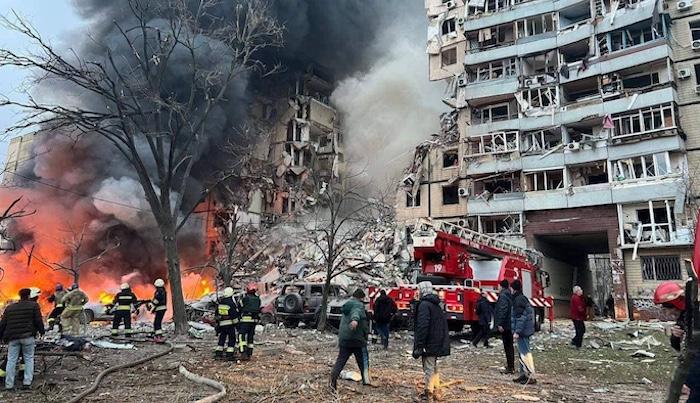
Ukrainian officials reported explosions across Kyiv and the Lviv region, and Kyiv said at least four people were killed and dozens wounded amid widespread damage to energy and residential infrastructure during freezing weather.
AP News reported that Russia said it used a new Oreshnik ballistic missile along with other weapons in the large overnight strike on Kyiv.
The BBC said the strikes severely damaged Kyiv’s energy infrastructure, leaving nearly half the city’s apartment buildings — roughly 6,000 — without heat.
EurAsian Times recorded Ukrainian claims that the attack produced fires, gas shortages and power outages in freezing weather.
The Moscow Times and NDTV described explosions and impacts in western regions near the EU border, emphasizing the geographic reach and civilian consequences of the barrage.
Conflicting reports on Oreshnik
The Oreshnik is presented differently across sources. Moscow and other Russian officials tout it as a Mach‑10, nuclear‑capable hypersonic weapon that can evade defenses and strike deep into Europe. Western analysts and several outlets portray it more cautiously as an experimental intermediate‑range ballistic missile (IRBM) derived from earlier designs.
There is debate over whether the warhead used in this strike was a live explosive or an inert 'dummy'. Spectrum Bay News 9 reported that Russia said it fired a hypersonic Oreshnik intermediate‑range ballistic missile into Ukraine’s Lviv region.

CNN described the weapon as one that appears capable of carrying nuclear or conventional payloads and can release multiple independently targetable reentry vehicles (MIRVs) at hypersonic speeds. At the same time, DW and other outlets noted Ukrainian claims that fragments indicate an inert warhead, saying the SBU released fragments it says came from the Oreshnik and asserting it likely carried an inert 'dummy' warhead.
Kyiv attack damage and response
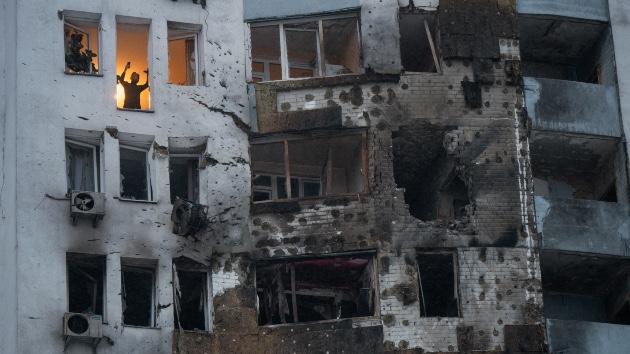
Officials in Kyiv said at least four people were killed and about 25 wounded, with dozens of residential buildings damaged. Critical heat and water were cut for hundreds of thousands during subzero temperatures, forcing emergency crews to deploy portable boilers and prioritize hospitals and maternity wards. AP News documented bodies and burning residential buildings and reported officials' casualty figures.
“Ukrainian officials said the attack killed four people and wounded at least 25, including an emergency medical worker; four doctors and a police officer were hurt while responding.”
Newsweek and the Toronto Star highlighted the heavy toll on housing and services, with the Toronto Star saying the assault caused heating and water outages for roughly half of Kyiv's apartment blocks (about 6,000 units) amid subzero temperatures. Municipal teams restored power and heat to hospitals and other public facilities using portable boilers, the reports added. BBC and France24 made similar points about the scale of outages and damage to the Qatari embassy.
Western reactions to Oreshnik
Western governments and European institutions reacted with immediate condemnation and alarm, calling the use of the Oreshnik an escalation and demanding urgent consultations.
Politico recorded Kyiv’s foreign minister asking for an emergency U.N. Security Council meeting and calling the missile’s use a grave threat to European security.
Britain, France and Germany condemned the strike as escalatory and unacceptable in multiple media outlets, including EurAsian Times, The Independent and CNBC.
Analysts and some Western officials described the launch as political signaling to NATO and the EU.
The Moscow Times said the launch was likely political messaging aimed at intimidating Kyiv’s Western allies.
Outlets such as Spectrum Bay News 9 noted the missile’s proximity to NATO borders and suggested a possible psychological purpose for the strike.
Contested missile strike accounts
Significant uncertainties and contested claims remain: Moscow says the strike was retaliation for an alleged Ukrainian drone attempt on a Putin residence, a claim Kyiv denies and which Western intelligence reportedly disputes. Experts also disagree on the missile’s technical nature — whether a hypersonic MIRVed weapon or an IRBM derivative — and on whether the launch was a deliberate demonstration with inert warheads or a live‑warhead attack, distinctions that shape legal assessments and escalation risks. The New York Post and Reuters‑cited Western sources reported Moscow’s stated rationale, while CNN and DW highlighted Western skepticism.
“Moscow said the strike was retaliation for an alleged December drone assassination attempt on President Vladimir Putin’s residence, but U.S. CIA and Ukrainian officials have dismissed that claim as fabricated and say there is no evidence.”
Politico and on‑site Lviv tests reported by Politico found no abnormal radiation or air‑quality readings, undercutting immediate nuclear fears. Given these competing narratives and partial evidence — missile fragments, social‑media footage, and official statements — the situation remains ambiguous and contested across available reporting.