Russia22 April, 20267 min read
Russia Suspends Kazakh Oil Transit to Germany via Druzhba Pipeline Starting May 1
Starting May 1, Russia will suspend Kazakh oil transit to Germany via Druzhba. PCK Schwedt refinery in Berlin depends on Kazakh supplies; halt strains Berlin's fuel supply.

May 1 cutoff threatens Berlin fuel
Russia plans to suspend the transit of Kazakh crude oil to Germany via the Druzhba pipeline starting May 1, according to multiple reports that tie the decision to the PCK refinery in Schwedt (Brandenburg), a key supplier for Berlin. El País said the German government reported on Wednesday that Russia plans to suspend transit of Kazakh crude oil to the PCK refinery in Schwedt starting May 1, forcing the refinery to make up the deficit with supplies from other sources. Reuters reporting cited by 1Lurer and DW described the same timing, with Russia set to stop oil exports from Kazakhstan to Germany via Druzhba from May 1, and with the German Federal Ministry for Economic Affairs and Energy confirming the news to DW in a statement.
DW said Rosneft Germany informed the Federal Network Agency, acting as trustee, that “the transit of Kazakh crude oil through the Druzhba pipeline across Russian territory to the PCK refinery is prohibited as of May 1, 2026,” while adding that “The Russian Federation has not yet confirmed this to the German government.” The same DW account placed the refinery in the town of Schwedt about 100 kilometers (62 miles) north of Berlin and said it supplies the vast majority of diesel, petrol and heating oil needed for the city of Berlin.
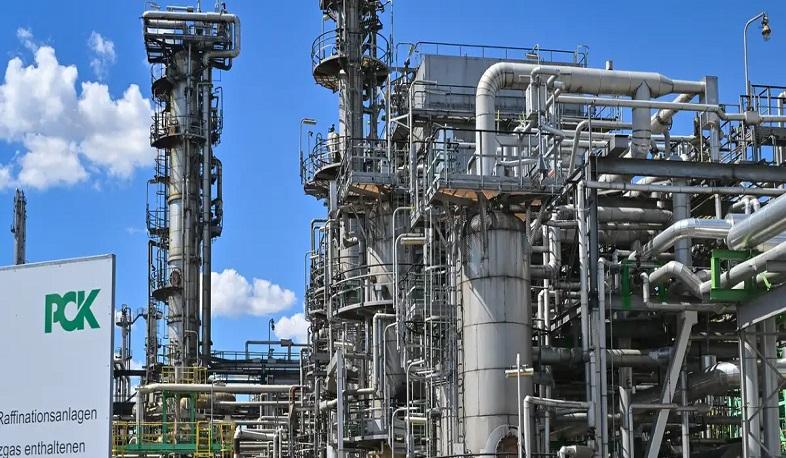
Arise News and Ukrinform both anchored the disruption to the PCK refinery’s reliance on Kazakh flows, with Arise News saying a full halt would remove roughly 17% of the up to 12 million metric tons processed annually by the refinery. In parallel, the Reuters-sourced figures in Arise News and Ukrinform put Kazakhstan exports to Germany through Druzhba at 2.146 million metric tonnes in 2025, or about 43,000 barrels per day, with Arise News adding that supplies reached 730,000 tonnes in the first quarter of 2026.
Technical capacity cited, but context matters
Across the reports, Russia’s stated rationale for the May 1 halt centers on “technical possibilities” or “technical capability,” while other accounts link the timing to broader disruptions affecting energy flows. 1Lurer said Deputy Prime Minister Alexander Novak told Reuters that the move was due to "technical possibilities", offering no further explanation, and it added that “Starting from May 1, volumes of Kazakh oil previously supplied via the Druzhba pipeline to Germany will be redirected to other available logistics routes.” El País similarly said Russia’s justification for the measure is the supposed lack of technical possibilities to transport oil from Kazakhstan, and it reported that Rosneft Deutschland had informed the Federal Network Agency that the Druzhba pipeline will soon stop transporting Kazakh oil to Germany.
DW described the German government’s position that the cessation would not ultimately jeopardize supply, quoting a spokesperson for the Federal Ministry for Economic Affairs and Energy saying, “The cessation of Kazakh oil deliveries to the PCK refinery does not ultimately jeopardize the security of supply of petroleum products in Germany, even though PCK Schwedt would have to operate at a reduced capacity.” At the same time, DW framed the move as part of a pattern of energy leverage, quoting Benjamin Hilgenstock that “Russia will retain the ability to threaten European energy security until all imports from and through Russia have stopped.”
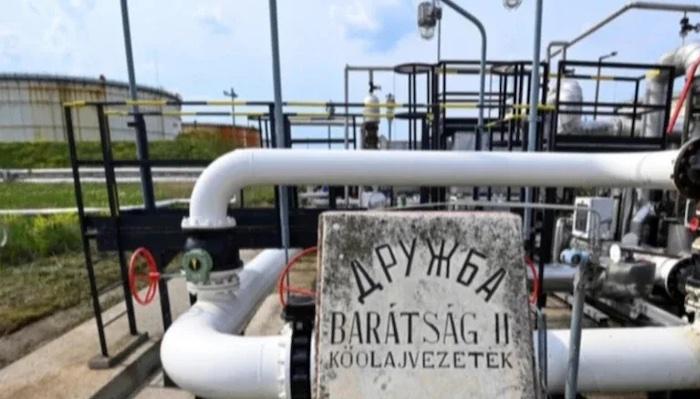
Eurasianet added a different causal thread by reporting that KazTag quoted Kazakhstan Energy Minister Yerlan Akkenzhenov saying the cutoff was “most likely due to the recent attacks on Russian infrastructure,” and it said Russia was claiming “a lack of technical capability” is forcing Moscow to halt Kazakh shipments via Druzba. The same El País report placed the decision “amid an energy shock caused by the closure of the Strait of Hormuz,” and it connected that shock to kerosene shortages affecting airlines, including Lufthansa announcing the cancellation of “about 20,000” flights from now until the end of October.
Officials trade assurances and denials
The reporting shows a direct exchange between Russian officials, German authorities, and Kazakhstan’s energy leadership, with each side offering different levels of certainty about the cutoff. Kremlin spokesperson Dmitry Peskov told reporters, “We will try to check it,” and multiple outlets reported that he was unaware of any decision to halt exports, including Ukrinform’s Reuters-sourced account and Arise News’s description of Peskov’s daily conference call. In contrast, Deputy Prime Minister Alexander Novak confirmed the suspension, telling journalists that Kazakh oil would be redirected to “other available logistics routes,” and 1Lurer added that Novak said the Germans had “given up on Russian oil, so they are doing fine.”
On the German side, DW said the German Federal Ministry for Economic Affairs and Energy confirmed the news to DW in a statement and quoted the ministry saying Rosneft Germany “will utilize existing options to ensure security of supply in Germany.” El País reported that Rosneft Deutschland had informed the Federal Network Agency that the Druzhba pipeline will soon stop transporting Kazakh oil to Germany, while also saying the German government explained that no official confirmation had yet been received from Moscow.
Kazakhstan’s Energy Minister Yerlan Akkenzhenov provided another layer, with Eurasianet reporting KazTag quoted him saying the cutoff would mean “zero transit” of Kazakh oil in May via Druzhba to the Russian city of Samara, and with EADaily saying he answered a TASS question about “unofficial sources” and “There have been no official statements from the Russian side so far.” EADaily also quoted Akkenzhenov’s claim that “Most likely, this is due to the recent strikes on the Russian infrastructure,” and it said Kazakhstan plans to redistribute the volume of oil supplies to other directions.
Germany’s trusteeship and compliance questions
Beyond the immediate pipeline decision, the sources also describe how Germany’s trusteeship over Rosneft-linked assets and the mechanics of customs oversight complicate the story of what flows into Schwedt. El País said the PCK refinery is 54% owned by German subsidiaries of the state-owned Russian Rosneft, which have been under the German government's fiduciary administration since 2022, and it noted that the facility had not received Russian oil since 2023 when the previous German government decided to do away with crude from that country because of the war. L’Opinione delle Libertà, drawing on an investigation by Süddeutsche Zeitung (Sz), Ndr, and Wdr, argued that customs authorities were ordered to reduce “ritardi” in imports of oil by Rosneft Deutschland GmbH and its subsidiary Pck Raffinerie GmbH, citing an order from the Direzione generale delle dogane di Bonn on 8 September.
That Italian-language report said the order instructed that imports already registered must be delivered “immediatamente” to the two companies and that if difficulties arise, the Direzione generale delle dogane must be informed “immediatamente e con urgenza,” implying that customs “non possono più controllare le consegne di petrolio a Rosneft Deutschland prima che raggiungano la raffineria Pck.” It also stated that the process raised questions about whether Germany was applying the EU oil embargo credibly, quoting Transparency International Germany’s Anna-Maija Mertens calling the instruction “incomprensibile” and “problematica.”
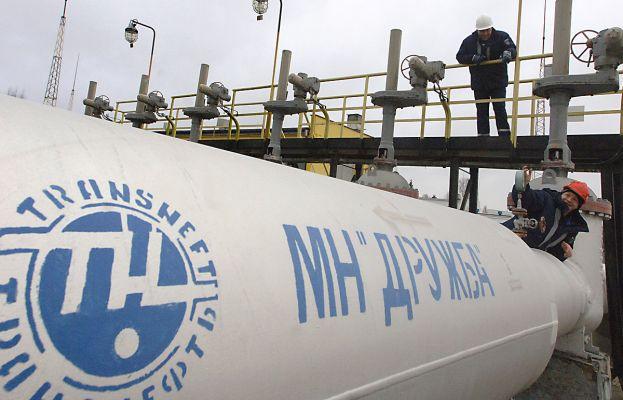
The same report said a risk profile from the customs criminal investigation office stated that when it comes to crude from one of 14 “Paesi amici della Russia,” particular attention should be paid to signs of possible evasion, and it named Kazakhstan as one of those states. In parallel, the Reuters-linked legal framing in Energia Italia NEWS described the PCK refinery case as “un caso legale multinazionale,” noting that the majority stake—54.17%—belonged to Rosneft and that Germany “nationalize[d]” Rosneft’s activities while the consortium of owners was not remodulated.
What happens next for Berlin
The sources converge on the idea that the PCK refinery’s role in Berlin’s fuel supply makes the May 1 cutoff consequential, even as German officials argue that security of supply is not ultimately jeopardized. DW said the refinery supplies Berlin and the surrounding region with more than 90% of their petrol, diesel and heating fuel, while also stating that since 2022 most of its oil comes from ports such as in Rostock and in Poland rather than via Druzhba. DW also quantified the Druzhba exposure, saying about 17% of the almost 12 million metric tons of oil a year processed by the refinery comes via that link, and it described how a complete halt would present a major challenge.
Arise News similarly said fuel from the plant powers 9 out of 10 vehicles in the Berlin and Brandenburg region and that a full halt would remove roughly 17% of the up to 12 million metric tons processed annually by PCK. El País added that kerosene is the most critical fuel for aircraft and said Lufthansa was the first major European airline to announce cancellation of “about 20,000” flights from now until the end of October.

In response to the disruption, El País reported that a spokesman for Rosneft Germany told dpa that the company has to study “how to guarantee, where possible, substitute supplies so that the PCK can continue producing at full capacity,” and that “We are analyzing the repercussions in detail.” Eurasianet added that Kazakh oil shipments could resume in June, provided the “technical issues” can be resolved, while also stating that Russia has not officially confirmed the cutoff.