Yemen · updated 1h ago · 3 min read
Houthis Take Control of Bab Al-Mandeb, Threaten To Completely Close It To American Ships
Houthis control Bab al-Mandeb strait, threatening the Red Sea chokepoint. Houthis warn they will attack US interests if Washington aids Saudi.
32 outlets told this the same way.
2 of 3 outlets skipped it: US will not launch offensive strikes against Houthis.
32outlets compared
Bab al-Mandeb standoff
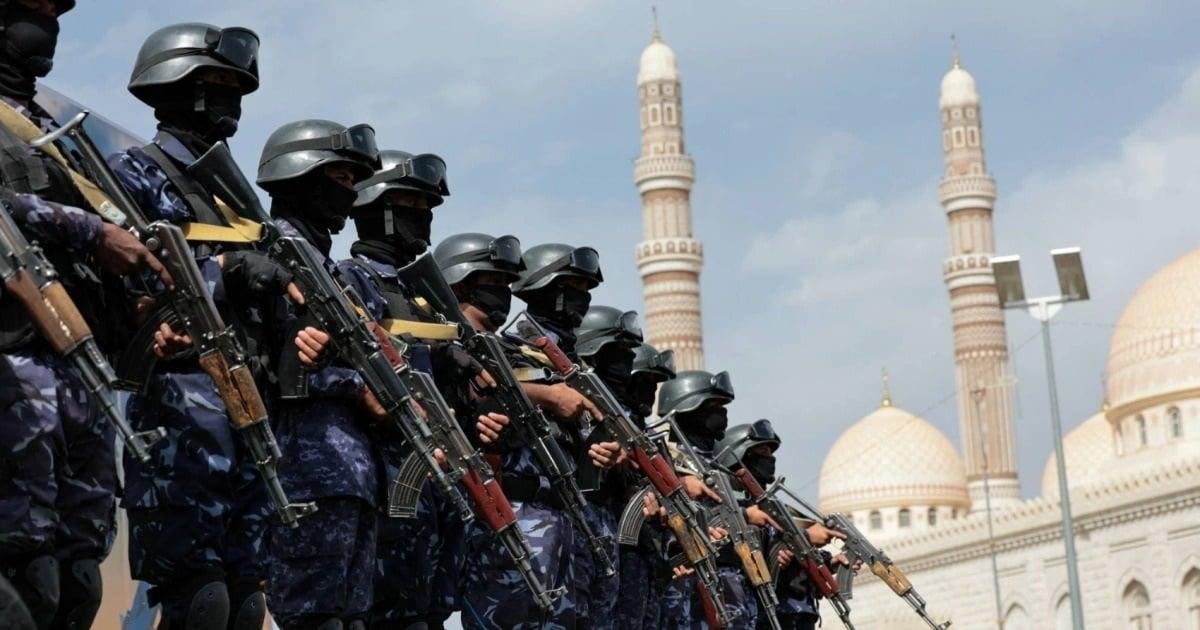
Houthi forces took control of the Bab al-Mandeb strait, the entry to the Red Sea, this month in fighting that expelled Yemen’s Saudi-backed government forces from the Red Sea coast and left hundreds dead.
Military adviser Abed Mohammed al-Thawr warned that if the United States “dares to intervene militarily with its fleets or attempts to take control of Bab al-Mandab, that is a red line for them and for anyone else... we will fight for it,” and he said the Houthis would “completely close Bab al-Mandab to American ships.”

Saudi Crown Prince Mohammed bin Salman asked for help from U.S. President Donald Trump to combat the Houthis, and the Yemeni government also made the same request, according to U.S. media reports and a well-informed source.
The Houthis said Saudi Arabia has carried out hundreds of attacks in Yemen since fighting resumed in July, effectively ending a four-year truce, while the United Nations said on Tuesday that displaced people could rise from more than 130,000 to more than 230,000 in the coming months.
Abed Mohammed al-Thawr denied having received orders from Iran, but he said both countries are “one alliance and one body,” adding, “Iran is a friendly country, an ally and a brother to us, but it does not give us orders.”
Airstrikes and competing death tolls
The Houthi-run Health Ministry said Saudi airstrikes killed or wounded 24 civilians in the past 24 hours, and Saudi authorities did not immediately comment on the reported civilian deaths. Al-Masirah TV channel, cited by Middle East Eye, said Saudi air strikes killed 10 people and left 14 others wounded in Yemen’s Taiz and al-Jawf governorates over the past 24 hours, with “Eight civilians were killed and 11 others wounded in Taiz, while two civilians were killed and three others wounded in al-Jawf.” Mehr News Agency reported that Yahya Saree, the spokesman for the Yemeni Armed Forces, said the Saudi enemy carried out 52 air strikes using F-15 and Typhoon fighter jets launched from the Khamis Mushait and Taif airbases, alongside missile attacks launched from Jizan.
Mehr News Agency also said Saree put the total at 988 missile and air strikes since the escalation of hostilities, and teleSUR said a deadly wave of violence since last Sunday left an initial toll of at least 150 people dead amid intense aerial bombardments by the Saudi-led coalition. The conflict’s toll also appeared in Yemen’s Health Ministry figures under the Sana’a government, which teleSUR and Tercera Información both tied to deaths and injuries in Taiz and Al-Jawf, while Tercera Información quoted the ministry saying the “massacres committed by the Saudi aggression against civilians represent a flagrant violation of international humanitarian law.”

Displacement and escalation risks
The United Nations warned that internal displacement inside Yemen could swell to more than 230,000, and it said renewed fighting could drive 10,000 across the Red Sea to Djibouti. The Guardian said as many as 169 people were reportedly killed in Yemen in the last three days as Iran-aligned Houthis battled Saudi-backed government forces for control of strategic heights on the Red Sea coast, while thousands fled the violence. The Guardian also reported that the clashes have compounded an already dire humanitarian crisis, where about 22 million people need humanitarian assistance and 5.2 million people are already internally displaced.
Babar Baloch, a UN refugee agency spokesperson, told reporters in Geneva that displacement inside Yemen could rise to 230,000 people and more than 10,000 could flee to Djibouti if fighting continued, and he said the agency was “planning for more than 10,000 arrivals in Djibouti.” The Guardian said the Houthis’ push for the Kahboub mountains near the Red Sea coast could further cut off Aden, the seat of Yemeni government forces, from the western coast, while the Houthis’ control of the heights would give them a strategic vantage point over Red Sea coastal areas.