
Sam Altman’s World Launches World ID Upgrade To Fight Deepfakes And Bots
Key Takeaways
- World ID upgrade unveiled as full-stack proof-of-human infrastructure across apps and AI.
- Verifies real people without exposing personal data to consumer apps, enterprises, and agents.
- Partnerships expanded with Tinder, Zoom, and Docusign.
World ID Upgrade
Sam Altman’s World project unveiled what it called its most significant upgrade yet to World ID at an event in San Francisco, pitching the system as “full-stack proof of human” infrastructure aimed at consumers, enterprises and AI agents.
“Sam Altman’s World project launches major upgrade to fight deepfakes and bots The project is also expanding its partnerships with Tinder, Zoom and Docusign”
The upgrade is explicitly positioned as a response to concerns mounting across the tech industry over bots, deepfakes and AI agents impersonating humans online.

World said its redesigned architecture is intended to improve privacy, security and usability, and it added new features including account-based identity, multi-key support and recovery mechanisms.
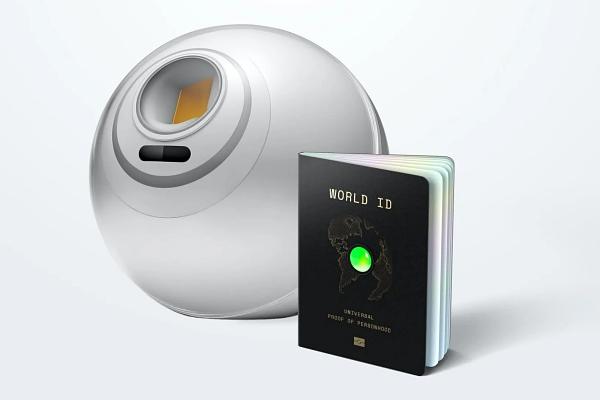
The project continues to rely on its custom-built “Orb” devices, which scan a user’s face and iris to generate a unique cryptographic code representing that individual.
World said the images are deleted after processing and that only anonymized fragments of the code are sent across a distributed network to confirm the person has not previously registered.
The credential, World says, can prove someone is a unique human online without revealing their identity or personal data.
Senior executive Daniel Shorr said at the event, “World 4.0 is powerful, scalable and open,” and Altman said, “In the age of AI, being human will be incredibly valuable and the internet will want to know you're human.”
Partnerships and Tools
Alongside the protocol update, World detailed a slate of integrations aimed at embedding its identity layer across consumer platforms, enterprise workflows and AI-driven services.
On the consumer side, the project said it is expanding partnerships with platforms like Tinder, where users can display a “verified human” badge, and it is rolling out “Concert Kit,” a tool designed to help artists reserve tickets for verified individuals to combat scalper bots.
Gaming and online communities are another focus, with partnerships involving Razer and Mythical Games, while Reddit has signaled it is exploring similar identity tools for bot detection.
Enterprise use cases are central to the rollout as well, with World saying it is working with Zoom on a feature called “Deep Face,” which verifies that a meeting participant is a real human rather than a deepfake.
World also said it is working with Docusign to incorporate proof-of-human checks into digital agreements.
The company is rolling out new tooling, including “AgentKit,” to allow developers to attach credentials that prove there are humans to agents, which World says will be needed for sensitive actions and enable agent-based commerce tied to verified individuals.
World said it is working with firms including Okta, Vercel and Browserbase on these capabilities, aiming to establish a trust layer for automated workflows without requiring personal data.
Sam Altman described the broader ambition at the event, saying, “World ID is on the way to being a real human network for the internet.”
Biometrics and Criticism
World’s upgrade keeps its core proof-of-humanity mechanism tied to biometric scanning through the Orb, a design that the CoinDesk reporting says has drawn criticism from some over its use of iris scanning.
“Community Trust ScoreVerified Russia wants crypto firms to register”
The system requires users to visit an Orb in person, where the device scans their face and iris to generate a unique cryptographic code representing that individual.
World said the images are deleted after processing, and that only anonymized fragments of the code are sent across a distributed network to confirm the person has not previously registered.
CoinDesk also describes the update as a redesigned architecture intended to improve privacy, security and usability, while still relying on the Orb-based credential generation.
The reporting notes that some critics have flagged the use of biometric scanning via the Orb as a controversial aspect of the system.
In the same coverage, World’s senior executive Daniel Shorr framed the upgrade as a scalable and open system, saying, “World 4.0 is powerful, scalable and open.”
The company also introduced a dedicated World ID app, currently in beta, to allow users to manage credentials and authenticate across platforms.
CoinDesk says the app reflects a broader ambition to make proof-of-human identity as seamless as logging into a social media account.
Russia’s Crypto Registry Bill
A separate technology-and-regulation thread in the provided reporting focuses on Russia’s push to require crypto service providers to register with the Bank of Russia or face criminal penalties.
The Currency analytics piece says a new bill introduced in Russia demands that anyone offering crypto services—“individuals, companies, platforms”—must formally sign up with the Bank of Russia.
It states that the proposal lays out fines and prison time for those who don’t comply, and it emphasizes that the bill “hasn’t passed yet” while already drawing attention from crypto operators across Russia.
The reporting says no one from the government has commented publicly on the specifics, leaving the industry to guess at what compliance will actually look like.
It describes the Bank of Russia as a gatekeeper that would decide who gets to operate legally and who doesn’t, and it says registration isn’t optional.
The piece also notes that the government didn’t specify amounts or sentence lengths, adding uncertainty for providers trying to understand the risk.
In its framing of enforcement, the reporting says the bill doesn’t answer questions about how authorities would identify unregistered providers or what triggers an investigation.
It also says the proposal still needs legislative approval and that the process could take months, with changes possible before a final version is adopted.
Compliance Uncertainty and Stakes
The Russia crypto-registration reporting portrays compliance uncertainty as the hardest part for service providers because registration requirements are described as “largely undefined.”
“Sam Altman’s World project launches major upgrade to fight deepfakes and bots The project is also expanding its partnerships with Tinder, Zoom and Docusign”
It says the legislation targets anyone providing crypto services in Russia, describing a broad category that could include exchanges, wallet providers, payment processors and possibly peer-to-peer platforms.
The piece says the Bank of Russia would become the gatekeeper, deciding who gets to operate legally and who doesn’t, while enforcement remains unclear about how unregistered providers would be identified and what would trigger investigations.
It adds that officials haven’t filled in the gaps, leaving operators in “wait-and-see mode.”
The reporting also highlights that penalties create different kinds of risk: fines can be budgeted, but prison time creates personal liability for executives and operators.
It states that the threat of imprisonment could push some providers out of the Russian market entirely, even before the bill becomes law.
The piece further says international crypto firms operating in Russia face a dilemma, because complying could mean submitting to Russian regulatory oversight and potentially sharing user data.
It concludes that the bill’s introduction signals intent, but without implementation details, no one knows exactly what’s coming, and service providers can’t prepare for a registration process that hasn’t been detailed.
More on Technology and Science

Blue Origin Reuses New Glenn Booster for First Time on NG-3 From Cape Canaveral
12 sources compared

Austria Police Find Rat Poison in HiPP Baby Food Jar, Triggering Recall at SPAR
12 sources compared

Trump Signs Executive Order To Fast-Track Psychedelic Drug Research, Including Ibogaine
52 sources compared
Sam Altman’s World Expands Proof-Of-Human Verification With Tinder, Zoom, and Docusign
15 sources compared