USA · updated 1h ago · 2 min read
Sanders, Ocasio-Cortez, and Merkley Unveil Ban Flock Act To Bar Federal ALPR Use
Sanders, Ocasio-Cortez, and Merkley unveil Ban Flock Act to bar federal use of ALPRs. Bill would prohibit federal agencies from using ALPRs and restrict funding for local programs.
Whether the bill text singles out Flock or covers all ALPRs.
11 of 12 outlets skipped it: exceptions include toll collection and future Congress-approved uses.
11outlets compared
Same story, two versions
tap a side to read it in full
TechCrunch
“Despite its title, the bill doesn’t call out Flock in the text and covers any and all ALPR systems.”Read the original ↗
VitalLaw
“The Ban Flock Act (H.R.10691, 119th Cong. (2026)), which is named after Flock Safety, a leading ALPR vendor, was introduced in the House”Read the original ↗
This affects perceived scope, from vendor-focused to technology-wide regulation.
Ban Flock Act unveiled
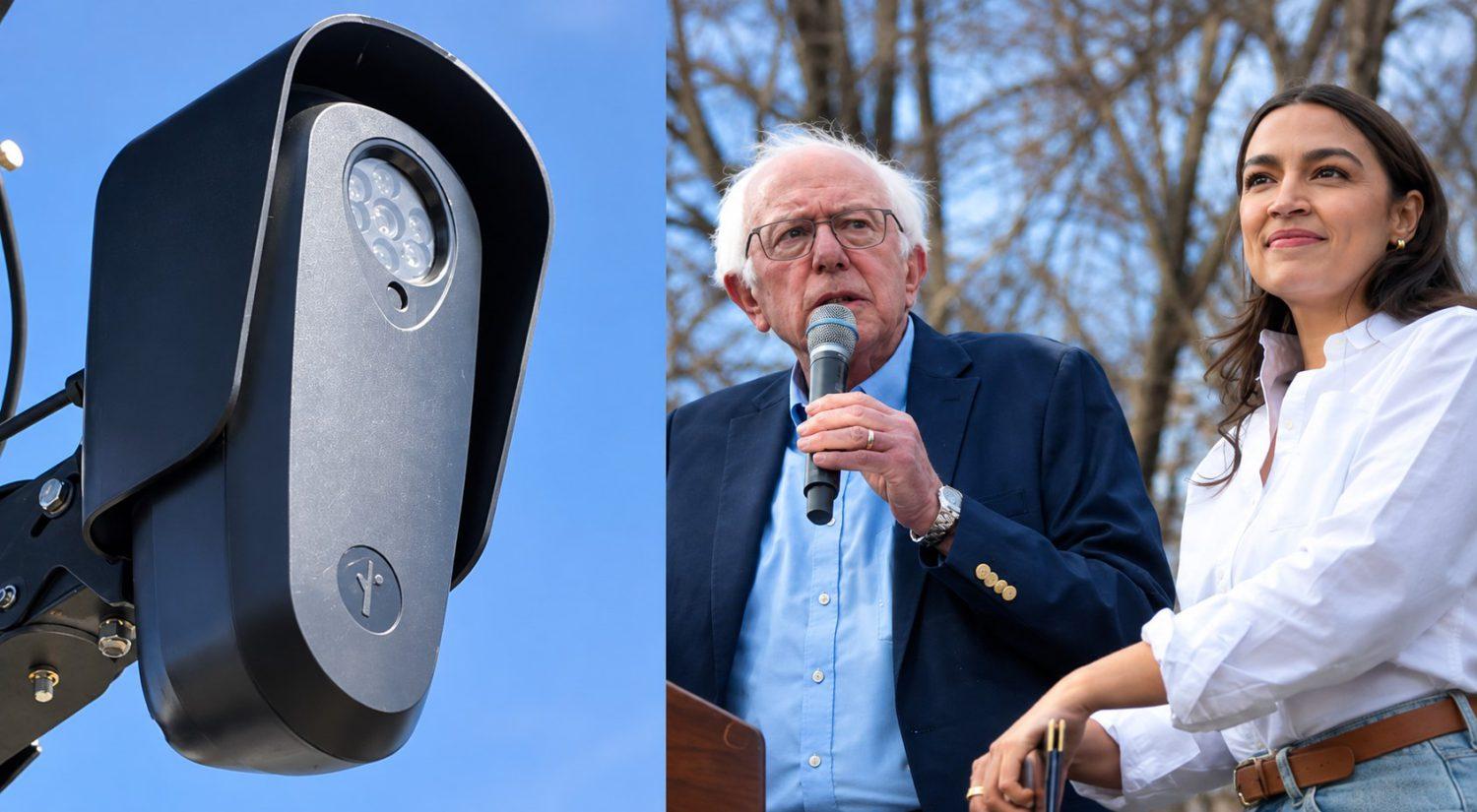
Senator Bernie Sanders, Senator Jeff Merkley, and Rep. Alexandria Ocasio-Cortez unveiled the Ban Flock Act on Friday to bar federal agencies from using automatic license plate readers and from accessing the information those readers gather.
The Ban Flock Act would also halt federal grant funding to state and local governments that use ALPRs and would allow Americans to sue the federal government for violation of their rights through the use of automatic license plate readers.

Rep. Alexandria Ocasio-Cortez said, "AI-powered cameras are keeping track of our every move and weaponizing this data against working people to make record profits."
Sen. Bernie Sanders warned that the United States is "moving toward a surveillance state where a handful of giant companies make huge profits by giving the government, by selling to the government, the power to track our every move."
What the bill would do
The Ban Flock Act would prohibit "the head of any Federal agency and any Federal official, in an official capacity, and any person acting on behalf of the Federal Government" from acquiring or using an ALPR or any "captured plate data" derived from an automatic license plate reader operated by another entity. The legislation would allow Congress, through additional legislation, to authorize federal agencies to use ALPRs with proper data privacy safeguards, including policies to delete images after 48 hours.
The bill would also allow the use of ALPRs for the collection of highway tolls, and it would let individuals and state attorneys general sue federal agencies that violate the legislation's provisions. The bill text would require states that do not enact similar bans to lose federal funding under the legislation, while it would still permit Congress to authorize limited federal ALPR use with safeguards.
Broader fight over cameras
The Ban Flock Act entered a Congress already debating other approaches, including Rep. Thomas Massie's Flock-Off Act and Sen. Josh Hawley's Stop Flock Abuse Act.
Rep. Thomas Massie introduced the Flock-Off Act on September 2, 2026, and the bill would block federal funds from purchasing, installing, maintaining, or upgrading both ALPRs and biometric surveillance cameras, with systems that received federal funding required to go offline within 180 days.
Sen. Josh Hawley’s Stop Flock Abuse Act targeted the technology’s operation rather than its funding, and Hawley’s office described provisions including a 10-day data deletion requirement, a prohibition on facial recognition, and mandatory search logs.
Flock Safety’s network scale also featured in the debate, with Hawley’s office saying Flock Safety claims to operate more than 120,000 cameras across 49 states and to process more than 20 billion vehicle scans each month.