Technology and Science24 March, 20267 min read
Santa Fe Jury Orders Meta To Pay $375 Million For Concealing Child Exploitation Risks
New Mexico jury orders Meta to pay $375 million for child safety violations. Verdict states Meta concealed risks of child exploitation on its platforms.

Jury Verdict in Santa Fe
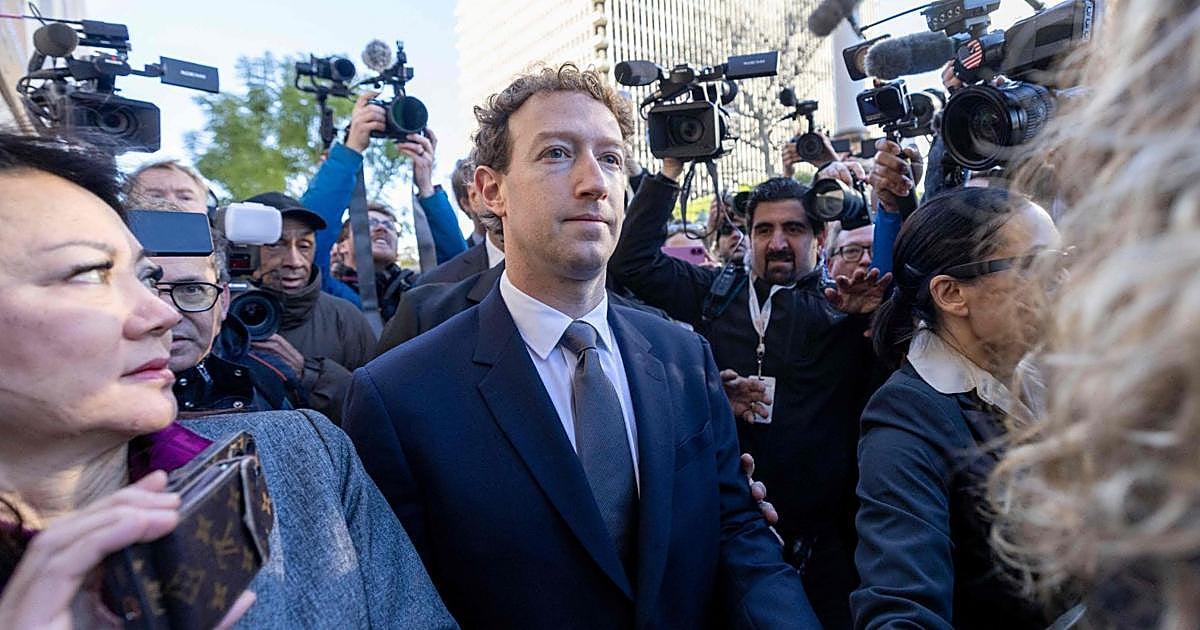
A Santa Fe, New Mexico jury ordered Meta to pay $375 million in damages after a seven-week trial concluded that the company that owns Facebook and Instagram “deliberately concealed information about serious deficiencies in its platforms and business practices that facilitated the sexual exploitation of minors.” The verdict found that Meta violated the state's Unfair Practices Act by failing to transparently disclose “the dangers to which children and adolescents who use its social networks are exposed,” according to RTVE.es. The case relied heavily on an undercover operation described by RTVE.es, in which investigators created fake profiles of minors on Instagram and Facebook that “in a very short time, began receiving contact from adults with explicit sexual content.”
Prosecutors argued that the results were “irrefutable evidence of 'how easily vulnerable users could be located by potential predators' due to the company's safeguarding system failures,” RTVE.es reported. The BBC similarly framed the outcome as a landmark finding that Meta and Google intentionally built addictive social media platforms that harmed mental health, but in the New Mexico matter it also emphasized the $375 million civil penalties and the jury’s determination that Meta “knowingly harmed children’s mental health and concealed what it knew about child sexual exploitation on its platforms,” as described by AP News. Meta said it would appeal, and RTVE.es reported that a Meta spokesperson told local media the company “disagrees with the verdict” and confirmed it will appeal the order requiring it to pay the multimillion-dollar damages to the state.

Meta’s Threat to Withdraw
As the case moved toward a remedies phase, Meta raised the possibility of shutting down access to its platforms in New Mexico, framing the state’s demands as impossible. The Guardian reported that Meta threatened to block access to Instagram, Facebook and WhatsApp in New Mexico, describing the move as “an unprecedented move in its home country,” and said the ultimatum came in a court filing this week after the company was found liable and fined $375m. The Guardian also quoted Meta’s filing: “Many of the requests are technologically or practically infeasible and would essentially force Meta to build entirely separate apps for use only in New Mexico,” and added that “Therefore, granting onerous relief could compel Meta to entirely withdraw Facebook, Instagram and WhatsApp from the state as the only feasible means of compliance.”
AP News described the same escalation as Meta “raising the prospect of shutting down its social media services in New Mexico” in response to prosecutors asking for fundamental changes, including Instagram, to protect children’s mental health and safety. In a court filing unsealed Thursday, AP News reported Meta said a proposed requirement for 99% accuracy in verifying that child users are at least 13 years old would effectively require the company to shut down services: “As a practical matter, this requirement effectively requires Meta to shut down its services — for all users in the state — or else comply with impossible obligations.” Fox Business similarly said Meta’s legal team argued New Mexico’s requests were so burdensome that “if implemented it might force Meta to withdraw its apps entirely from the State of New Mexico as an alternative way of complying with the injunction.”

Torrez Calls It a PR Stunt
New Mexico Attorney General Raúl Torrez dismissed Meta’s withdrawal threat as a publicity move and said his office would continue seeking court-ordered changes for underage users.
Source New Mexico reported that Torrez “dismissed Meta’s warning as a “PR stunt” and said the office will continue to pursue judicial efforts to have the company change how it operates for underage users,” adding that Torrez said Meta “has a choice, obviously, and the responsible choice and the ethical choice, and frankly, the smart business move, is for them to just go ahead and start doing the hard work of making this a safer product.”
Fox Business quoted Torrez saying, “Meta is showing the world how little it cares about child safety,” and expanded that “This is not about technological capability. Meta simply refuses to place the safety of children ahead of engagement, advertising revenue, and profit,” in a statement that directly rebutted Meta’s claims of infeasibility.
The Guardian likewise quoted Torrez calling the threat to withdraw a “PR stunt,” and repeated his argument that “We know Meta has the ability to make these changes,” while accusing the company of rewriting rules and redesigning products to preserve market access.
AP News included Torrez’s response to Meta’s impracticality argument, quoting him saying “I highly doubt that they’re going to be willing and able to turn the lights off for their product all over the country,” and describing his reference to “before times” when “we didn’t have infinite scroll and we didn’t have auto-play.”
MS NOW added that Torrez disputed Meta’s filing by saying the company “is showing the world how little it cares about child safety,” and stated, “For years the company has rewritten its own rules, redesigned its products, and even bent to the demands of dictators to preserve market access,” while insisting, “This is not about technological capability.”
Remedies Sought in the Second Phase
The remedies phase of New Mexico’s case is expected to determine what actions Meta must take after the $375 million verdict, and multiple outlets described the specific reforms prosecutors are seeking. Fox Business said New Mexico wants Meta to meet a 99% accuracy threshold in verifying that children on its platform are at least 13 years old, and it reported Meta pushed back by arguing the requirement would require it to “comply with impossible obligations.” Fox Business also listed additional remedies New Mexico is seeking, including “safer recommendation algorithms that don't prioritize engagement over child well-being,” restrictions on “end-to-end encryption for minors,” “prominent warning labels about the platform's risks,” “permanent bans for adults engaging in or facilitating the exploitation of children,” and “an independent oversight regime through a court-appointed child safety monitor.”
The Guardian similarly described the remedies phase as a bench trial scheduled to begin on 4 May, and said the New Mexico department of justice will argue for court-ordered reforms including “effective age verification to prevent adults from posing as minors,” “safer recommendation algorithms that do not prioritize engagement over children’s wellbeing,” and “restrictions on end-to-end encryption for minors to prevent predators from operating in secrecy.” AP News added that prosecutors are asking for changes to child accounts aimed at “reining in addictive features,” improving age verification, and preventing child sexual exploitation through “default privacy settings and closer oversight,” while also noting that Meta executives emphasized the company “continuously improves child safety and addresses compulsive social media use.” Source New Mexico provided additional detail on the bench trial’s scope, saying the NMDOJ will argue Meta’s activities constitute a public nuisance and ask the court for financial penalties and to “fundamentally restructure how Meta operates for children,” with modifications that include banning “infinite scroll, autoplay and push notifications during school and sleep hours” and capping access to “90 hours per month.”
Wider Legal and Global Echoes
The New Mexico case is being positioned by multiple outlets as part of a broader wave of litigation and policy pressure on social media companies, with parallels to other trials and international approaches. RTVE.es said the New Mexico case comes “amid growing judicial pressure on big tech,” and it noted that “a federal jury in California is deliberating in a similar case against Meta and YouTube” to determine whether companies should be held liable for damages related to child safety on their platforms. AP News described the New Mexico case as “the first to reach trial among more that 40 state attorneys general who have filed suit against the company,” and it said most are pursuing remedies in U.S. federal court.
The Guardian added that the second phase is expected to last three weeks and described how the lawsuit followed a Guardian investigation published in April 2024 that found Facebook and Instagram had become marketplaces for child sex trafficking, which was cited multiple times in the complaint. Amnesty International, in Spanish-language reporting, framed the verdict in the U.S. as a “momento histórico” and quoted Erika Guevara Rosas saying the decision “condenatorio representa un momento histórico” and that companies “han integrado deliberadamente en sus plataformas unas características como el desplazamiento infinito, la reproducción automática y las persistentes notificaciones creadas para ‘enganchar’ a los usuarios y usuarias jóvenes.” BBC coverage of the Los Angeles case described a jury award of “US$6 million in total — US$3 million in compensatory damages and US$3 million in punitive damages” to Kaley, and it reported that the ruling will likely have implications for “hundreds of similar cases currently pending in courts across the United States.”