Full story
Mecca pact amid Iran war
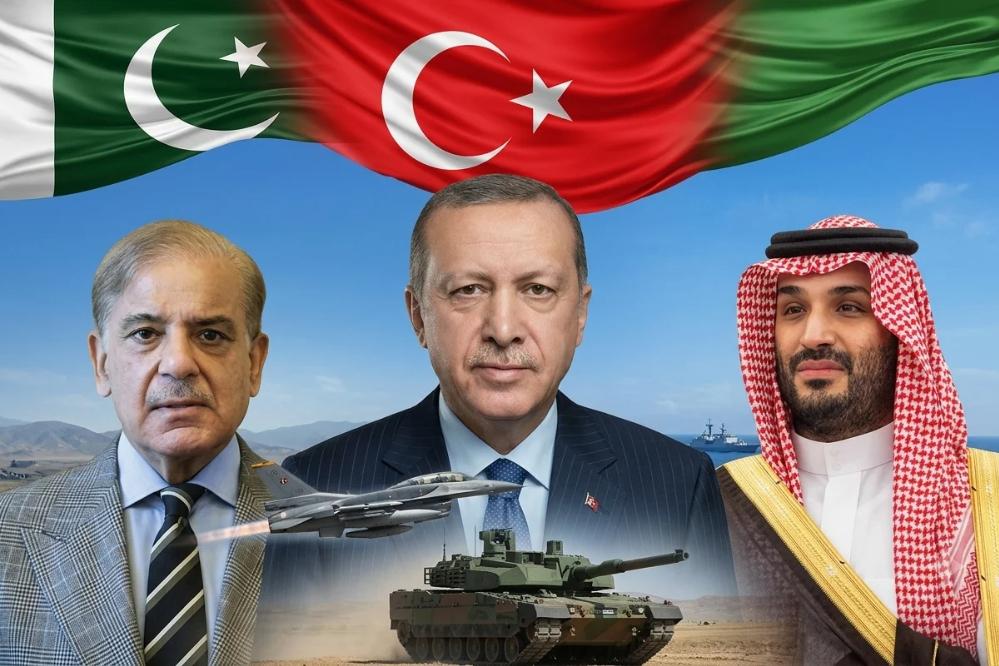
Saudi Arabia, Turkey and Pakistan signed the “Mecca Joint Defense Agreement” in Mecca on Friday, committing the three states to collective defense in the context of the war between the United States and Iran.
“stipulates that an attack against any of them “shall be regarded as attack on them all.””
The agreement stipulates that an armed attack against any of the three would be regarded as an attack on all, and it was described as intended “to strengthen collective deterrence against any act of aggression.”

Reuters reported that a U.S. official said there was “progress between Oman and Iran on the strait, and we expect a deal soon,” linking the broader regional security picture to the Strait of Hormuz and oil shipping disruptions.
CNN said the pact could draw Pakistan and Turkey into a war they have kept at arm’s length, while also noting that the statement did not give specifics on the commitments each had accepted.
The Guardian framed the first test of the tripartite pact as potentially coming in Yemen, where it said the Houthis killed at least 58 Yemeni government troops in missile and drone attacks on Thursday and injured 11 civilians in southern Saudi Arabia.
Tehran and Riyadh reactions
Iranian reaction to the pact included criticism from Ebrahim Rezaei, a member of the Iranian parliament’s National Security and Foreign Policy Committee, who said on X, “The Saudis should understand that a paper agreement with Turkey and Pakistan will not bring them security.”
Euronews reported that Saudi Arabia said the agreement “does not represent any orientation toward building a military axis or sectarian/religious bloc,” and it also said it was not linked to nuclear endeavours or an arms race.

NewsNation described the pact as a response to regional escalation that brought Iranian missile fire onto Gulf oil exporters, and it said an attack blamed on Yemen’s Iran-backed Houthis wounded 11 civilians in southern Saudi Arabia.
The Guardian said some Iranians considered the new alliance a direct threat to Tehran, quoting Hesamoddin Ashna saying, “The trilateral agreement alters the rules of the peripheral war.”
In the same reporting, the Guardian said a Saudi spokesperson responded to the Houthi attacks by saying it did not “seek escalation but we will not allow the current balance of power on the ground to be changed” while Maj Gen Turki al-Maliki said the coalition would continue taking all necessary measures to protect civilians.
What comes next
The Reuters report tied the defense pact to a wider effort to manage regional chokepoints, saying the U.S. anticipated an agreement between Iran and Oman so that normal oil traffic could resume and the United States would lift the blockade of Iranian ports.
““Once the deal is announced to restore commercial shipping without impediments, the United States will lift the blockade of Iranian ports.””
Reuters also said that before the U.S. and Israel launched the war on Iran on February 28, about one out of every five barrels of oil consumed worldwide transited the strait, and it said Iran justified charging a toll on oil tankers and firing on ships that attempt to cross without permission.
In parallel, Reuters reported that Abu Dhabi National Oil Company said on Friday that 15 of its vessels had been struck while transiting the Strait of Hormuz since the start of the conflict, killing one crew member and wounding 20 others.
The Guardian described the Houthi campaign as continuing despite Saudi Arabia’s 10-nation naval coalition meant to protect commercial shipping from Houthi attacks in the Red Sea and the Bab el-Mandeb strait, and it said there was “no immediate sign that the naval coalition is deterring the Houthis.”
Al-Monitor added a diplomatic and symbolic layer to the pact by reporting that Turkish President Recep Tayyip Erdogan, Saudi Crown Prince Mohammed bin Salman and Pakistani Prime Minister Shehbaz Sharif signed the document in Mecca on Friday, and it quoted Saudi deputy minister for public diplomacy Rayed Krimly stressing the agreement did not “represent an effort to establish a military axis or a sectarian bloc.”