Technology and Science19 March, 20262 min read
Scientists Find All Five Nucleobases on Asteroid Ryugu
This article is an automated aggregation of coverage from news outlets. Our editorials offer in-depth analysis curated by the NewsCord team.
Ryugu samples contain all five nucleobases: A, C, G, T, and U. Findings support extraterrestrial origin of life's building blocks and suggest common occurrence.

Mission Discovery
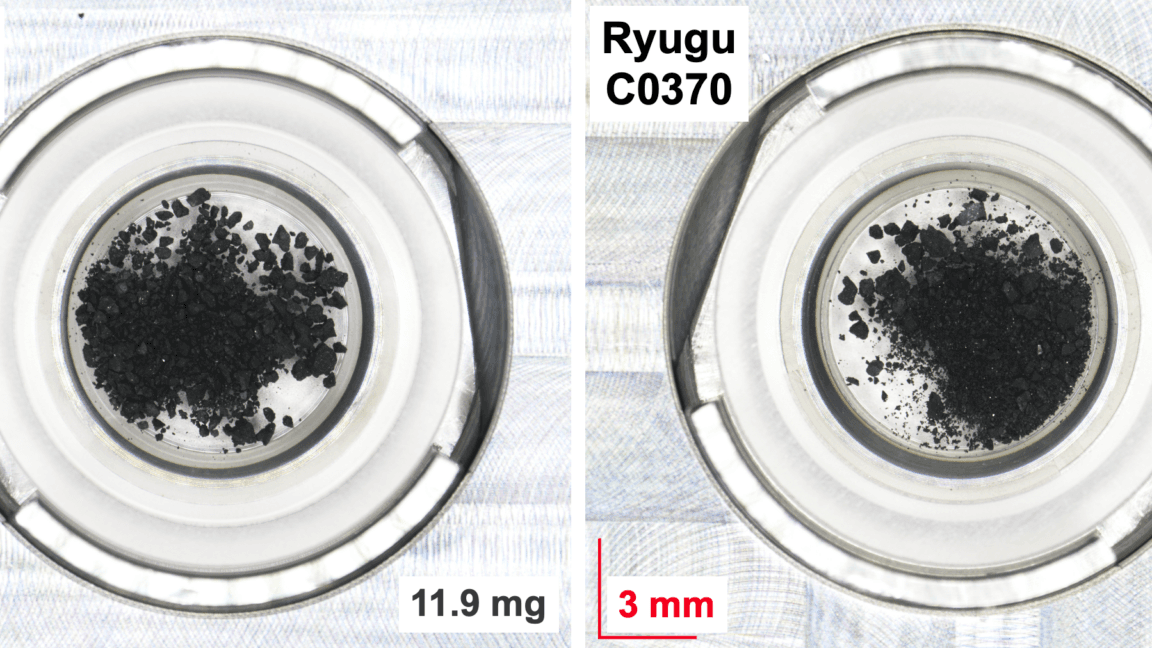
An international team of scientists has discovered all five nucleobases of DNA and RNA in samples collected from asteroid Ryugu. This discovery comes from JAXA's Hayabusa2 mission, which launched its unmanned spacecraft in 2014. The spacecraft successfully landed on Ryugu in 2019 and collected dust samples from the asteroid.
“An international team of scientists has detected the five nucleobases of DNA (adenine, guanine, cytosine, thymine, and uracil) in samples from the asteroid Ryugu, a 900-meter-wide body shaped like a spinning top that travels through our solar system.”
The samples were returned to Earth in 2020 and weighed only 5.4 grams each. Despite their small size, these precious samples contained all five nitrogenous bases essential for life. The samples also contained 15 amino acids, the building blocks of proteins.
Molecular Significance
The detection of all five nucleobases—adenine, guanine, cytosine, thymine, and uracil—represents a significant breakthrough in astrobiology. Scientists emphasize that this finding does not indicate the presence of life on Ryugu itself. Instead, it demonstrates that primitive asteroids can produce and preserve molecules crucial for prebiotic chemistry.
The asteroid acts as a natural vault of life's ingredients rather than a laboratory of living organisms. This discovery shows that complex molecular structures can form in environments completely alien to life.

It challenges previous assumptions that organisms must exist for these molecules to appear. Instead, these molecules can be generated from chemical processes in space itself.
Comparative Analysis
Comparative analysis between Ryugu, Bennu, and meteorites like Murchison has revealed fascinating patterns about nucleobase distribution. While all contain essential nucleobases, their proportions vary significantly. These variations reflect the particular chemical conditions of each formation environment.
“Comparing purines (adenine and guanine) and pyrimidines (cytosine, thymine, and uracil) among Ryugu, Bennu, and these meteorites, scientists found that the concentration of ammonia could influence their formation, opening new questions about the chemistry of the early Solar System.”
Ryugu shows a remarkable balance between purines and pyrimidines. Other materials show distinct predominance of one group over the other. The Murchison meteorite is richer in purines, while Bennu shows greater concentration of pyrimidines.
These differences reflect distinct chemical and evolutionary histories of parent bodies. Environmental factors like ammonia directly influence molecular formation patterns.
Origins of Life
The discovery of all five nucleobases on Ryugu supports the hypothesis that life's ingredients could have arrived from space. This finding reinforces that asteroids could have seeded Earth with components necessary for life emergence. Ryugu and Bennu are both carbonaceous asteroids, making up 75% of all asteroids.
They could originate from the same primordial body that fractured during early Earth formation. This abundance of prebiotic molecules across multiple celestial bodies suggests life's foundations may be widespread.

Several potential carriers could have delivered these materials to Earth through asteroid impacts. This challenges the notion that life's building blocks formed exclusively on Earth.
Chemical Processes
The detection of nucleobases on Ryugu provides insights into chemical processes in the early Solar System. Environmental factors like ammonia directly influence molecular formation and preservation. Different nucleobase proportions develop based on specific chemical environments.
“Comparing purines (adenine and guanine) and pyrimidines (cytosine, thymine, and uracil) among Ryugu, Bennu, and these meteorites, scientists found that the concentration of ammonia could influence their formation, opening new questions about the chemistry of the early Solar System.”
This suggests primordial solar system chemistry was more complex than previously understood. The molecules have been preserved for billions years within asteroids. This demonstrates their remarkable stability over cosmic timescales.
Scientists gain a direct window into early solar system chemical conditions. This offers clues about life's origins on Earth and possibly elsewhere.