Full story
Repatriation in Cape Town
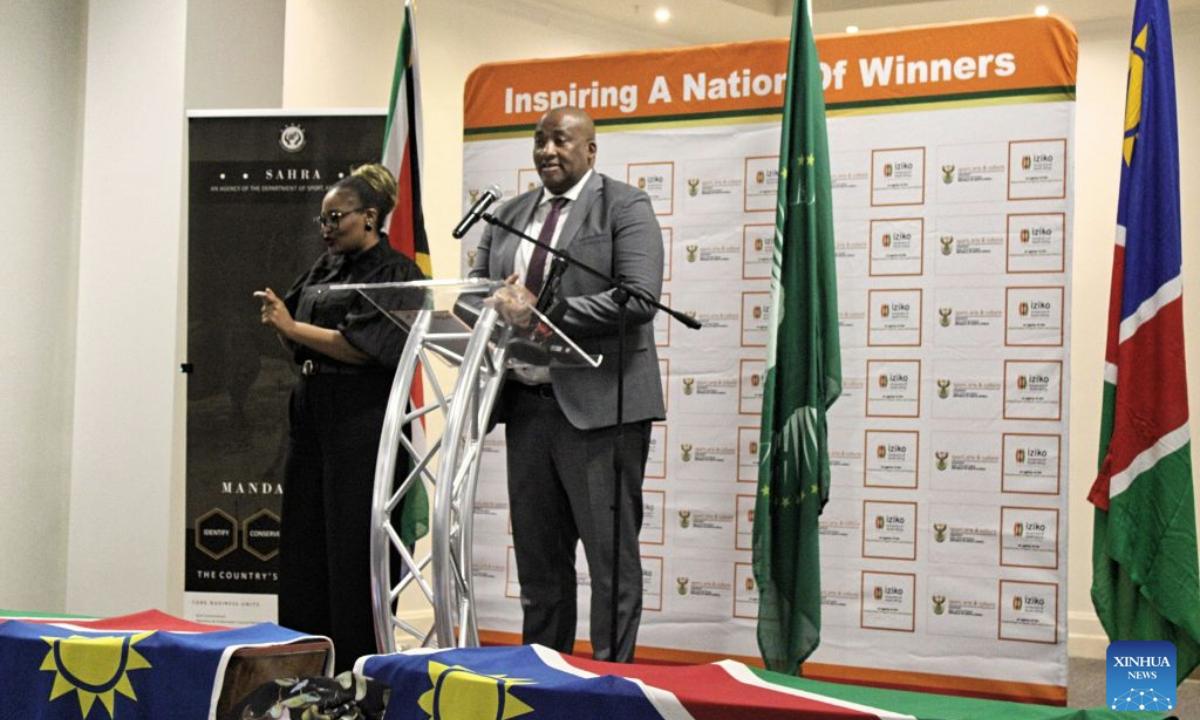
South Africa returned ancestral remains and the mortal remains of two Namibian political prisoners during a repatriation ceremony in Cape Town at the Iziko South African Museum, the country’s legislative capital, on Aug. 19, 2026.
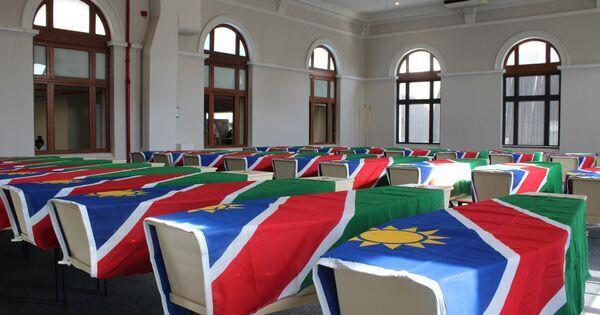
“Two rooms were filled with ivory-colored coffins, side by side”
The Global Times said two rooms were filled with ivory-colored coffins, each draped with the Namibian flag, and that the mortal remains of 84 indigenous people had been held at Iziko for more than 100 years.
The ceremony included coffins for Festus Nehale, who died in 1971, and Simon Petrus Nileng, who died in 1974, both of whom were imprisoned on Robben Island and buried in Cape Town.
Global Times chairperson of the Council of Iziko Museums of South Africa Marvin Mdhluli said the remains “entered the South African Museums as objects of race-based pseudo-scientific research,” and described the purpose as portraying indigenous communities as having inferior attributes and status.
EWN said the remains of 86 Namibians, including two freedom fighters, were being repatriated home after a decade-long search for their graves, with the bulk unethically collected more than 100 years ago.
Voices at the ceremony
EWN reported that the families of Festus Nehale and Simon Niilenge stood emotionally in front of their caskets during a ceremony held by some of Namibia’s traditional leaders at the repatriation event.
Sport, Arts and Culture Minister Gayton McKenzie said he was tasked by President Cyril Ramaphosa to expedite the process of repatriating struggle heroes and remains, adding, “They’ve never been free, but today they’re going home.”
Global Times quoted McKenzie saying, “By bringing these political heroes and ancestors home, representing the Ovambo, Himba, San, Nama, Damara and Herero peoples, we restore their dignity, identity and rightful place in their homeland,” during the Cape Town handover.
EWN said head of the Namibian government delegation Manfred Gaeb expressed gratitude, describing the return as “It brings closure to a chapter that was opened from childhood.”
Global Times also said Namibia’s Minister of Education, Innovation, Youth, Sports, Arts and Culture Sanet Steenkamp stated the liberation heroes will be reburied at Namibia’s Heroes' Acre on Aug. 24.
Next steps and what’s at risk
EWN said the remains will leave South Africa on Friday, with the two struggle heroes to be buried at Namibia’s Heroes' Acre on August 24.
“The remains will leave South Africa on Friday”
Global Times said the handover included grave goods and body casts, including beads, ostrich eggs and jewelry with lineage to Namibia, as members of the Namibian delegation bowed before the coffins.
EWN described the remains as having been taken from Namibia as human experiments more than 100 years ago, where skulls and brains were measured against those of other races, and said human experiments were considered part of mainstream science during the colonial period.
EWN reported McKenzie called for access to the Robben Island Museum to be made free for primary school children so they would not forget South Africa’s struggle history.
Global Times framed the repatriation as redress and healing, quoting McKenzie that “For too many years, the remains of our freedom fighters and ancestors were kept far from the land they called home.”