USA30 May, 20263 min read
South Korea and US Hold Talks After Xavier Brunson Calls Korea “Dagger in Asia”
This article is an automated aggregation of coverage from news outlets. Our editorials offer in-depth analysis curated by the NewsCord team.
Seoul and Washington are in talks over Brunson's remarks; Blue House aware. Brunson said the dagger remark explained the operational environment.

Dagger remark sparks talks
South Korea and the United States entered talks after US Forces Korea commander Xavier Brunson described South Korea as “the dagger in the heart of Asia” from China’s east coast, drawing sharp criticism from China.
Seoul’s presidential Blue House said it was “aware of Commander Brunson’s recent series of public remarks” and that Seoul and Washington “have been maintaining communication at various levels regarding all relevant issues”.
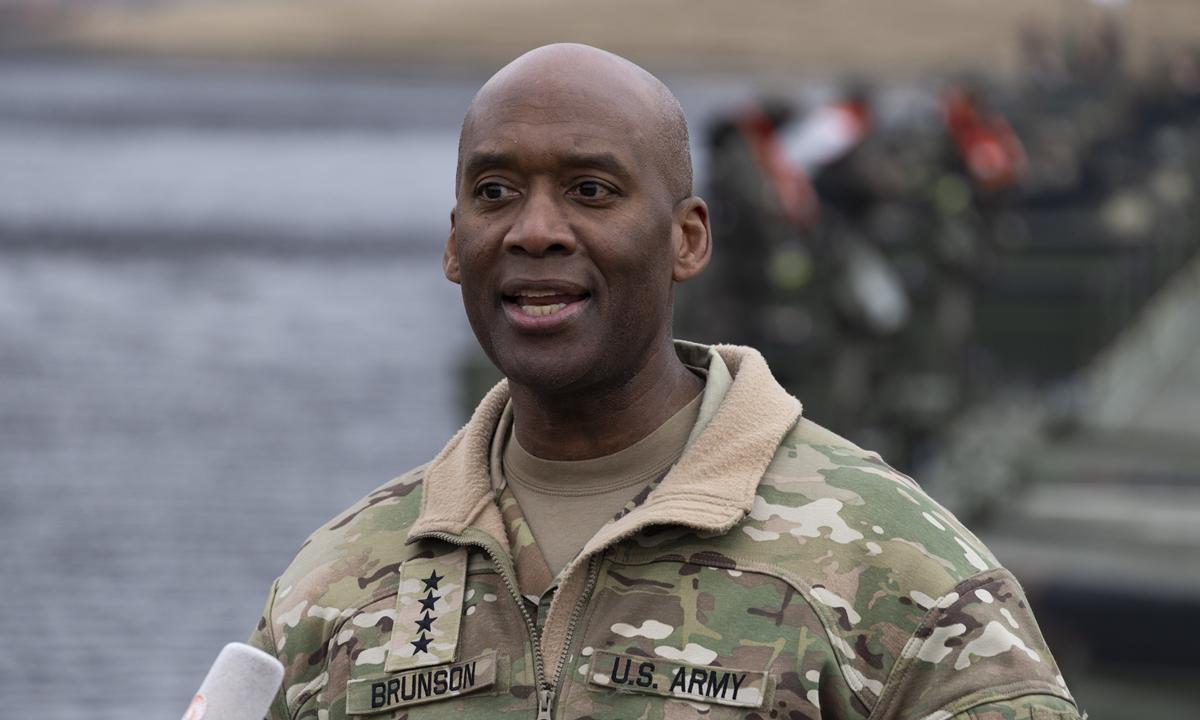
The controversy followed Brunson’s podcast interview hosted by the U.S. Army War College on May 22, where he said, “When they (the Chinese) look out from the east coast of China, what they see is there’s Korea, the dagger in the heart of Asia,” according to a transcript posted on the Strategic Studies Institute of the US Army War College.
The Chinese Embassy in Seoul protested the remarks, saying Brunson had “truly crossed the line,” and asked whether his comments were authorized by Washington.
The dispute also unfolded amid speculation that Washington might seek to expand the role of US Forces Korea in countering China’s growing regional influence, a key ally of North Korea and Russia.
Seoul, China trade accusations
South Korea’s uneasiness was reflected in the way officials conveyed Seoul’s position to Washington through diplomatic and security channels, with National Security Adviser Wi Sung-lac and officials from the Ministry of National Defense and the Ministry of Foreign Affairs involved, according to Cheong Wa Dae.
The Korea Times reported the ruling Democratic Party of Korea criticized Brunson, with Rep. Boo Seung-chan saying the comments “arbitrarily defined Korea’s strategic status, infringed upon the sovereignty of its people and even fueled diplomatic tensions.”
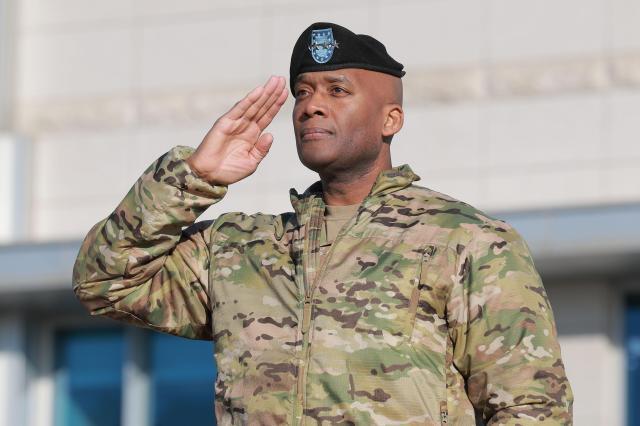
China’s Embassy in Seoul pushed back directly, warning that Brunson’s wording “truly crossed the line” and asking whether his remarks were “rife with hostility and aggression regarding China authorised by Washington?”
Brunson later clarified his intent, telling the Shangri-La Dialogue in Singapore that “What I said was trying to describe the operating environment, because what's incredibly important in being strong and quiet is about being able to describe the environment where we're working,” as the dispute continued.
The Straits Times said South Korea’s presidential office was “unable to confirm the specific details of the discussions held through diplomatic and security channels between South Korea and the United States,” even as it acknowledged ongoing communication.
Operational context and troop presence
Brunson defended the “dagger” language as part of explaining the operational environment, saying during a session at the Asia Security Summit that “What I was trying to tell the students at the War College was about how we change our perspective and think about where we are positioned,” and adding, “You may recall that a Prussian military philosopher in the past said, 'Korea is a dagger aimed at Japan.'”.
The Korea Herald said Seoul’s message to Washington was delivered through diplomatic and security channels, while a Cheong Wa Dae official declined to elaborate on the government’s stance and instead said, “(We) are aware of Commander Brunson's recent public remarks, and there are communications between South Korea and the United States on various pending issues at various levels,” according to the report.
The dispute also intersected with the scale of the alliance posture, as CNA said “About 28,500 US troops are stationed in South Korea to help guard against the nuclear-armed North.”
In Singapore, Brunson also said he was “encouraged by the fact that my president and my secretary went to China. That is tremendous,” linking the controversy to broader US-China engagement.
Aju Press similarly framed Brunson’s clarification as contextual, quoting him saying, “It was in the context of explaining the operational environment we face.”