Technology and Science14 October, 20252 min read
SpaceX Launches Starship’s 11th Test Flight and Successfully Lands Booster in Gulf of Mexico
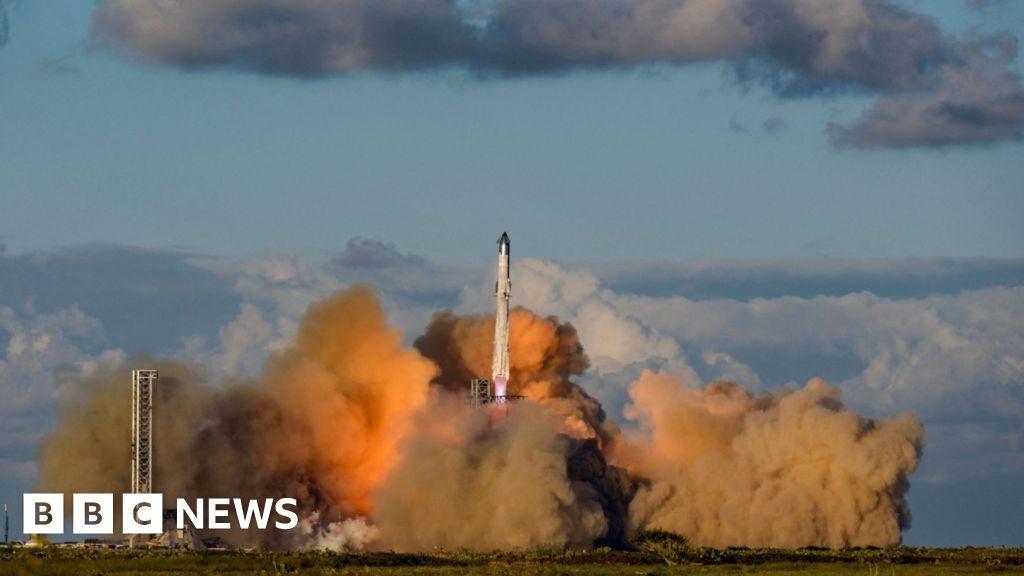
Starship’s 11th test flight lasted over an hour, deploying eight mock Starlink satellites. The Super Heavy booster successfully performed a controlled splashdown in the Gulf of Mexico.
17 outlets told this the same way.
Starship 11th Test Flight
SpaceX launched Starship’s 11th full-scale test from its South Texas/Starbase site. The spacecraft flew “halfway around the world” and deployed eight mock Starlink satellites. The mission concluded with an upper-stage descent over the Indian Ocean and a Super Heavy booster splashdown in the Gulf of Mexico.
“On October 13, 2025, SpaceX successfully launched its massive Starship rocket on its 11th full-scale test flight from Starbase, Texas.”
Multiple outlets noted the mission’s dual payload deployment of dummy satellites and the controlled ocean splashdowns. Asian and local Western sources emphasized both the scope and the outcome of the flight. The mission involved a planned, unrecovered booster splashdown and an unrecovered upper stage after reentry.

Collectively, the reports describe the flight as a significant step in Starship’s test campaign. The test combined orbital-scale flight, payload deployment tests, and improved return maneuvers even without hardware recovery.
Technical Achievements in Spaceflight Test
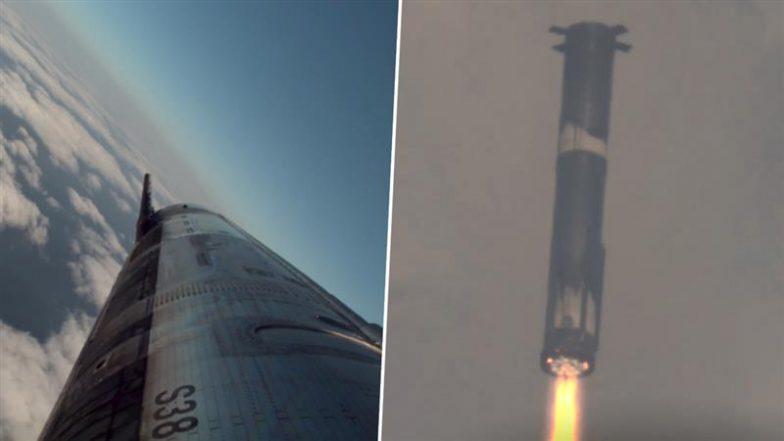
Reports highlight several technical achievements during the mission. The upper stage reignited an engine mid-flight. Key landing maneuvers were successfully executed.
Hot staging was used for stage separation. Advanced banking maneuvers were tested to enable future captures. Outlets also note high suborbital speeds were reached.

Recovery was not expected due to the test configurations. One account points to intentionally altered heat shield tiles to probe failure points.
Another mentions testing new heat shield tiles under intense reentry conditions. Together, these details frame the mission as focused on data collection for reusability and controlled deorbiting.
NASA Artemis Program Coverage
Coverage diverges on timelines and implications for NASA’s Artemis program. Western mainstream outlets describe Starship as critical for a Moon landing by the end of the decade. Other sources cite a more specific 2027 target and caution that delays are possible.
“The flight advances SpaceX’s goal of developing Starship for NASA’s planned 2027 Moon landing mission, where the spacecraft will ferry astronauts between lunar orbit and the surface.”
Some reports add programmatic details, such as refueling depots and cargo runs. These reports frame the flight as strengthening NASA’s position in a space race with China.
Another report quotes praise attributed to a NASA leader for the lunar step forward. This underscores differing emphases between caution and celebration.
Progress in Rocket Reusability
Even without recovery, several sources highlight progress in reusability. The Super Heavy’s controlled splashdown in the Gulf and the upper-stage descent are described as data-gathering steps toward rapid reuse and controlled deorbiting.
Asian and local Western outlets emphasize planned non-recovery while noting that dummy satellites will not remain in orbit. The consistent theme is that this flight validated key return maneuvers and contributed to design improvements for future, more ambitious reuse goals.

Starship Launch Progress Update
Context from prior flights and next steps highlights momentum following earlier setbacks. Bhaskar English recounts early explosions and the loss of vehicles during 2023–2024. Mashable and NewsBytes emphasize that recent tests have included consecutive successes and an important benchmark in August.
“The first orbital test on April 20, 2023, ended with an explosion 4 minutes after launch, but was still considered a success for the rocket's initial liftoff.”
A new version of Starship is expected to be introduced next. Local reports mention infrastructure upgrades taking place in Florida.
Multiple outlets also note Elon Musk’s in-person attendance at this launch, which has been described as “much more visceral.” This presence underscores the growing public attention to Starship’s progress.