Europe28 October, 20262 min read
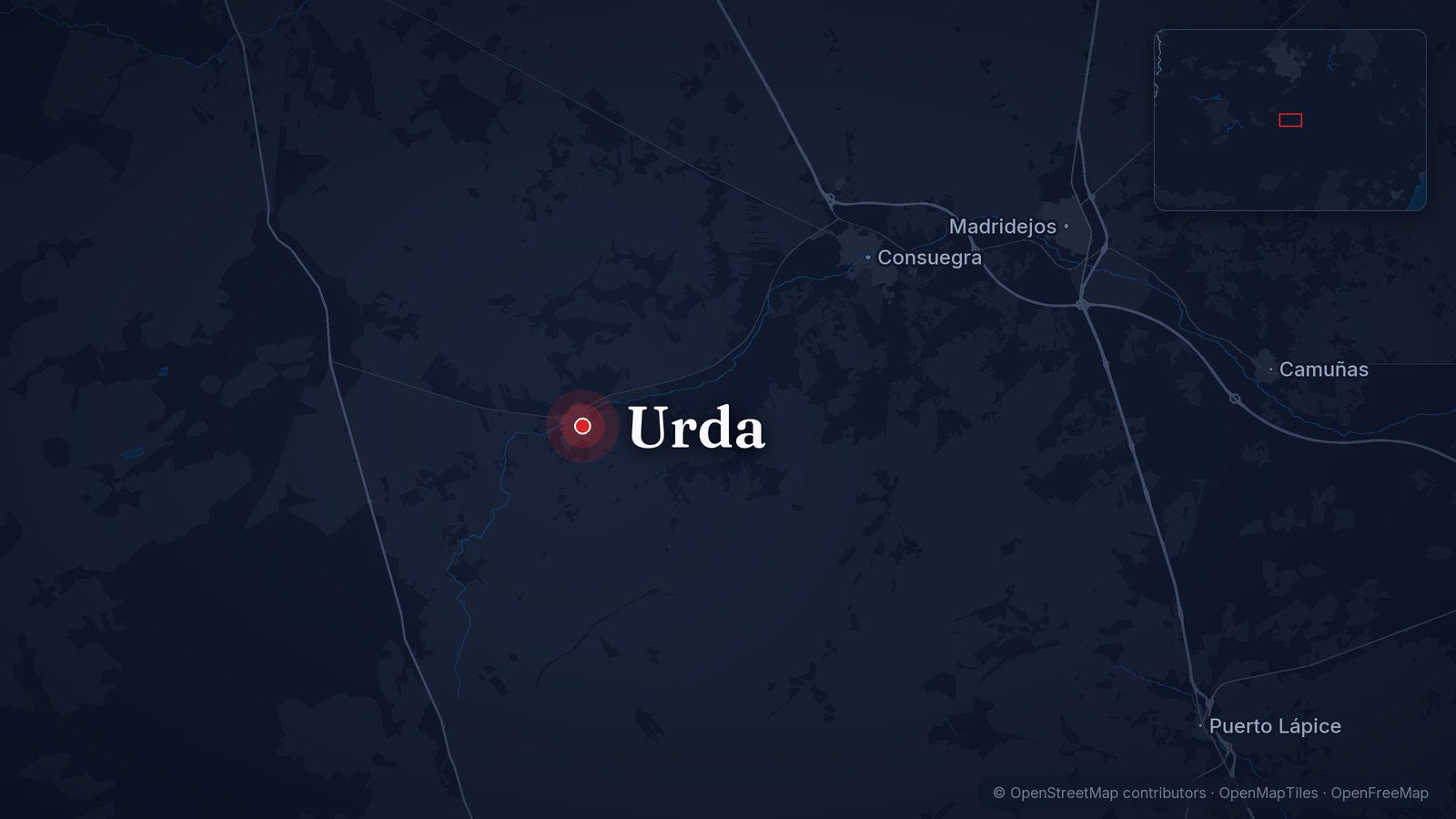
MapHigh-Speed Train Collision Near Urda, Toledo Kills At Least 68 On Madrid-Seville Line
37 Western Mainstream8 Other4 Local Western9 Other source typesMap: © OpenStreetMap contributors, ODbL · Cropped for layout
This article is an automated aggregation of coverage from news outlets. Our editorials offer in-depth analysis curated by the NewsCord team.
At least 68 people killed and dozens injured in two-train collision near Urda, Toledo. A Renfe AVE slammed into the rear of an Iryo train on Madrid-Seville line.
Save coverage image
58 outlets in this story. Read their headlines below.
Spain rail crash toll
A high-speed train collision on Spain's Madrid-Seville line near Urda, Toledo, killed at least 68 people, with the regional government of Castilla-La Mancha also saying about 80 people were injured and warning that some of the most seriously injured might not survive. Prime Minister Pedro Sánchez said, “Spain is in mourning,” and he added, “We will get to the bottom of this, and if there was negligence, it will be revealed, and if there were system failures, there will be a strong response.” Transport Minister Óscar Puente told journalists that the “inexplicable” decision by the rail controllers to allow a train to proceed after a signaling system failure led to the crash.
Renfe operated an AVE high-speed train traveling from Madrid to Seville, Iryo operated another high-speed train, and two carriages derailed after one struck the rear of the other. The BBC said a passenger described the train he was on as having been stopped for several minutes when the second train rear-ended it, and authorities were investigating the causes after two carriages derailed and left dozens dead and injured.
Control center and mourning
Óscar Puente said the LZB control system went down at around 8:30am along a 63km stretch affecting six trains, and he said control transferred to the Atocha control post where the decision was made for the Renfe train to resume its journey “normally.” The Associated Press reported that Puente said the control center decided to allow the trains to move again without any speed restrictions, and it said Puente described the order as “inexplicable.” Pedro Sánchez announced three days of official mourning from October 29 to 31, and he said, “Spain is in mourning.”
Residents of nearby towns came to help those affected, distributing water and offering their vehicles to transport the injured. More than 200 members of the Military Emergencies Unit were working at the site, while the town council of Los Yebenes said it had gathered food and basic supplies for those affected.
Europe-wide reactions and stakes
European Commission President Ursula von der Leyen said she was devastated and extended condolences, posting, “Today, Europe mourns with you,” after the crash. French President Emmanuel Macron expressed solidarity with Spain, saying his thoughts were with the victims, their families, the injured, and rescue workers. Spain’s rail operator ADIF suspended high-speed rail services between Madrid and the southern region of Andalusia while the Civil Guard sent a disaster investigation team to the site, according to El País in the Al Jazeera account.
Authorities were investigating the causes of the accident, which caused two carriages to derail and left dozens dead and injured. Prime Minister Pedro Sanchez stated that the causes of the two crashes appeared unrelated, and he said, “What is unacceptable for a country like Spain is to suffer two train accidents in the same year,” while emergency crews continued rescue and recovery efforts.