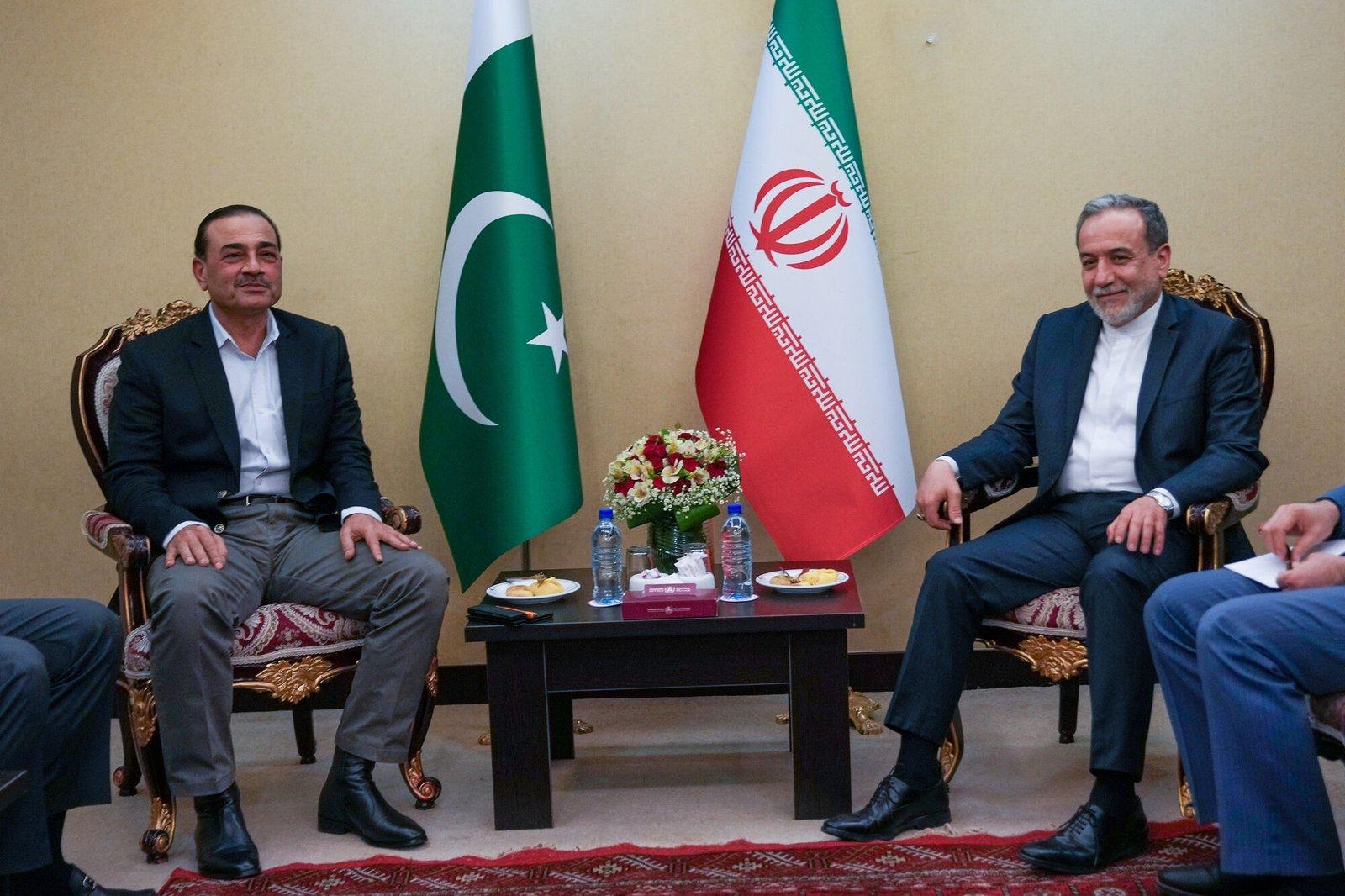
Trump Sends Witkoff and Kushner to Pakistan for Talks With Iran Foreign Minister Araghchi
Key Takeaways
- Witkoff and Kushner travel to Islamabad to meet Iran's foreign minister Abbas Araghchi.
- Araghchi arrives in Islamabad as part of renewed US-Iran talks efforts.
- Iran says no direct meeting planned; observations to be conveyed via Pakistan.
Envoys to Islamabad
President Donald Trump is sending special envoy Steve Witkoff and Jared Kushner to Pakistan for talks with Iran’s foreign minister, with the White House saying the planned meetings are set for Saturday.
The AP reported that the talks are intended to revive ceasefire talks between the U.S. and Iran, and it said Iranian Foreign Minister Abbas Araghchi arrived in Islamabad late Friday.

AP added that Araghchi wrote on social media that he was traveling to Pakistan on a trip focused on “bilateral matters and regional developments.”
The AP also said Iran’s foreign ministry made clear there would be no direct negotiations with American government representatives during this visit, with spokesman Esmael Baqaei saying, “No meeting is planned to take place between Iran and the U.S.”
In parallel, the White House press secretary Karoline Leavitt told Fox News Channel that Witkoff and Kushner would meet with Araghchi, saying, “We’re hopeful that it will be a productive conversation and hopefully move the ball forward to a deal.”
BBC similarly said Witkoff and Kushner were heading to Pakistan for peace talks with Iran on Saturday morning, and it quoted Leavitt saying, “The Iranians want to talk.”
CBS News framed the same trip as a White House effort to hear a plan for peace through Pakistani intermediaries, while also noting that Iran’s foreign minister arrived in Pakistan’s capital on Friday.
Conflicting messages
While the White House described the Pakistan trip as a step toward direct engagement, multiple reports showed Iran publicly denying that any Iran-U.S. meeting is planned.
CNBC said Leavitt confirmed on Fox News that Witkoff and Kushner would engage in “direct talks” with their Iranian counterparts, and it quoted her saying, “The Iranians reached out” and asked for an in-person conversation.

Yet AP reported that Iran’s foreign ministry spokesman Esmael Baqaei said on X, “No meeting is planned to take place between Iran and the U.S.”
BBC echoed the denial, quoting Baqaei saying, “No meeting is planned to take place between Iran and the US. Iran's observations would be conveyed to Pakistan.”
CNN likewise described the “latest instance of conflicting messages from Washington and Tehran,” and it said Iran’s Foreign Ministry spokesperson Esmaeil Baghaei denied those plans with “no meeting is planned.”
South China Morning Post captured the same contradiction as “confusion over Pakistan meeting,” reporting that the White House said the envoys would engage with “representatives from the Iranian delegation,” while Iran’s foreign ministry spokesman Esmail Baghaei posted that no US-Iran meeting was scheduled and that “Iran’s observations would be conveyed to Pakistan.”
WION also reported Baghaei’s X post, quoting, “No meeting is planned to take place between Iran and the US,” and it added that “Iran’s observations would be conveyed to Pakistan.”
Strait of Hormuz pressure
The diplomatic push in Pakistan is unfolding alongside heightened pressure around the Strait of Hormuz, which multiple outlets tied to the war’s broader economic and security effects.
“Islamabad, Pakistan – Iranian Foreign Minister, Abbas Araghchi, is expected to fly into Pakistan’s capital on Friday night with a small delegation, in what officials said was a key step towards the resumption of direct talks with the United States aimed at ending their war”
BBC said the U.S. and Israel began attacking Iran on 28 February and that Tehran subsequently restricted shipping through the Strait of Hormuz, while warning that Washington’s continuing blockade was “growing and going global.”
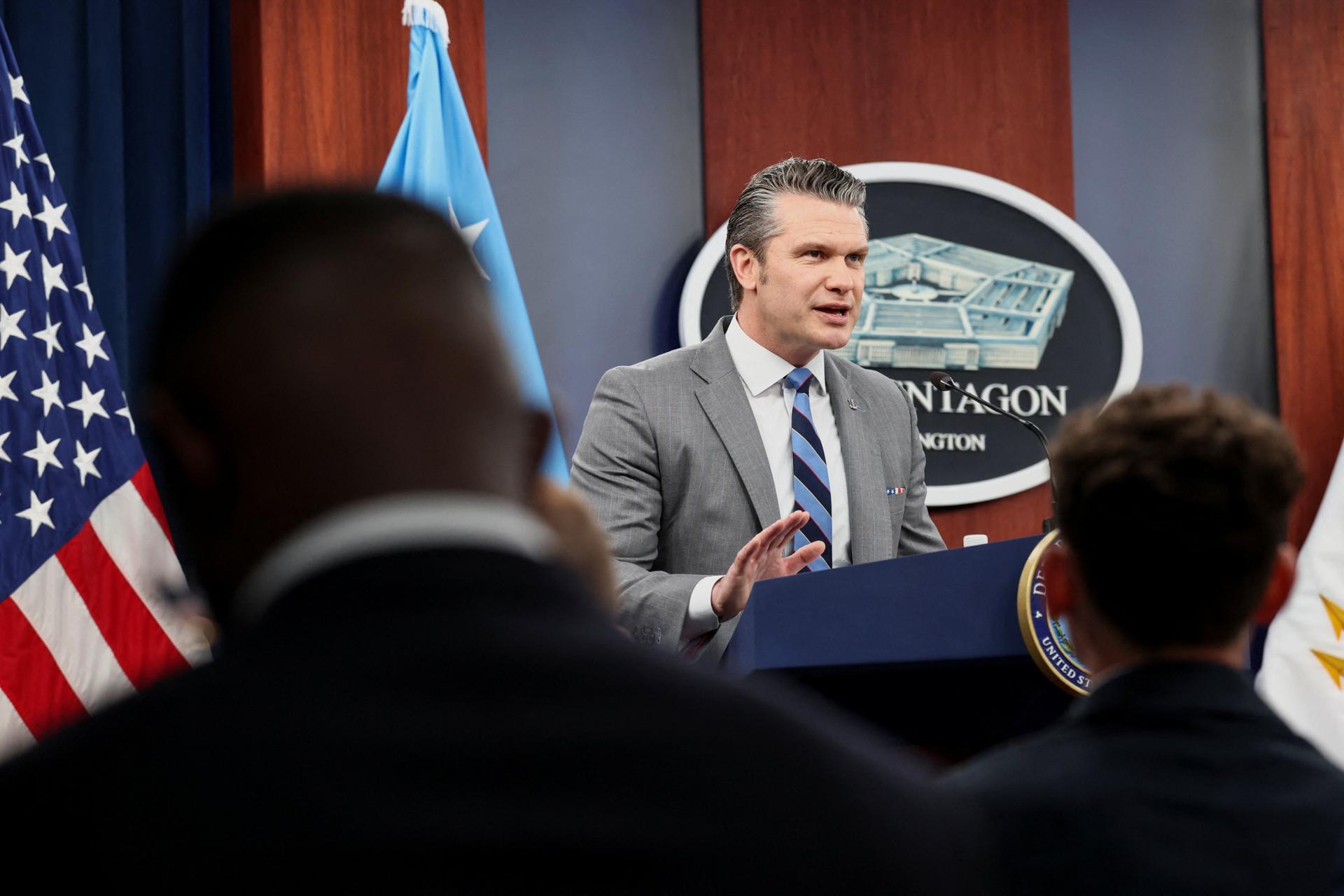
It quoted Defence Secretary Pete Hegseth stressing that the blockade was “growing and going global,” and it also quoted him saying Tehran had a chance to make a “good deal,” adding that “all they have to do is abandon a nuclear weapon and in meaningful and verifiable ways.”
AP described the wider context as “a war that has snarled crucial energy exports through the Strait of Hormuz,” and it said the squeeze on shipments through the strait rippled through global maritime trade flows, including through the Panama Canal.
CBS News added that the standoff has intensified amid Iran’s threats against the critical channel and a U.S. blockade on Iranian ports, which it said effectively closed it, and it quoted Chevron CEO Mike Wirth saying, “We'd have to believe that our people on the ship will be safe, the cargo will be safe, and they can be transited with a high degree of confidence.”
The Guardian connected the negotiations to the strait as well, reporting that Iran’s foreign ministry spokesperson Esmail Baghaei said the main subject in negotiations was “ending the war in a way that secures the country’s interests,” while also emphasizing issues such as “the strait of Hormuz” and “lifting sanctions.”
CBS News reported that the U.S. had redirected at least 33 ships since the White House leveled the blockade on April 13, citing CENTCOM.
Sanctions, markets, and money
Beyond diplomacy, the reports also described parallel U.S. actions aimed at Iran’s financial channels and the knock-on effects on markets and shipping.
CBS News said the U.S. froze $344 million in cryptocurrency over alleged ties to Iran, with Treasury Secretary Scott Bessent announcing Friday that the action was intended to “degrade Tehran's ability to generate, move, and repatriate funds.”
It quoted Bessent saying the Treasury’s Office of Foreign Assets Control was “sanctioning multiple wallets tied to Iran,” and it added that the U.S. had also moved to sanction anyone attempting to facilitate the movement of Iranian oil amid the blockade of Iran’s ports.
BBC reported that in other developments on Friday, the U.S. treasury imposed sanctions on a major Chinese refinery and 40 other targets, aimed at disrupting “Iran's illicit oil trade.”
AP similarly described the energy and trade disruption as part of a broader squeeze on global maritime trade flows, and it said the price of Brent crude oil retreated on the news, vacillating between $103 a barrel and more than $107.
CBS News also tied the conflict to U.S. economic strain, saying that in the eight weeks since the Iran war started, the conflict had driven gas prices above $4 a gallon, strained homebuyers and pushed inflation to its highest level in nearly two years, while quoting Mark Zandi of Moody's Analytics saying, “I think the damage has already been done, in part because there's no going back on oil prices, at least not any time in the near future.”
CNBC added a separate economic pressure point by reporting that some businesses were paying $4 million to traverse the Panama Canal amid the Strait of Hormuz crisis, with the Panama Canal Authority describing an auction for slots.
What happens next
As the envoys prepare to travel, the outlets also laid out what each side says it wants from the next phase and what could derail it.
“Trump dispatches Witkoff and Kushner to Pakistan for new talks with Iran’s foreign minister Trump dispatches Witkoff and Kushner to Pakistan for new talks with Iran’s foreign minister ISLAMABAD (AP) — President Donald Trump is sending his envoys Steve Witkoff and Jared Kushner to Pakistan to meet with Iran’s foreign minister, the White House said Friday, as officials in the South Asian nation pushed to revive ceasefire talks between the U”
BBC said the open question now is how much progress the countries can make in Pakistan, and it noted that JD Vance led the U.S. delegation in the first round of talks earlier this month but was not confirmed to be going to the negotiations this weekend.

It quoted Iranian parliamentary speaker Mohammad Bagher Ghalibaf warning that it was “not possible” for the Strait of Hormuz to be opened due to “the blatant violations of the ceasefire” by the U.S. and Israel.
BBC also quoted Iranian President Masoud Pezeshkian saying Tehran remained open to negotiations but that “breach of commitments, blockade and threats are main obstacles to genuine negotiations.”
The Guardian described the U.S. and Iran’s demands as tied to the strait and sanctions, saying Iran had said it would not restart talks until the U.S. lifted its blockade of Iranian ports, while the U.S. was demanding “verifiable assurances that Tehran would end its nuclear programme and lift its own crippling blockade of the strait.”
It also reported that in one new idea being canvassed, Iran was considering parcelling up its 400kg stockpile of highly enriched uranium and agreeing to dilute sequentially the enrichment level of each parcel in return for the lifting of specific sanctions.
AP added that U.S. Defense Secretary Pete Hegseth told reporters on Friday, “Iran has an important choice, a chance to make a deal, a good deal, a wise deal,” while also saying a second U.S. aircraft carrier will join the blockade in a few days.
More on USA

Pete Hegseth Says U.S. Blockade of Iranian Vessels Will Continue in Strait of Hormuz
13 sources compared

DOJ Brings Back Firing Squads, Gas, Electrocution for Federal Executions
12 sources compared

DC Circuit Blocks Trump Executive Order Suspending Asylum Access at U.S.-Mexico Border
13 sources compared
Pete Hegseth Says U.S. Blockade of Iranian Vessels Will Continue in Strait of Hormuz
11 sources compared