Sudan28 May, 20263 min read
Sudan Transitional Justice Consultations In Khartoum Link Omar Al-Bashir Atrocities To Possible Genocide
This article is an automated aggregation of coverage from news outlets. Our editorials offer in-depth analysis curated by the NewsCord team.
Khartoum and regional consultations shape Sudan's transitional justice process. Debate exists whether the process signals genuine progress or a 'big lie'.
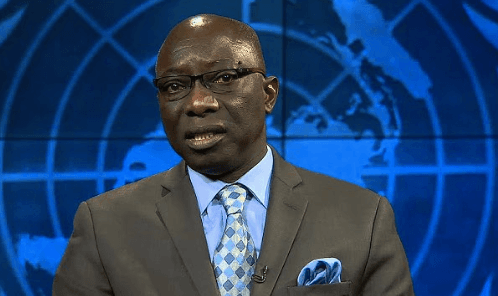
Transitional justice talks
Sudan’s transitional justice process is being shaped through consultations in Khartoum and across regions, with Abdulsalam Sayyed Ahmed describing justice as “central and it remains so, especially among the young people who have lost friends and among the families who mourn some of their members.” Sayyed Ahmed links the push for justice to “numerous atrocities committed during Omar al-Bashir's three decades in power,” including “crimes against humanity” and “a possible genocide,” and he says it remains “very sensitive” around the Darfur conflict. The civilian coalition of the Forces for Freedom and Change – Central Council (FFC-CC) negotiated a framework agreement signed December 5, 2022, setting aside five sensitive issues including “justice and transitional justice,” and it held five national workshops from January to March under the patronage of UNITAMS.
The justice workshop was scheduled for March 11 to 15 in the six historical regions of the country—“the East, Blue Nile, Darfur, Khartoum, the North, and the Center”—and Sayyed Ahmed says the regional approach helps “involve a wide range of people.” A national closing conference held March 16-20 in Khartoum gathered Sudanese society at the Friendship Hall on the banks of the Nile, and the regional workshops’ demands were compiled into a 16-point “Principles Declaration” included in a draft final agreement leaked March 27 with signing announced for April 1.

Charter and political fault lines
A separate Sudanese political effort, the Sudanese Declaration of Principles Forces coalition, announced the signing of a new political charter under the slogan “Towards Building a New Nation,” aiming to “restor[e] the spirit of the Sudanese revolution and sustaining peace in the country.”
The charter frames a transitional authority that must be “entirely civilian and without any participation from the military,” and it calls for a “comprehensive process of transitional justice and historical accountability,” including handing over those wanted by the International Criminal Court and compensating victims.

It also proposes a unified and democratic Sudanese state based on a decentralised federal system that “separates religion and state,” establishes equal citizenship, and sets equal citizenship as the basis for rights and duties.
The National Umma Party expressed reservations about the charter’s separation of religion and state, saying that “raising this sensitive controversial issue in this simplistic and direct manner is regrettable and does not serve the broad consensus that the country needs at this critical stage in its history.”
The same source says a delegation from the National Umma Party, headed by its Secretary-General, Dr. El Wathiq El Barir, participated in the meeting held last week, alongside representatives affiliated with the Civil Democratic Alliance for Revolutionary Forces (Somoud) headed by Abdullah Hamdok, the Baath Party, and the Sudan Liberation Movement led by Abdelwahid.
Mass atrocity warnings
In South Sudan, Adama Dieng, the African Union’s Special Envoy for the Prevention of Genocide and Other Mass Atrocities, warned that incendiary rhetorical statements by a senior military official of the South Sudan People’s Defence Forces (SSPDF) and reports of mobilization in Jonglei State heighten the risk of serious violations. Dieng said the government of South Sudan has “the constitutional and moral obligation to protect its population from potential mass atrocities that could arise from these incendiary speeches,” and he urged inclusive dialogue, reconciliation, and a “culture of peace.” He called for strengthening institutions safeguarding human rights, ensuring accountability for perpetrators, and holding to account those who incite violence, while also demanding “unimpeded access for humanitarian partners to vulnerable populations.”
Dieng further said early warning systems and rapid interventions must be strengthened to detect and contain escalation of tensions before they “degenerate into violence,” and he urged the international community including the United Nations Security Council, the African Union, and IGAD to take “all necessary measures to urgently protect South Sudanese civilians.” The warning comes as the same source ties the risk to “the persistent humanitarian crisis and the history of violence in South Sudan,” emphasizing that collective action is needed for a “stable, peaceful, and inclusive South Sudan, freed from the scourge of genocide and mass atrocities.”