Sudan03 July, 20264 min read
Sudan’s Armed Forces Retake Khartoum as Rapid Support Forces Control Darfur
Sudanese Armed Forces retook a large part of Khartoum. Displacement risk noted; millions displaced in conflict.

War, displacement, and deaths
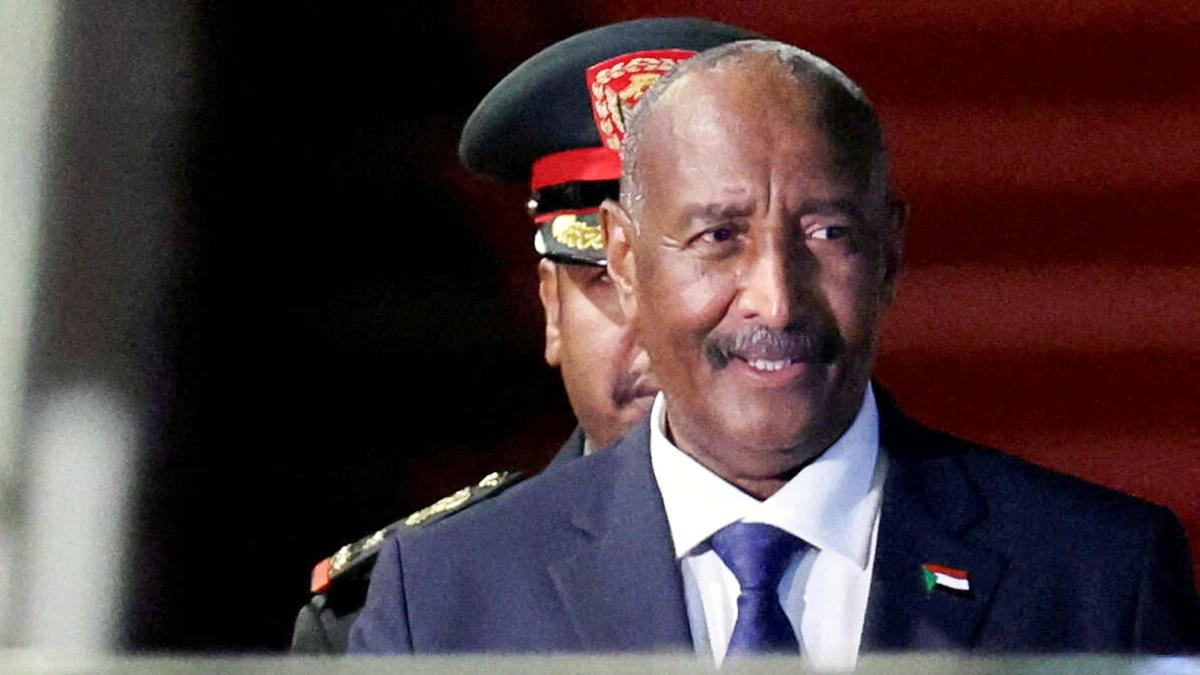
The conflict in Sudan, which broke out on April 16, 2023, has killed at least 150,000 people, mostly civilians, and displaced about 14 million people in total, with roughly 9 to 10 million internally displaced and about 4.4 million refugees or asylum seekers in neighboring countries including Chad, Egypt, and especially South Sudan. The Sudanese Armed Forces under President Abdel Fattah al-Burhan have retaken a large part of Khartoum, including Omdurman and Bahri, and have established their base in Port Sudan, while the Rapid Support Forces led by Mohamed Hamdan Dagalo, or Hemedti, had consolidated control over most of western Darfur by October 2025. In a message commemorating three years of war, Paul Swarbrick, the Bishop of Lancaster and Africa liaison bishop to the Catholic Bishops Conference of England and Wales, urged Catholics in England and Wales to pray for peace and asked the UK government not to lose sight of the crisis.
Swarbrick said he is warned, thanks to his ties with the Church in Sudan and with Catholic charitable organizations working in the region, of the fear that the conflict could be neglected by the international community, and he noted that the United Kingdom is a key reference for Sudan on the United Nations Security Council. The same source links the worsening situation in Sudan to the war in Iran, saying the United States has designated the Sudanese Muslim Brotherhood as a terrorist group and accusing it of receiving support from Iran’s Islamic Revolutionary Guard Corps (IRGC).

Sanctions and Brotherhood pressure
A Foundation for Defense of Democracies (FDD) analysis described Washington’s approach to Sudan as moving beyond diplomatic calls for a ceasefire to “precise surgery” aimed at dismantling the Sudanese Islamist movement locally known as the Kizan. The analysis says Washington now regards the Sudanese Islamic movement as the actual driver of unrest threatening security of the Red Sea and the Horn of Africa, and it says that under measures Washington intensified in spring 2026, Ali Karti—described as the secretary-general of the Islamic movement and former foreign minister—came under the OFAC microscope. The FDD analysis adds that the American sanctions were not merely symbolic and targeted the financial vessels managed by Karti to fund Islamist militias fighting alongside the army, and it frames targeting Karti as targeting “the mastermind who is trying to recreate Bashir's regime.”
Separately, Radio Dabanga reported that US Senior Advisor for Arab and African Affairs Massad Boulos told Asharq Al-Awsat that the US State Department designated the Sudanese Islamic Movement in March as both a Global Terrorist Organisation and a Foreign Criminal Organisation. Dabanga Radio TV Online also quoted Boulos warning that Washington would continue to use “all available tools” to deny Iran and groups linked to it the resources needed to support what the United States describes as terrorism, while indicating additional designations and sanctions remained under consideration.
Oil, gold, and state resources
Ahead of a Security Council meeting on the situation in Sudan, United Nations Under-Secretary-General for Political Affairs Rosemary DiCarlo warned on Friday, June 26, 2026 that “the outbreak of a large-scale battle will trigger new waves of displacement” and would worsen instability across the Kordofan region. DiCarlo also said drone attacks targeting bridges and transport corridors across Darfur and Kordofan in recent weeks had severely disrupted humanitarian aid routes and isolated many communities, and she stressed that “the number of civilian casualties continues to rise day by day.” At the same briefing, Abdel Fattah al-Burhan, head of the Transitional Sovereignty Council in Port Sudan, confirmed the army’s adherence to the military resolution of the conflict and rejected any solution he described as “unclear or moderate.”
Atalayar reported that estimates place the annual cost of the war in Sudan at four billion dollars and that Suleiman Baldo, director of the Sudanese Observatory for Transparency, said Port Sudan had diverted all state revenues to financing the war effort. The same Atalayar report said that although annual gold production exceeds 70 tons with revenues estimated at $6 billion, the Central Bank of Sudan records only $2 billion, raising questions about the destination of the remaining $4 billion, which it says would be diverted to financing the war effort and large-scale purchases through companies in the army's defense-industrial system and the Muslim Brotherhood.