Full story
Border Flood and Missing
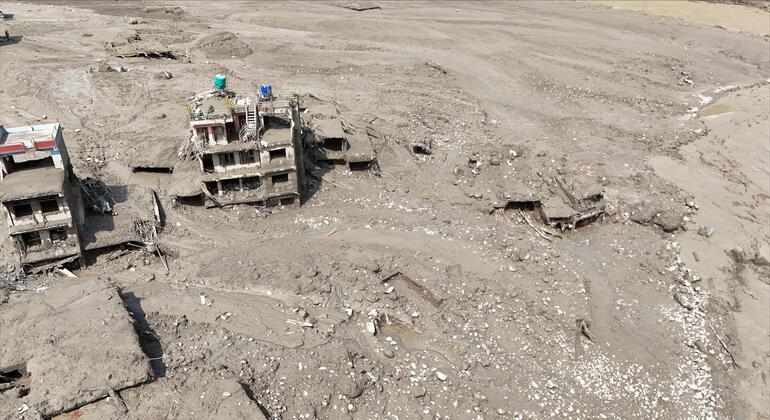
A sudden flood swept through the Himalayas near the China border, killing more than 160 people and leaving hundreds missing, with Nepalese police saying they had found 157 bodies and noting 41 others injured.
“Nepalese police, in their latest statements, said they had found 157 bodies”
Nepal Electricity Authority said around 430 megawatts of production capacity, including hydroelectric and solar plants, had been disrupted and service cut off in the region due to the damage, while several highways were closed.

Nepal’s Prime Minister Pushpa Kamal (Balen) Shah said rescue and relief teams, along with police and the army, had been dispatched to assist in relief efforts.
In the BBC’s account, an Indian government official said India sent 10 tonnes of aid to Nepal, while Nepal’s prime minister’s office said search and rescue efforts by the country’s army would continue overnight.
The BBC also reported that 1,697 personnel had been deployed and a further 656 kept on standby for additional operations, as six military helicopters rescued 94 people during the day and five civilian helicopters rescued 12 others.
Helicopters, Drones, and Causes
Nepal’s police said 28 police officers in Rasuwa were still missing, and the force said a canine team and four drones had been mobilised for the search and rescue effort.
The BBC reported that the US Geological Survey said further analysis indicated “that the seismic energy was instead generated by a landslide” by itself, after early reports had suggested an earthquake may have triggered an ice avalanche and landslide.

In Nepal’s prime minister’s office statement, 800kg of tents and 200kg of medical supplies were delivered to the affected areas, and a large number of people stranded above Timure were to be evacuated by air Thursday morning.
The BBC also described Nepal’s department of meteorology and hydrology saying images showed a massive chunk of ice that seemed to have collapsed from a mountain on the Tibetan side, bringing down rocks and other sediments.
In the same BBC report, hydrological observations were cited saying water levels on the Trishuli river rose by as much as nine meters (27 feet) over half an hour, while scientists tried to piece together the order of events using satellite images.
Aid, UN Response, and Stakes
UN agencies reported that severe flooding in Nepal and China had claimed many lives, left people missing, and caused widespread destruction, with UN spokesperson Stéphane Dujarric saying the Secretary-General was saddened by the flooding.
““The Secretary-General is saddened by the severe flooding”
The UN said UN Resident Coordinator in Nepal Lila Pieters Yahia was coordinating relief efforts with partners in an effort to meet what would clearly be massive humanitarian need, while OCHA reported that settlements, markets, roads, bridges and hydropower infrastructure were swept away or damaged and electricity disrupted.
UN agencies also said the Nepalese Red Cross had dispatched 200 emergency shelter packages, while Save the Children started deploying staff to the flood-hit Nuwakot district.
The UN reported that the World Food Programme was providing emergency rations and logistics support, and that two staff from the World Health Organization were already on site with enough medical kits for about 10,000 people for three months.
In the BBC’s account of the human stakes, it said 54 US tourists were known to be among the missing, and it quoted a US State Department spokesperson saying the administration “has no higher priority than the safety and security of Americans” while closely tracking the situation.