Technology and Science13 April, 20263 min read
Super Typhoon Bavi Brings Catastrophic Winds and Flooding to Guam and Northern Mariana Islands
Category 5 typhoon with winds around 260 km/h approaching Guam and the Northern Mariana Islands. Guam and Northern Mariana Islands residents evacuated to emergency shelters amid warnings of catastrophic damage.
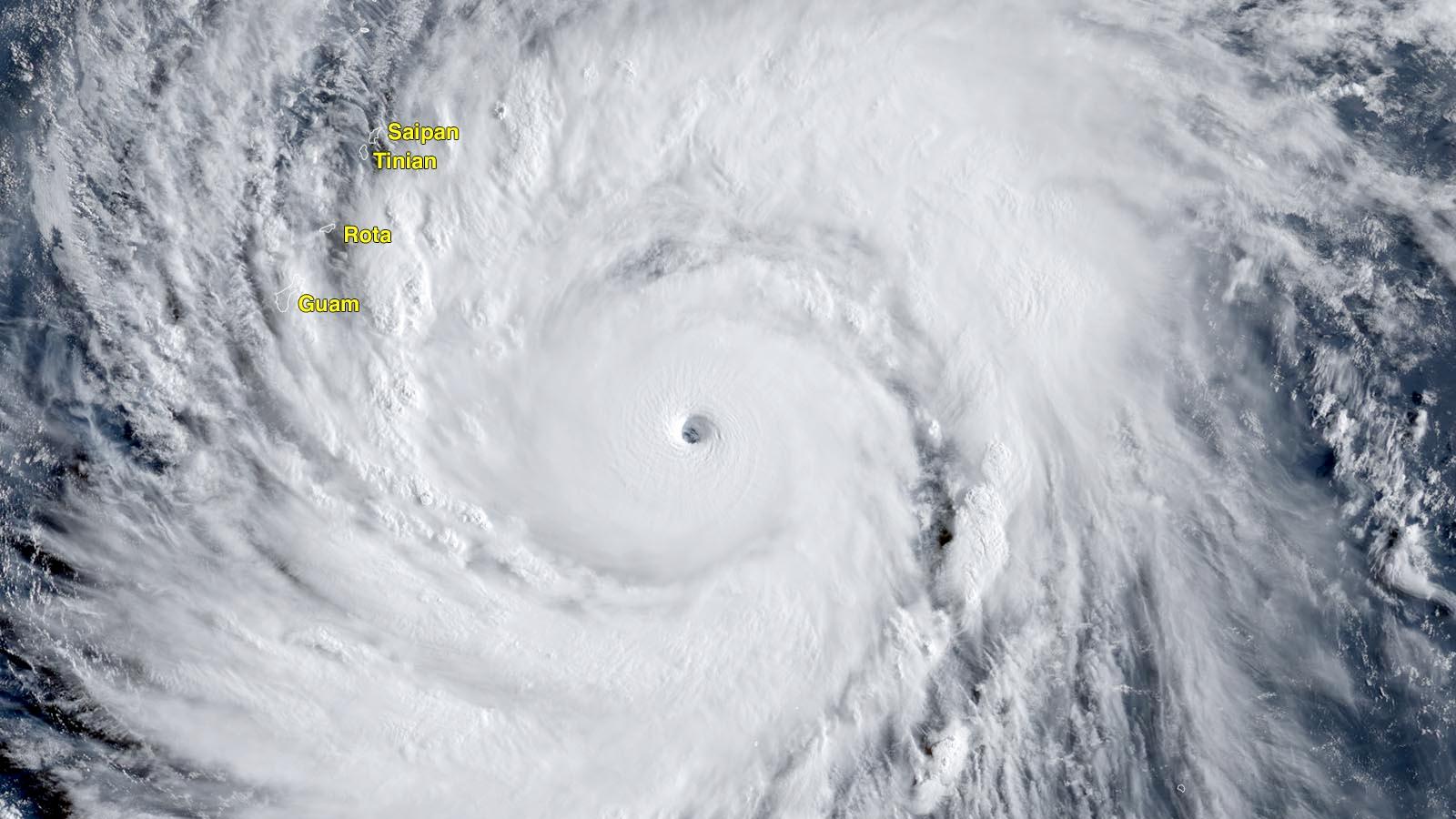
Bavi nears Guam
Super Typhoon Bavi is forecast to roar over Guam and the Northern Mariana Islands on Monday morning, with the National Weather Service calling it “very dangerous” and warning of “catastrophic” damage near the system’s centre later. The NWS projected waves of up to 10.7 metres (35 feet), described as “the height of a 10-storey building,” and said “Significant flooding from torrential rains, and coastal inundation are expected.” Residents moved to emergency evacuation centres and made last-minute preparations on Sunday, hours before the storm was projected to bulldoze through the United States Pacific territories.
Pinky Cubacub, 55, boarded up her eatery’s windows in Guam after lining up early on Saturday to buy US$500 worth of plywood, while the BBC reported Guam opened five evacuation centres in its schools as Bavi approached. The BBC said Bavi was forecast to make landfall early on Monday morning with winds of up to 257km/h (160mph), and warned the “very dangerous” storm could cause “significant flooding from torrential rains” possible and waves potentially nearly 11m (35ft) high.

Warnings and shelters
NPR quoted Guam and surrounding islands meteorologist Landon Aydlett saying, “This is a powerhouse super typhoon and this is going to be a very grim outlook for any island that takes a direct hit,” as he tracked the storm from central Guam just after 1:30 a.m. Monday local time.
Aydlett warned that it was “going to be probably near catastrophic for the entire island,” and NPR said the National Weather Service had issued typhoon warnings for Guam, Rota, Tinian and Saipan.

The BBC reported that Guam’s civil defence office said at 13:00 local time (03:00 GMT) on Sunday that one evacuation site had already reached maximum capacity and that people were being redirected to another site.
The BBC also quoted the NWS warning that the “window is rapidly closing to evacuate if directed to do so by local officials,” and said winds “will pose a deadly threat to those venturing outside.”
In the Northern Mariana Islands, the NWS predicted that if Bavi tracks near or over Rota, most of the area “will be uninhabitable for weeks, perhaps longer,” with “many non-concrete, non-reinforced homes” facing destruction and “total roof failure and wall collapse,” according to Al Jazeera’s account of the NWS forecast.
After Sinlaku, stakes
The storm threat is arriving after Super Typhoon Sinlaku hit the region in mid-April, with FOX Weather saying Sinlaku “resulted in no deaths” but caused widespread devastation across Saipan and Tinian and left an estimated $1.5 billion plus in damage. NPR said there was particular concern for people still recovering from Typhoon Sinlaku, and Aydlett warned that “From what I've heard from Saipan and Tinian, where many people still have no power two-and-a-half months after Sinlaku ravaged those islands, the shelters are packed and they had to turn people away.” The BBC reported that Guam has a population of about 170,000 and opened five evacuation centres in its schools with maximum capacity of around 1,700, primarily for vulnerable people.
The BBC also said Bavi was expected to pass directly over Guam and the Northern Mariana Islands by Monday afternoon, but the NWS warned destructive conditions could be expected for eight to 10 hours prior to or after the arrival of the storm’s centre. In addition to the immediate wind and flooding risk, the BBC said Bavi would be the 11th category four or five tropical cyclone to hit US territory in the past decade, and it linked the outlook to a strong El Niño event expected to push more tropical storms into higher intensities.