
Supreme Court Hears Arguments on Whether States Can Count Late Mail-In Ballots
Key Takeaways
- Supreme Court hears Mississippi case on counting late-arriving mail ballots.
- Mississippi allows five-day grace period for post-Election Day ballots.
- Ruling could redefine election-day timing, affecting overseas, military, and state deadlines.
Case Overview
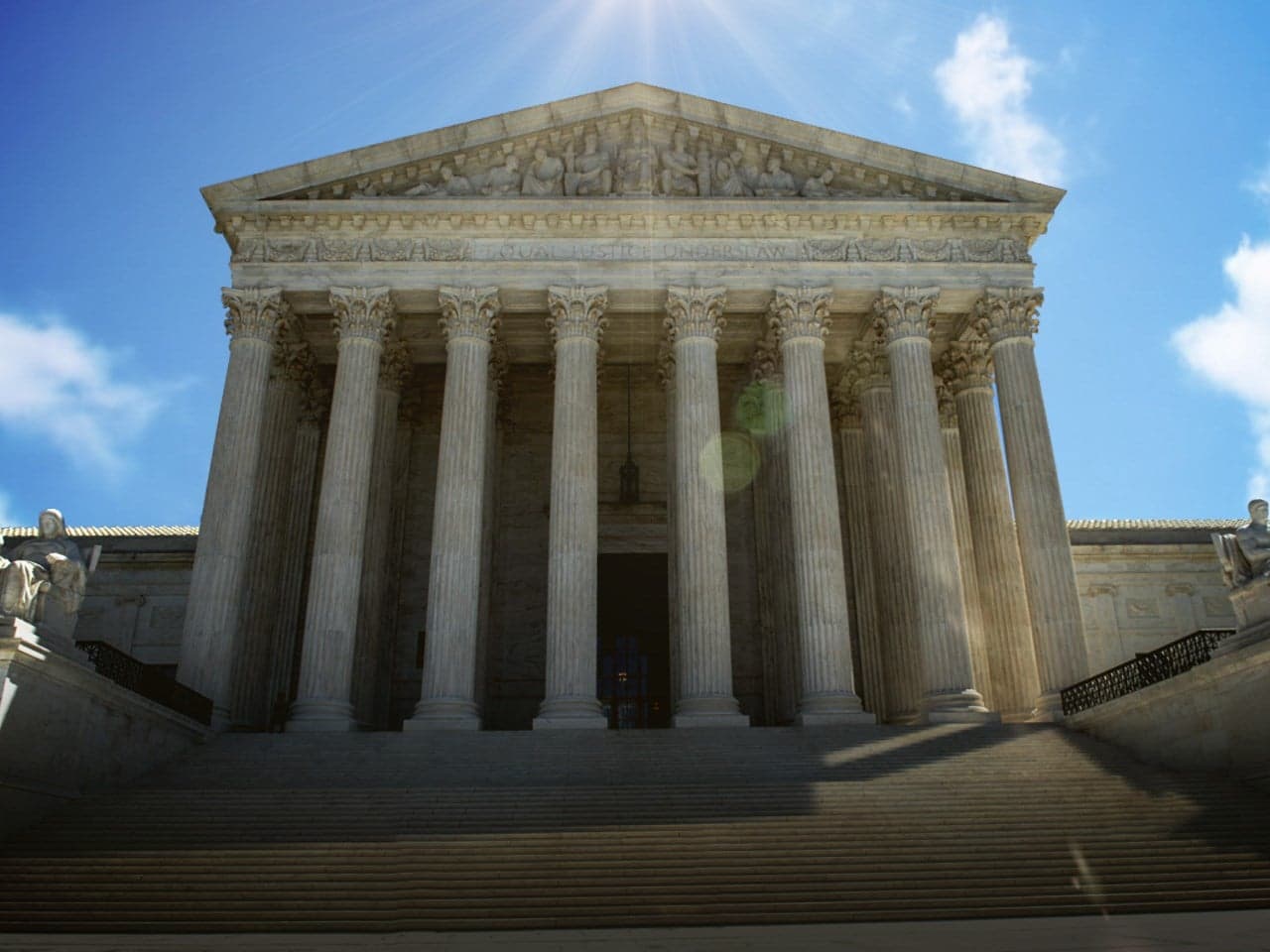
The U.S. Supreme Court on March 23, 2026, heard oral arguments in the high-stakes case Watson v. RNC.
“Chief Justice John Roberts, whose center chair makes him the most senior, gets the first crack”
The case examines whether states can count mail-in ballots that arrive after Election Day if they are postmarked by that deadline.

The case centers on Mississippi's law that allows mail ballots to be counted up to five days after Election Day as long as they were postmarked by Election Day.
This legal battle has profound implications for election administration across the country.
It potentially affects 14 states plus the District of Columbia that have similar grace periods for regular ballots.
It also affects 29 states plus DC that allow some military and overseas ballots to be received after Election Day.
The Supreme Court's decision, expected by the end of June 2026, could reshape how states conduct federal elections.
It will impact voter access for millions of Americans.
Legal Arguments
The legal dispute hinges on conflicting interpretations of federal election law and the meaning of 'Election Day.'
The Republican National Committee and Mississippi's Libertarian Party argue that federal statutes enacted in the 1800s set a uniform 'election day' for the nation.

They contend that ballots must be received by Election Day, not just postmarked by that date.
Conversely, Mississippi's Republican Secretary of State Michael Watson argues that the Constitution's Elections Clause gives states authority to set election rules.
His state's grace period merely provides a cushion for election workers without extending voting days.
The state warns that a ruling against them would 'jeopardize the laws of the 29 states that accept some ballots after election day.'
The Trump administration has sided with the challengers, arguing that 'closing the ballot box on election day is a powerful safeguard against late-breaking foul play.'
Trump's Role
President Trump's involvement represents the latest chapter in his ongoing crusade against mail-in voting.
“Since returning to the White House, the president and his administration have tried to gain more control of federal elections”
He has consistently claimed it is rife with fraud despite extensive evidence to the contrary.
Trump's push against late-arriving ballots dates back to 2020 when he urged election workers to 'STOP THE COUNT.'
He made baseless allegations that mail-in voting contributed to his election loss.
The Trump administration has taken multiple actions to limit mail voting.
This includes signing an executive order in March 2025 targeting states that allow late-arriving ballots.
The administration has also pressured states to eliminate grace periods by threatening lawsuits.
As CNN reports, Trump 'has never let go of his unfounded beliefs that voting by mail is rife with fraud.'
Military Voters
Military and overseas voters stand to be particularly affected by the Supreme Court's decision.
They represent a significant portion of voters who benefit from extended receipt deadlines.

About 4 million servicemembers and U.S. citizens living abroad rely on mail voting.
Many are deployed in combat zones, different states, or serving as diplomats overseas.
Voting experts warn that eliminating grace periods could create chaos and confusion for these voters.
Newsweek reports that 'since before the Civil War, states have developed voting processes like grace periods to accommodate the needs of military voters.'
Legal analysts suggest the Court might distinguish between regular and military ballots.
Lisa Dixon called this outcome 'quite plausible,' noting that 'the court could certainly treat it as two different categories of ballots.'
Election Impact
The timing of the Supreme Court's decision could have significant implications for the 2026 midterm elections.
“• The Supreme Court is hearing oral arguments in a case about whether states may count mail-in ballots received after Election Day”
Potential disruptions to election administration and voter communication are likely.

States are currently preparing for the November midterms.
A ruling invalidating existing deadlines could cause 'a lot of confusion in those states about voting by mail,' according to Adav Noti.
The Brennan Center for Justice estimates the ruling would impact grace periods for around 30 states.
Several states are already modifying their laws in anticipation of the decision.
Four Republican states have recently changed their laws to bar counting late-arriving ballots.
The Court is expected to rule by the end of June, which could avoid post-election fights.
However, a last-minute rule change could create uncertainty for voters close to the election.
More on USA
RNC bid to disqualify late-arriving mail ballots goes before Supreme Court
19 sources compared

Supreme Court Leans Toward GOP Push to Limit Mail-In Ballots
41 sources compared

Adam Schiff and John Curtis introduce bipartisan bill banning sports wagering on Kalshi and Polymarket.
25 sources compared

Trump Extends Deadline to Reopen Strait of Hormuz, Delays Strikes on Iranian Power Plants.
27 sources compared