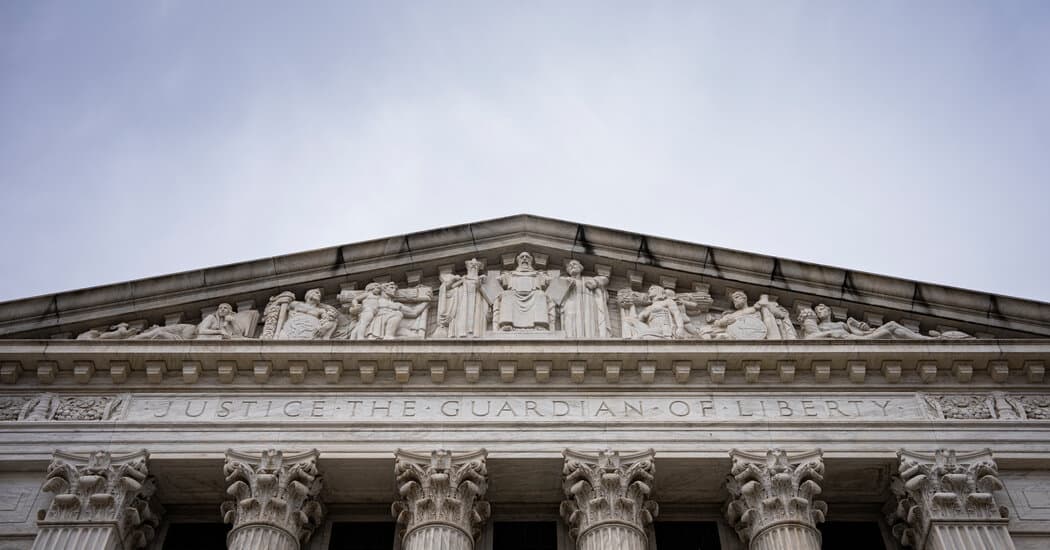
Supreme Court Hears Mail-Ballot Case Threatening End To Alaska's 10-Day Grace Period Nationwide
Key Takeaways
- Supreme Court weighs whether ballots postmarked by Election Day can be counted if received after.
- Alaska currently allows a 10-day grace period for late-arriving ballots.
- A ruling could end nationwide grace periods, reshaping mail-in voting for the midterms.
Alaska's Mail Ballot Challenges
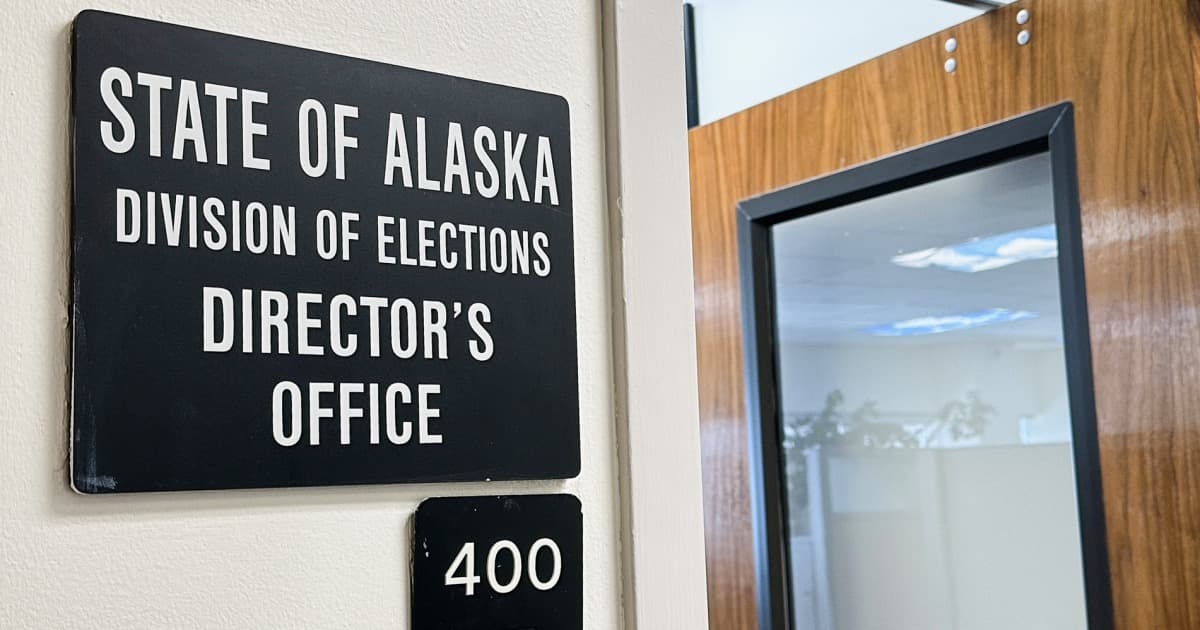
Alaska's unique geography creates profound challenges for mail balloting that make its 10-day grace period essential for democratic participation.
“Washington — As voters gear up for the midterm elections in November that will decide control of the House and Senate, the Supreme Court is set to weigh Monday whether states can count mail ballots that are postmarked by, but arrive after, Election Day”
The state's vast expanse - more than twice the size of Texas - and reliance on air transportation for mail delivery mean that many rural communities, particularly Alaska Native villages, face significant delays in receiving and returning ballots.

The tiny village of Beaver, located 110 miles north of Fairbanks along the Yukon River, exemplifies this issue, as its roughly 50 residents rely on weekday flights for all mail, including voting materials.
This geographic reality results in disproportionate disenfranchisement of Alaska Native voters, with historical data showing that 55%-78% of absentee ballots from some districts arrive after election day despite being properly postmarked.
The state's ranked-choice voting system further complicates matters, as ballots must be flown to the state Division of Elections in Juneau for tabulation, creating additional logistical hurdles that make the grace period not just convenient but necessary for ensuring votes are counted.
Supreme Court Challenge
The Supreme Court case currently before the justices represents a direct threat to Alaska's voting practices and could establish a nationwide precedent affecting 14 states that currently allow late-arriving ballots.
The challenge, brought by the Republican National Committee and the Libertarian Party of Mississippi against Mississippi Secretary of State Michael Watson, argues that federal Election Day statutes envision a single day for casting ballots and that grace periods violate federal law.

If the court sides with the challengers, it could invalidate Alaska's 10-day grace period along with similar practices in other states, potentially disenfranchising thousands of voters who rely on mail delivery due to geographic isolation.
Alaska's senior U.S. Senator Lisa Murkowski, a Republican, has expressed particular concern about the case, warning that 'there's probably no other state where this ruling could have a more detrimental impact than ours.'
She views the legal challenge as part of a broader effort to end voting by mail nationwide, coinciding with other restrictive voting measures being pushed at the federal level.
Legal Arguments Divide
The legal battle over ballot grace periods has crystallized sharply divided perspectives on election integrity versus voter access.
“As Supreme Court hears mail ballot case, alarms are raised in far-flung Alaska - Click here to listen to this article - - Alaska accepts ballots postmarked by election day that arrive within 10 days”
Opponents of grace periods argue that such extensions improperly prolong the election process beyond the single day designated by Congress for choosing federal officers.
Jason Snead, executive director of the Honest Elections Project, a conservative organization, contends that 'ballots had to be in the hands of election officials, and they had to be in the hands of those officials before Election Day was over in order to be counted.'
Proponents, however, emphasize that grace periods merely account for the delivery and counting of ballots already cast by Election Day, not an extension of voting itself.
Mississippi's Secretary of State Michael Watson argues that 'an election is the choice of a federal officer, and voters make that choice when they mark and submit their ballots.'
This fundamental disagreement over the definition of 'Election Day' - whether it encompasses only ballot marking or also receipt and counting - forms the core of the Supreme Court's consideration, with significant implications for how elections are conducted nationwide.
Broader Voting Rights Context
The debate over ballot grace periods occurs within a broader context of President Trump's sustained campaign against mail voting and efforts to impose stricter voter identification requirements.
The Supreme Court case comes as the U.S. Senate debates legislation pushed by Trump that would require people to show proof of citizenship to register to vote and a photo ID to cast a ballot, measures that Democrats and voting rights advocates view as voter suppression.
Trump has a long history of attacking mail balloting, dating back to his 2020 election loss when he demanded states 'stop the count' of votes and has continued to claim that mail voting breeds fraud despite extensive evidence to the contrary.
A November 2025 Brookings Institution study found that mail voting was a practical, secure way to expand voter access, with about four cases of fraud out of every 10 million mail ballots.
This context raises concerns that the legal challenge, combined with restrictive legislation, represents a coordinated effort to make voting more difficult, particularly for populations that disproportionately rely on mail balloting such as rural residents, military personnel, and overseas citizens.
Election Logistics Concerns
A Supreme Court decision striking down ballot grace periods could create significant logistical chaos for election officials and voters alike, particularly as the 2026 midterm elections approach.
“Julie Carr Smyth, Associated PressJulie Carr Smyth, Associated Press Leave your feedback There will be just one Election Day for this fall's midterm elections — Nov”
Experts warn that such a ruling would force states with existing grace periods to implement radical changes to their voting procedures with minimal notice, requiring massive voter education campaigns about new deadlines.
Stuart Holmes, director of elections for the Washington Secretary of State's office, noted that Washington's 21-day grace period resulted in 127,000 ballots being received after Election Day in 2024, and predicted a similar number would be rejected if grace periods are eliminated.
The timing of a potential ruling - expected by the end of June or early July - adds urgency, as it could come after many states have already set their primary election procedures but before the November general elections.
Election officials like Contra Costa County Clerk-Recorder Mary Connelly warn that having different procedures for primaries and general elections would be problematic, and that smaller counties would struggle to implement necessary changes quickly.
While some have suggested increasing drop box availability as a solution, experts question whether this would be sufficient to replace the reliability of mail service for remote communities.
More on USA
RNC bid to disqualify late-arriving mail ballots goes before Supreme Court
19 sources compared

Supreme Court Leans Toward GOP Push to Limit Mail-In Ballots
41 sources compared

Adam Schiff and John Curtis introduce bipartisan bill banning sports wagering on Kalshi and Polymarket.
25 sources compared

Trump Extends Deadline to Reopen Strait of Hormuz, Delays Strikes on Iranian Power Plants.
27 sources compared