
Full story
Tesla and Base Power Cut
Tesla has cut the monthly rental price of its Powerwall as Base Power accelerates home battery competition, with TechCrunch noting that Base Power raised $2 billion in less than a year.
“Tesla may have led the pack for years, but recently it has been feeling the heat from upstarts like Base Power”
In Texas, Tesla offers to rent a Powerwall package with a total capacity of 27 kWh for $35 per month, while Base Power installs home systems with a capacity of 39.2 kWh for $19 per month.
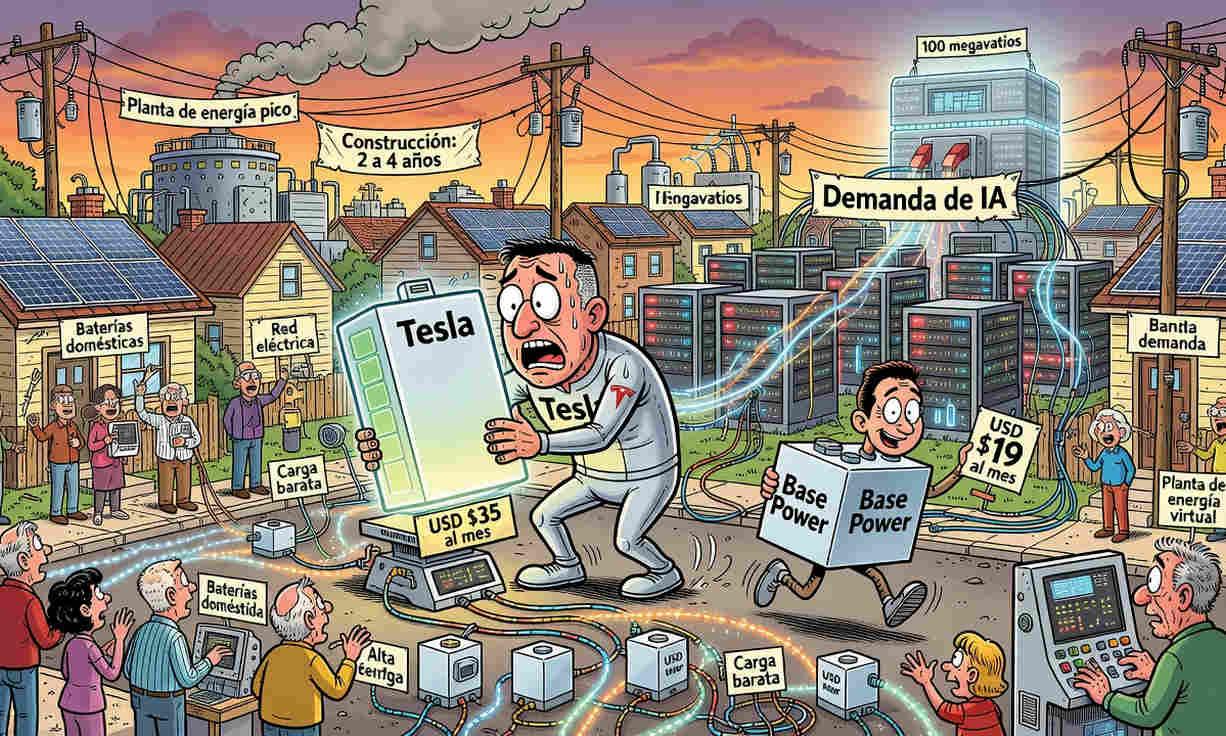
The shift is tied to declining battery costs and the spread of virtual power plants, or VPPs, which combine distributed devices into a shared energy resource management system.
VPP operators can charge batteries during hours when electricity prices are lower and sell stored energy when grid demand rises, partially reducing customers’ costs for backup power or electricity.
Grandview Research estimates the virtual power plant market at $7.4 billion today and says it could exceed $30 billion by 2033, as distributed home batteries can be brought online faster than conventional power plants.
VPPs, Pricing, and Speed
TechCrunch explains that a VPP aggregates and coordinates distributed energy resources like batteries and, in some cases, water heaters so that thousands of devices behave on the grid like a single large power plant.
In that model, VPP operators charge the batteries when electricity rates are low and then sell stored power back to the grid at a profit when demand sends prices soaring.

Tim Pianta, head of utility partnerships at Base Power, told TechCrunch, "There are resiliency needs everywhere," and said, "Our goal is to have it be a win-win, like it’s a no brainer."
TechCrunch also describes a speed advantage for VPPs, saying Base Power has a deal with CoServ, a North Texas electricity cooperative, to build a 100 megawatt VPP and that a traditional 100-megawatt power plant would take two to four years to come online.
TechCrunch adds that Base Power is "on pace to install that in under 12 months," while VPPs can avoid some land, permitting, and interconnection headaches because batteries are installed near where electricity is consumed.
AI Demand and Market Stakes
TechCrunch links the push for VPPs to rising electricity demand from AI data centers and the electrification of the economy, saying utilities and grid operators are embracing VPPs with newfound fervor.
“As electricity demand rises on the back of AI data centers and the electrification of the economy”
The article notes that utilities have traditionally handled spikes in demand by either building expensive “peaker plants” or paying large energy users like factories to disconnect for a few hours, but now they can pay a VPP instead.
It also says VPP operators charge batteries when electricity rates are low and sell stored power back to the grid at a profit, with the operator pocketing a chunk of profits and passing some on to consumers.
Base Power’s competition is framed as a challenge to Tesla’s earlier approach, with TechCrunch stating that for years Tesla operated a VPP using its Powerwall fleet but did not market it to consumers.
TechCrunch reports that Base Power has been installing 8 megawatt-hours’ worth of batteries every day and hopes to double that rate by the end of the year, as the market for VPP technology is still small at $7.4 billion today but expected to top $30 billion by 2033.