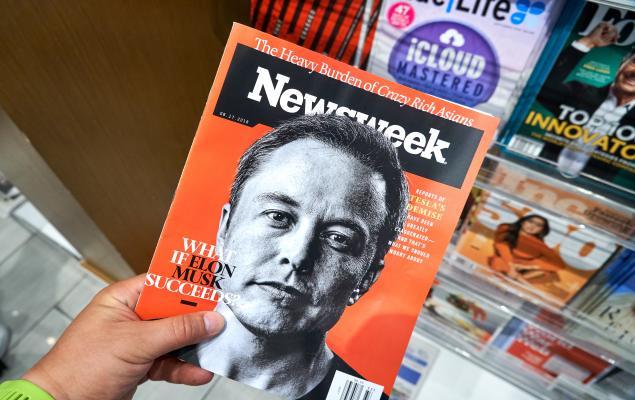
Tesla Plans $25 Billion Capital Expenditures in 2026 for AI and Robotics Push
Key Takeaways
- Capex for 2026 exceeds $25 billion to fuel AI and robotics initiatives.
- 2026 capex more than tripled versus 2025 spending.
- Capital investments aim to transform Tesla into an AI and robotics company.
Tesla’s $25B Capex Pivot
Tesla told investors it is preparing a major spending surge, with CEO Elon Musk saying, “With 2026 we’re going to be substantially increasing our investments in the future,” and that “you should expect to see significant, a very significant increase in capital expenditures.”
“Skip to main content Updated 15 hours ago - Business Tesla's earnings rise, but AI expenses are adding up Nathan Bomey email (opens in new window) sms (opens in new window) facebook (opens in new window) twitter (opens in new window) linkedin (opens in new window) bluesky (opens in new window) Add Axios as your preferred source to see more of our stories on Google”
In its first-quarter earnings report, Tesla said capital expenditures will skyrocket to $25 billion in 2026, far outpacing its previous annual spend, and TechCrunch framed the figure as covering “physical assets outside of its day-to-day operating expenditures.”
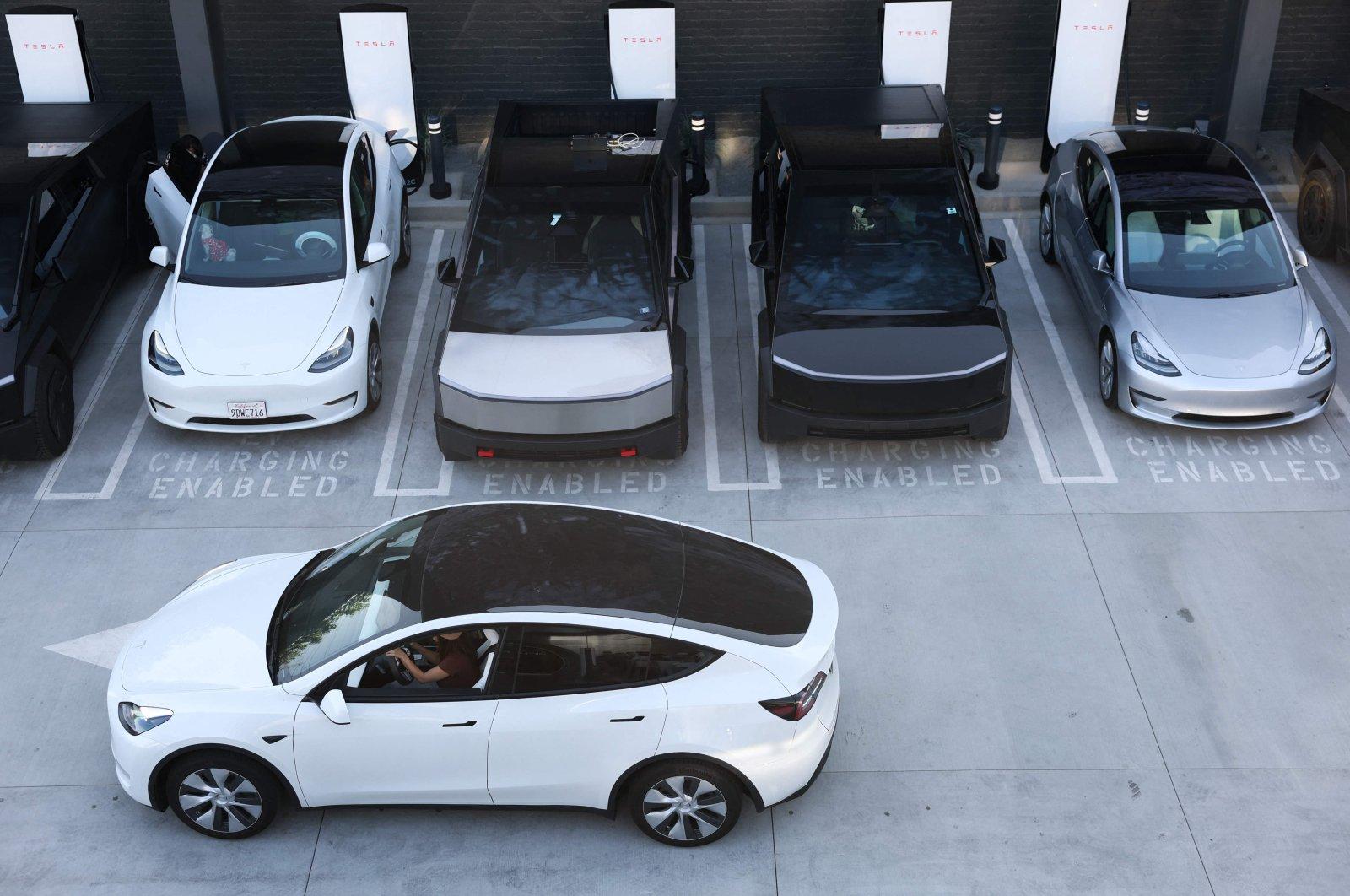
TechCrunch reported that the $25 billion plan is “three times higher than its annual capex budget in previous years,” and it listed prior annual capital expenditures of $8.5 billion in 2025, $11.3 billion in 2024, and $8.9 billion in 2023.
The same TechCrunch account said Tesla had announced in January that it expected capital expenditures to be “in excess of $20 billion in 2026,” and that the new $5 billion uptick suggests the AI initiatives will require more money than previously planned.
Axios added that Tesla’s pivot costs are showing up in the financial statements, reporting net income of $477 million up 17% while operating expenses ballooned 37% to $3.78 billion, and an operating margin that fell to 4.2%.
Tesla’s CFO Vaibhav Taneja told investors the spending will last “a couple of years,” and that the company will head into negative territory later this year, even as it reported $44.7 billion in cash, cash equivalents, and short-term investments at the end of the first quarter.
Where the money goes
Tesla’s spending plan is tied to a broad effort to move beyond building and selling EVs, solar, and energy storage, with TechCrunch saying the increase is linked to Musk’s desire “to evolve the company beyond building and selling EVs, solar, and energy storage.”
TechCrunch reported that “Some of the capex spend will go toward Tesla’s core technologies such as its battery and AI software,” and it said the company plans to invest in “AI training, chip design, and “laying the groundwork” for increasing manufacturing production.”

The same TechCrunch account said Tesla is also putting money toward “its robotaxi operations and its new semiconductor research fab in Austin,” and it described how the Fremont, California, factory could absorb some of that capital as Tesla ends production of the Tesla Model S and Model X and begins building its Optimus humanoid robot at scale.
Axios similarly said Musk directed the company to invest heavily in “the development and production of humanoid robots, self-driving cars and AI chips,” and it reported that Tesla recently discontinued the Model S sedan and Model X crossover to make way for Optimus production at its factory in Fremont, Calif.
TechCrunch added that Tesla said Wednesday it has “cleared ground outside its Austin factory for a dedicated Optimus manufacturing facility,” and it reported Musk’s expectation that Tesla would increase internal production of Optimus for testing and “probably” make Optimus “useful outside of Tesla sometime next year.”
Beyond factory and product changes, TechCrunch said Tesla is strengthening its supply chain “across the board,” covering batteries, energy, and AI silicon, while Las Vegas Sun reported that the investments would support “production of its Optimus humanoid robot, artificial intelligence initiatives and the Cybercab autonomous car.”
Financial tradeoffs and cash
Tesla’s capex surge is paired with a near-term financial squeeze that multiple outlets described in different ways, while still pointing to a cash cushion.
“Tesla boosts spending plan to $25 billion in AI, robotics push Thursday, April 23, 2026 | 2 a”
TechCrunch said Tesla enjoyed a “brief 4% share price bump” due in part to an unexpected “$1.4 billion in free cash flow,” but it also reported that the company “will head into negative territory later this year, Taneja said.”
Axios reported that Tesla’s first-quarter results showed net income of $477 million up 17%, but it also said operating expenses rose 37% to $3.78 billion and operating margin fell to 4.2%, attributing the pressure to “costs of pivoting to an AI future.”
Daily Sabah described the same pivot as “one of the most expensive bets in its history,” quoting Tesla CFO Vaibhav Taneja saying, “We are in a very big capital-investment phase, which is going to start now and would last a couple of years,” and it added that the company will record negative free cash flow for the rest of 2026.
Daily Sabah also reported that Tesla recorded positive free cash flow of $1.44 billion in the first quarter compared with estimates for a cash burn of $1.43 billion, and it said revenue was $22.39 billion for the three months ended March 31 compared with analysts’ average estimate of $22.6 billion.
Las Vegas Sun reported that Tesla spent “less than $2.5 billion” in the first three months of 2026, “well below the outlay the company will need to average per quarter to reach its expenditure forecast for the year,” and it tied that to Tesla posting $1.4 billion in positive free cash flow for the quarter.
Investor reaction and timelines
While Tesla framed the spending as necessary for a “substantially increased future revenue stream,” investors reacted with skepticism that several outlets quantified.
TechCrunch said Tesla shares “erased their gains in after-hours trading” as Musk and Taneja laid out the plans to investors, and it described the spending as coming with “a literal cost.”

Daily Sabah reported that investors took a more skeptical view, pushing Tesla’s stock down 2.4% after Musk’s remarks on a post-earnings call with analysts on Wednesday, even though shares had risen as much as 4% after the bell.
Las Vegas Sun said Tesla shares were “little changed in late trading,” erasing an earlier gain after executives announced the higher spending estimate, and it reported that “Through Wednesday’s close, the stock declined about 21% since touching a record high in mid-December.”
Zacks Investment Research emphasized that Tesla beat Wall Street expectations for a second consecutive quarter, saying adjusted EPS came in at $0.41 beating the $0.34 analyst forecast, and it described Musk as reaffirming timelines for Cybercab, Semi, and Megapack 3 with “volume production starting in 2026.”
Axios added a key operational timeline, saying Optimus pilot production is in the works for 2026 and Musk said the product will “probably” be “useful outside of Tesla sometime next year.”
Broader bets and next steps
Tesla’s capex plan is also being positioned as part of a wider competitive and industry shift, with multiple outlets drawing comparisons and detailing what Tesla says it will do next.
“ADVERTISEMENT Tesla has outlined a sharp rise in spending plans, with Chief Executive Officer Elon Musk telling investors that capital expenditure will climb to $25 billion in 2026, according to the company’s first-quarter earnings call”
TechCrunch said Musk was quick to note that Tesla isn’t the only company raising its capital expenditure budget, citing Amazon’s projected $200 billion in capital expenditures in 2026 across “AI, chips, robotics, and low earth orbit satellites,” and Google’s planned spend between $175 billion and $185 billion in 2026 up from $91.4 billion the previous year.

Axios reported that Tesla expects to reach volume production of the Cybercab and electric Semi in 2026, and it said Tesla is partnering with Musk’s SpaceX to build what Tesla called “the largest chip fab ever,” adding that Tesla anticipates “greater chip demand than what existing and planned industry capacity can accommodate.”
Las Vegas Sun similarly described Tesla’s plan to expand Robotaxi to Phoenix, Miami, Orlando, Tampa and Las Vegas in the first half of this year and said Musk expects it will likely not see material revenue until at least 2027.
Daily Sabah added more detail on Robotaxi expansion, saying Tesla started rolling out Model Y robotaxis in Dallas and Houston on Saturday and that preparations are underway to expand the service to five other cities in Arizona, Florida and Nevada, with Musk saying he expects the service in a dozen or so states by the end of this year.
Finally, TechCrunch reported that Tesla’s capital expenditures will last “a couple of years,” and it said Tesla reported $44.7 billion in cash, cash equivalents, and short-term investments at the end of the first quarter, framing the strategy as positioning the company for “the next era” even as free cash flow turns negative later in 2026.
More on Business
Sheikh Mohammed bin Rashid Unveils Dubai Metro Gold Line, Dh34 Billion Underground Project
10 sources compared
Lufthansa Cuts 20,000 European Short-Haul Flights As Jet Fuel Prices Surge
11 sources compared
CMA Fines AA And BSM £4.2 Million For Illegal Drip Pricing, Orders Refunds
11 sources compared
Miami Implodes 23-Story Mandarin Oriental Hotel on Brickell Key
10 sources compared