Technology and Science18 April, 20267 min read
Tesla Rolls Out Robotaxi Service in Dallas and Houston With Unsupervised Rides
Tesla launches unsupervised Robotaxi service in Dallas and Houston. Expansion marks first Robotaxi rollout beyond Austin and the San Francisco Bay Area.

Robotaxi rolls into Texas
Tesla expanded its robotaxi service to Dallas and Houston, with the company posting on social media that “Robotaxi is now rolling out in Dallas & Houston 🤠” and sharing a 14-second video showing Tesla vehicles driving without human monitors or drivers in the front seat. TechCrunch said the company now offers robotaxi service in three cities, all in Texas, after launching in Austin last year and starting to offer rides without safety drivers in January 2026. The TechCrunch report added that in a February filing Tesla said its Austin robotaxis have been involved in 14 crashes since launch.
“Tesla’s much-anticipated robotaxis are open for public rides in Houston, though their service area is small.”
Gagadget similarly described the rollout as “fully driverless rides” and said Tesla showed a short video where electric cars move without a driver and without human supervision in the front seat. In the new cities, multiple outlets emphasized how limited the initial fleet appears to be, with TechCrunch noting crowdsourced data on the Robotaxi Tracker website registering a single vehicle in each city, compared to 46 active vehicles logged in Austin.
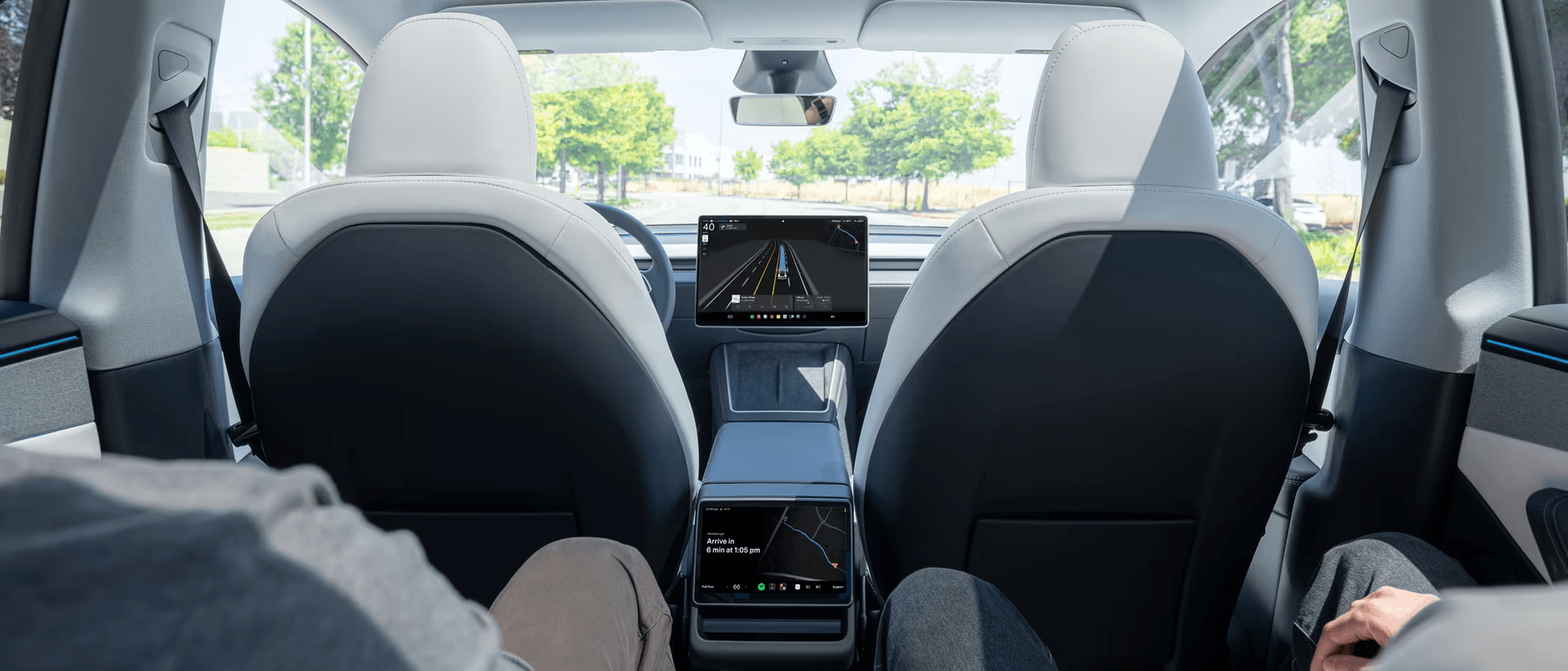
The Houston Chronicle reported that Tesla’s robotaxis are open for public rides in Houston but that the service area is small, and it said Tesla did not immediately say whether or when the Houston service would be expanded. Across the coverage, the common thread was that Dallas and Houston joined Austin and the San Francisco Bay Area, with the latter still described as a more limited ride service with human drivers.
Timeline, plans, and geofences
The Dallas and Houston rollout came after Tesla’s earlier commitments and followed a pattern of expanding geofenced service areas. Electric Vehicles reported that Tesla started on Saturday offering unsupervised rides in Dallas and Houston, fulfilling part of a seven-city expansion plan Tesla outlined in its Q4 2025 shareholder update deck published on January 28, 2026. That same report said the deck committed Tesla to launching Robotaxi in Dallas, Houston, Phoenix, Miami, Orlando, Tampa and Las Vegas within the first half of 2026, and it said CEO Elon Musk called the timeline “aggressive on the earnings call that followed.”
Electric Vehicles also described how Tesla classified the Bay Area operation as “Safety Driver” and Austin as “Ramping Unsupervised,” framing Dallas and Houston as the next step beyond those categories. The outlet further detailed the geofences, saying the Houston geofence covers approximately 25 square miles and is centered on the Jersey Village and Willowbrook areas in the northwest, bounded roughly by Highway 6 to the west, the Sam Houston Tollway to the south, and Highway 249 and FM 1960 to the north. For Dallas, Electric Vehicles said the geofence covers the Highland Park area, bounded roughly by the Dallas North Tollway to the west, Central Expressway (US 75) to the east, and extending south to downtown Dallas, and it said the service area includes portions of the Park Cities, Uptown, and downtown Dallas.
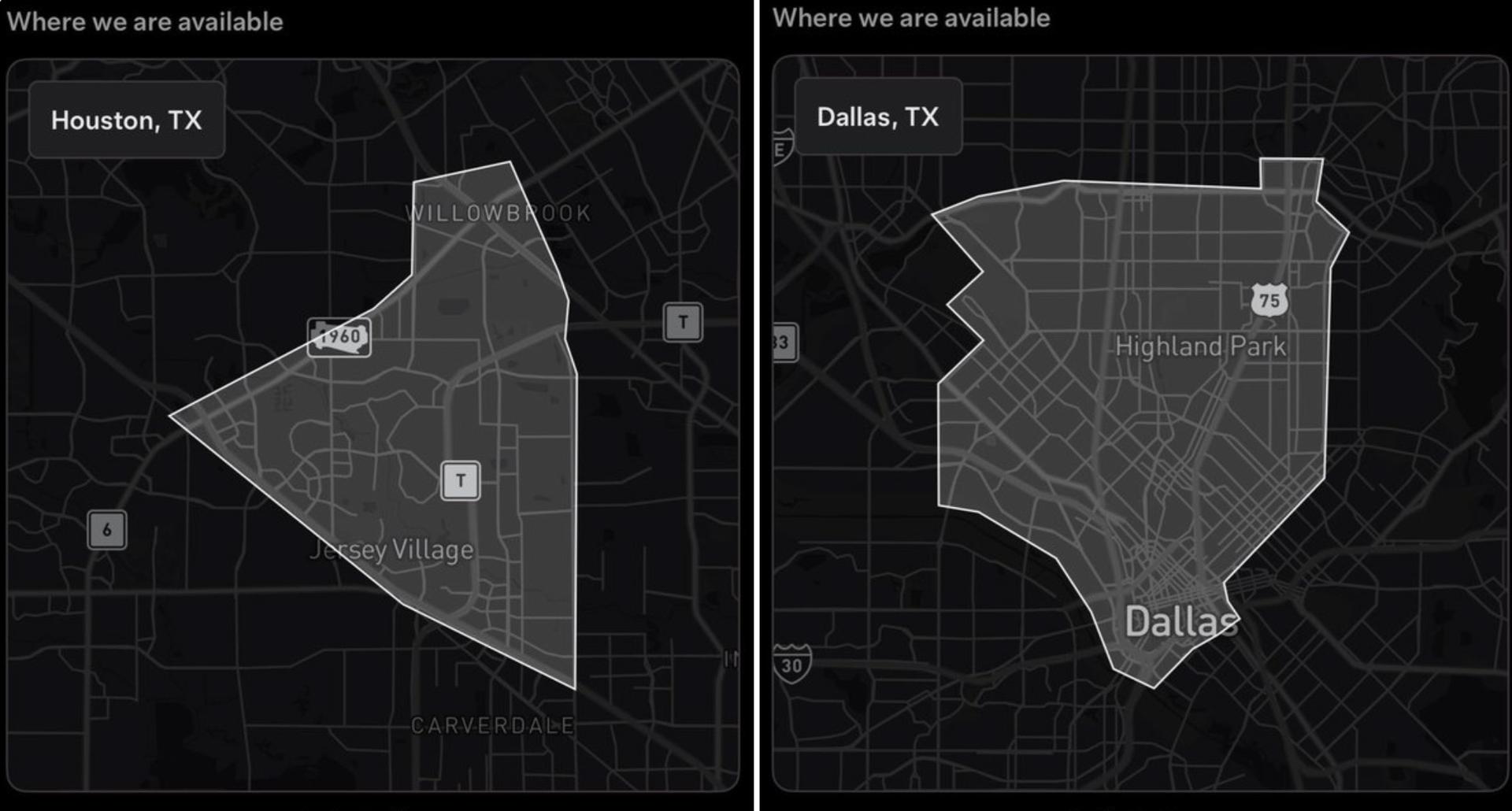
The Houston Chronicle provided a different but related description of Houston’s boundaries, saying the robotaxis are available in a roughly 20-square-mile area in the Jersey Village area, bounded by FM 1960 and US 290. Not a Tesla App added that the Houston geofence appears to be around 12 to 15 square miles and described it as forming a triangle covering the Jersey Village and Willowbrook areas, while it said Dallas covers roughly 30 to 35 square miles in a trapezoid-shaped region including much of the city’s “urban core” and the Park Cities.
Elon Musk and Tesla’s posts
Tesla’s announcement was accompanied by language and reactions that multiple outlets highlighted as part of the rollout’s messaging. Electric Vehicles said Tesla’s official ‘robotaxi’ account posted “Robotaxi now rolling out in Dallas & Houston,” alongside two map images showing the service areas, and it reported that minutes after the announcement the account wrote in a new post, “All by myself.” Electric Vehicles also said CEO Elon Musk commented on the announcement, writing: “Try Tesla Robotaxi in Dallas & Houston!”
TechCrunch described the company’s social media post as saying simply that “Robotaxi is now rolling out in Dallas & Houston 🤠” and included a 14-second video showing Tesla vehicles driving without human monitors or drivers in the front seat. Drive Tesla quoted the same “Robotaxi now rolling out in Dallas & Houston 🤠” post and added that Tesla shared the geofenced areas within which is Robotaxi service will operate without a driver behind the wheel. Gagadget similarly said Tesla announced this on social network X and showed a short video where electric cars move without a driver and without human supervision in the front seat.
Not a Tesla App emphasized that users confirmed the service is unsupervised after the announcement, and it quoted Tesla’s Robotaxi account on X stating: “Robotaxi now rolling out in Dallas & Houston.” In parallel, Houston Chronicle reported that Tesla CEO Elon Musk named Houston and Dallas as among the next cities planned for robotaxis' expansion during a shareholder meeting in November, along with Las Vegas, Phoenix and Miami.
Competitors and market context
Coverage of Tesla’s expansion also placed it alongside other autonomous-transportation activity in Texas. Houston Chronicle said Tesla’s robotaxis are the latest autonomous vehicles to court the Houston market and noted that Waymo, the autonomous taxi line owned by Google parent Alphabet Inc., began accepting paying customers in Houston in February. The same report said Waymo’s service area in Houston is within Houston’s Inner Loop and described it as a roughly 22-square-mile service area.
Houston Chronicle also said Nuro has operated artificial intelligence-powered autonomous delivery vehicles in Houston since 2019, and it reported that Nuro said in January that it had begun testing its own robotaxis, developed in partnership with ride-hailing app Uber, and that it planned to launch the service in the San Francisco Bay Area in 2026. Electric Vehicles added that Tesla’s entry into Dallas and Houston comes two months after Alphabet’s Waymo launched fully driverless commercial service in both Texas cities in February, operating through a fleet-management partnership with Avis Budget Group. Electric Vehicles further said Waymo’s Texas vehicles carry no safety monitor and no chase car, and rely on no remote supervision, and it stated that Waymo delivers over 500,000 paid robotaxi rides per week across eleven US cities with a target of 1 million weekly rides by the year end.

It also said the service operates approximately 2,500 active robotaxis nationwide. In the background of these comparisons, TechCrunch and Gagadget both emphasized Tesla’s limited initial presence in the new markets, with TechCrunch citing Robotaxi Tracker registering a single vehicle in each city and Gagadget noting that in the new cities one active vehicle has been recorded.
What comes next for Tesla
The rollout’s timing and the scale of Tesla’s broader robotaxi roadmap were central to how outlets described what comes next. Electric Vehicles said the launch comes four days before the company is scheduled to report first-quarter 2026 earnings on April 22, and it framed the Dallas and Houston expansion as giving Musk a concrete expansion datapoint to cite during Wednesday’s earnings call and Q&A. Not a Tesla App similarly said Tesla is scheduled to release its Q1 2026 earnings and present its financial performance to investors on Wednesday, April 22, and it described the launch as happening “just days before the call.”
“Robotaxi Tracker website only registering a single vehicle in each city (compared to 46 active vehicles logged in Austin).”
TechCrunch added that Tesla may not be running many vehicles in either of these new markets yet, with Robotaxi Tracker registering a single vehicle in each city compared to 46 active vehicles logged in Austin. Electric Vehicles also connected the expansion to production plans, saying Tesla has said it plans to begin volume production of the Cybercab later in 2026 at the Texas factory, and it said the Cybercab is positioned as the scaling platform for the Robotaxi network beyond the current Model Y-based fleet. The same report said volume production of the Tesla Semi is targeted for the first half of 2026, alongside the ramp of Megapack 3 production at the Houston Megafactory with a planned annual capacity of up to 50 GWh.
It also said Tesla reported earlier this month that it produced more than 408,000 vehicles and delivered over 358,000 vehicles in the first quarter of the year, and it cited analyst consensus for Q1 2026 revenue between $21.4 billion and $21.9 billion. In parallel, Drive Tesla described how customers began taking rides quickly and said several users on X shared videos confirming the service operates without a safety operator in either the driver or passenger seat, while it noted that Austin reached that milestone after “more than six months.”