
Full story
Tomb Reused Over Centuries
Archaeological investigations in a tomb at the Theban Necropolis, opposite Luxor, show burial rituals in Ancient Egypt changed over hundreds of years as the chamber was used and reused between the 25th Dynasty (754-656 BC) and the Ptolemaic period (305–30 BC), when it was abandoned.
“The bodies buried in vertical superposition did not have coffins but were carefully mummified”
Spanish researchers from the University of La Laguna studied one of the 400 tombs at the 4,000-year-old necropolis on the west bank of the Nile, excavating the chamber, photographing the mummies, and producing sketches and descriptions of their position, orientation and relationship with the tomb’s structures.
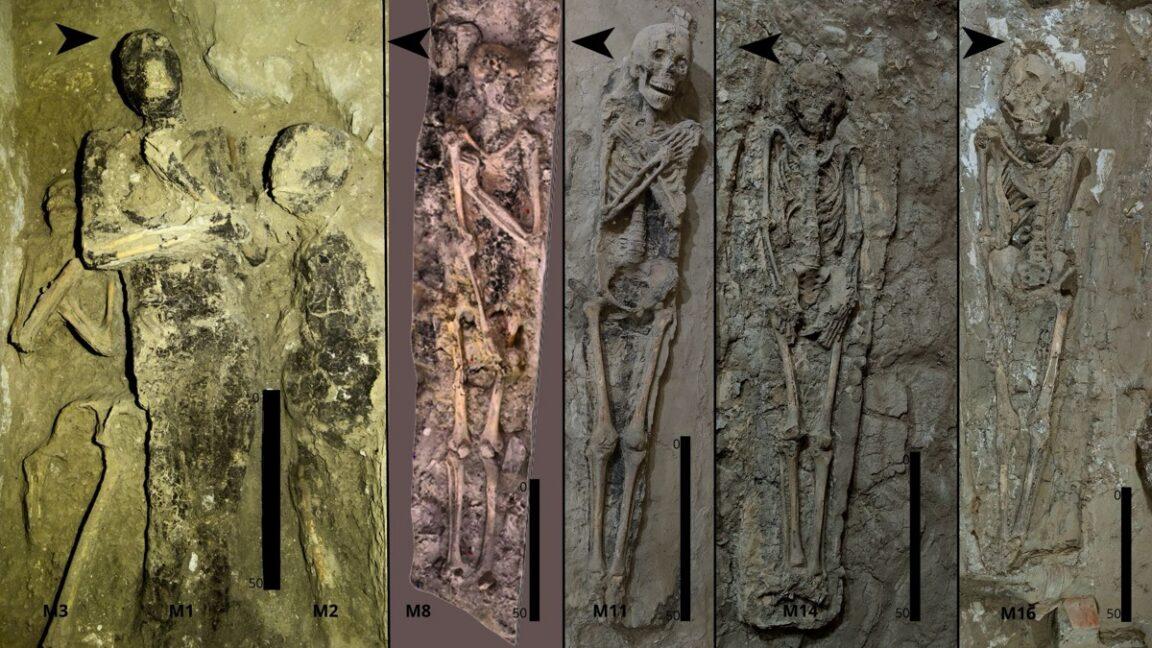
They found 16 mummified humans, one dog, and the disturbed remains of at least four people, and over time the bodies were treated differently, moving from being kept relatively separate in coffins to being kept much closer together, sometimes stacked, with arms folded rather than stretched out.
Senior author Dr Miguel Angel Molinero Polo said, “The bodies buried in vertical superposition did not have coffins but were carefully mummified,” describing a later pattern in the Ptolemaic period.
First author Dr Jared Carballo-Perez added that “One detail I find quite beautiful is the presence of a mummified dog placed directly on top of the mummies of a man and a woman,” linking the animal’s placement to a change in ritual practice.
Ritual Logic, Not Chaos
The study published in Frontiers in Environmental Archaeology describes the tomb as a repeatedly reactivated space, with new depositions adapted to the presence of earlier bodies rather than producing chaotic accumulation or a loss of ritual over time.
Phys.org reports that researchers examined part of the tomb—chamber three in tomb TT 209—to reconstruct how this burial space was used and reused between its construction during the Twenty-fifth Dynasty (754–656 BCE) and the Ptolemaic period (305–30 BCE), when it was abandoned.
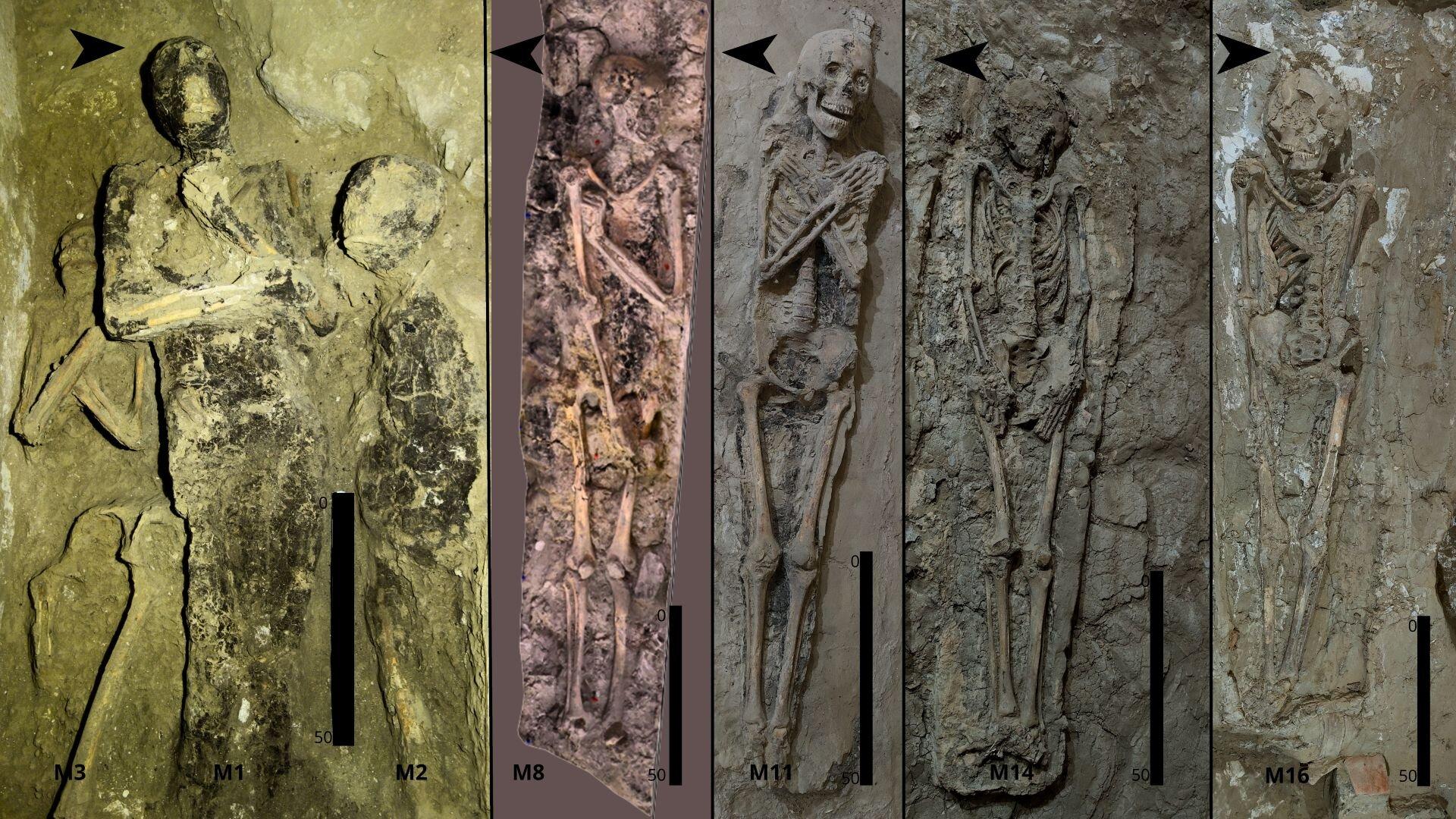
First author Dr. Jared Carballo-Pérez said, “The detailed study of the bodies indicates neither chaotic accumulation nor a loss of the original ritual over time,” and described a “spatial logic” in which each new deposition was adapted to previous bodies.
Senior author Dr. Miguel Ángel Molinero Polo added that “We have few details regarding how the people who entered tombs behaved,” emphasizing that the study could reconstruct what was done inside the chamber more securely than who re-entered it.
The team observed that for the earliest deposits bodies were placed in coffins, while later deposits placed bodies in any available space, with superposition found in two-thirds of the burials in the chamber.
Masn Identification and Stakes
In a separate development from Egypt, an Egyptian archaeological team may have identified the site of Masn, an ancient Egyptian city mentioned in texts written more than 3,000 years ago, with an inscription naming the city found at Tell Abu Seify in Qantara East near the Suez Canal in Egypt’s Ismailia governorate.
“Egypt’s Ministry of Tourism and Antiquities announced the discovery on Saturday”
The inscription, carved on a large fragment of a sandstone lintel, bears the royal titles of Ramses II and records the restoration of a statue of Horus, described as “Lord of the City of Masn,” and Egypt’s Ministry of Tourism and Antiquities announced the discovery on Saturday.
Hisham El Leithy, secretary general of Egypt’s Supreme Council of Antiquities, said further excavation and study will be needed before the identification can be confirmed, and the ministry said the latest inscription adds new evidence to the Tell Abu Seify theory.
Confirming the identification would place Masn on the Horus Military Road, described as the main military and trade route from Egypt into Sinai and ancient Canaan, helping archaeologists understand how the country’s eastern border was defended and administered.
The National also reports that the Theban tomb study should not be read as a straightforward shift from elite to general use, noting that the earliest burials involved coffins, funerary nets and amulets, while later individuals had different assemblages or no coffins but were still carefully mummified.