Timmy The Humpback Whale Found Dead Near Denmark’s Anholt After Germany Stranding
Key Takeaways
- Timmy the humpback stranded on Germany's Baltic coast, rescued privately, released into the North Sea.
- It was later found dead off Denmark's Anholt island, Danish authorities confirming Timmy's identification.
- Rescue described as controversial and cruel by NPR and Guardian.
Timmy confirmed dead
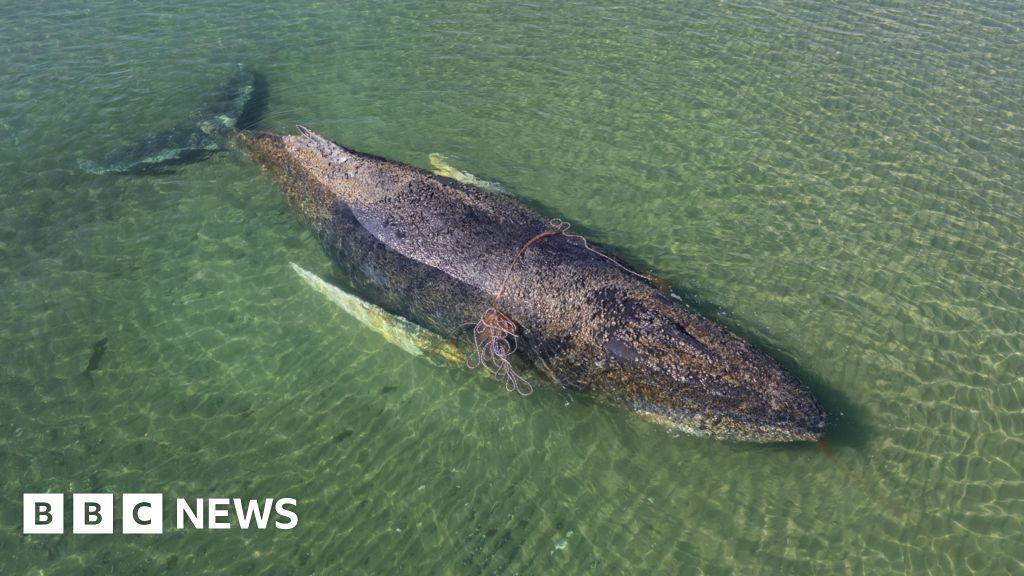
A humpback whale nicknamed “Timmy” was found dead near the Danish island of Anholt in the Kattegat, and Danish authorities confirmed it was the same animal previously stranded in Germany.
Jane Hansen, division head at the Danish Environmental Protection Agency, said, “It can now be confirmed that the stranded humpback whale near Anholt is the same whale that was previously stranded in Germany.”

The whale had been initially spotted stuck on a sandbank on March 23 and was released into the North Sea off Denmark on May 2 after being put in a barge.
Conditions on Saturday allowed a Danish Nature Agency employee to locate and retrieve an attached tracking device, and Hansen said, “the position and appearance of the device confirm that this is the same whale that had previously been observed and handled in German waters.”
Cost, controversy, and debate
The rescue attempt that transported the whale into a water-filled barge was criticized as “pure animal cruelty,” and the Guardian reported it was believed to have cost about €1.5m (£1.3m).
The International Whaling Commission had criticized the release as “inadvisable” because the male juvenile appeared to be “severely compromised” and unlikely to survive after its release.
The Guardian also cited the Oceanographic Museum in Stralsund, where museum director Burkard Baschek warned that trying to save Timmy amounted to “pure animal cruelty.”
In a separate critique, Amy Dickham, a professor of wildlife conservation at the University of Oxford, told the Guardian that it was “really questionable whether it was a good use of funds” compared with other threats to whales.
Aftermath and next steps
After the whale was found dead about 70km (45 miles) south of the release location, the Danish Environmental Protection Agency said it had “no concrete plans to remove the whale from the area or to perform a necropsy.”
The agency also told AFP that it was “not currently considered to pose a problem in the area,” while stressing that people should not approach the body because it might carry diseases transmissible to humans.
BBC reported that the operation was privately funded by two German entrepreneurs and that the whale had been nicknamed “Timmy” or “Hope” by rescuers and German media.
The BBC further noted that German authorities attempted a number of rescues before announcing they were giving up, and that wildlife groups warned the whale had no long-term chance of survival and had suffered skin damage due to low salinity waters along Germany’s Baltic coast.
More on Technology and Science

Texas Children’s Hospital Opens Nation’s First Detransition Clinic After $10M DOJ Settlement
11 sources compared

arXiv Bans Authors for One Year After LLM Hallucinated References and Unverified Results
11 sources compared

Elon Musk Demanda a Apple y OpenAI por Integrar ChatGPT y Bloquear la Competencia
19 sources compared

Anthropic Product Head Cat Wu Says Future AI Will Anticipate User Needs Before Prompts
10 sources compared