Europe04 July, 20262 min read
Tocqueville Estate Hosts Transatlantic Dialogue on Democracy’s Future in Normandy Near Cherbourg
This article is an automated aggregation of coverage from news outlets. Our editorials offer in-depth analysis curated by the NewsCord team.
Tocqueville estate in Normandy hosted a transatlantic dialogue on democracy’s future. About fifty participants from Europe and the United States attended.

Debating democracy’s future
At the Tocqueville estate, about fifty intellectuals, elected officials, and journalists from both sides of the Atlantic gathered on June 26 and 27 to think about the future of democracy from Normandy, near Cherbourg. Le Figaro describes the setting as an annual transatlantic dialogue convened for eight years at the initiative of Laure Mandeville and Jean-Guillaume de Tocqueville, with participants converging toward the château.
“Democracy is not only a form of government; it is a way of being in society.”
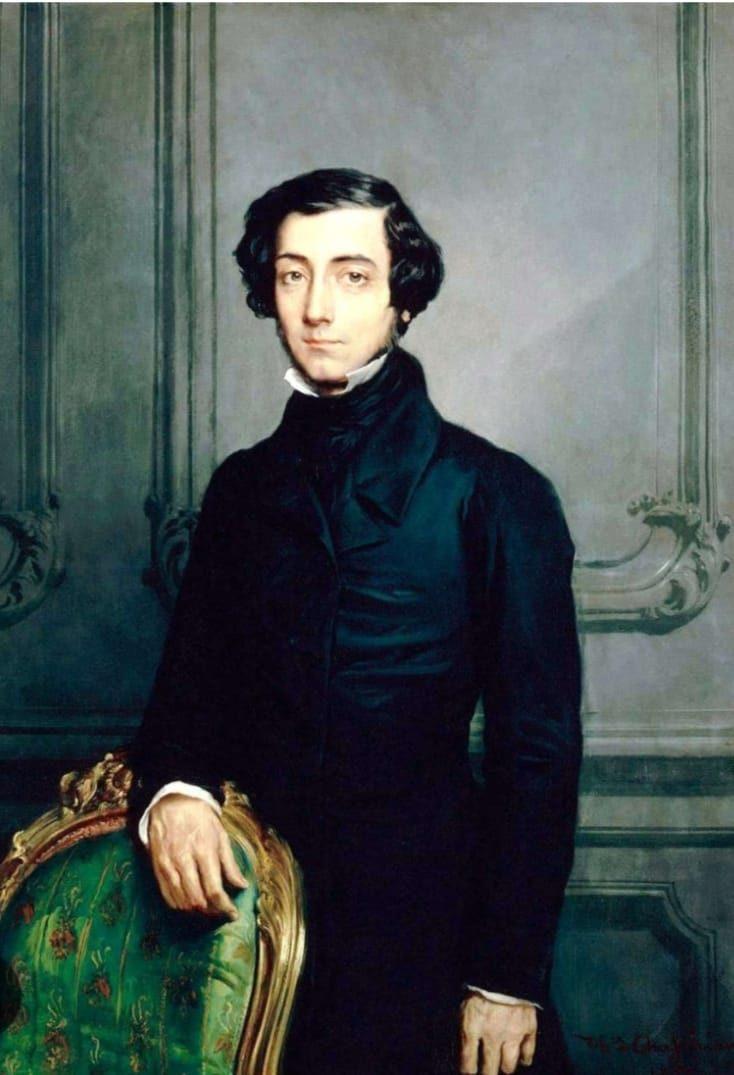
El Mundo frames the gathering as a discussion of “Tocqueville and our tired democracies,” with a program unpacking topics including the crisis of trust between citizens and rulers, freedom of expression, and Europe facing war and the Rule of Law. El Mundo says one topic threaded the dialogue: religion, arguing that for Tocqueville democracy is not only a form of government but “a way of being in society.”
Religion, liberty, and trust
El Mundo reports that Tocqueville’s American reflection places religion at the center of democracy’s future, because it reminds the individual that he is not self-sufficient and that a political community cannot live only on interests and subjective rights. The article adds that Tocqueville analyzed how the practice of Christianity in the New World did not negate liberty, but contained it, oriented it, and gave it moral ground.
El Mundo also links Tocqueville’s view to the “inner fragility of our democracies,” saying equality can emancipate the person but also imprison him in his private sphere. Fondation Méditerranéenne d'Études Stratégiques, in a separate discussion of Tocqueville’s ideas, argues that the “modèle occidental” is confronted by “une remise en cause brutale et même à une hostilité croissante,” including in the conflict Ukrainian and the revolutions arabes.

Institutions, information, and stakes
Fondation de France says democratic models are increasingly battered or threatened, and it frames its work around preserving democratic vitality through independence and pluralism of the media, access to reliable information, media literacy, and citizen engagement. The foundation quotes Axelle Davezac, chief executive of the Fondation de France, saying, “Democracy is not only a condition, but also an essential component of the general interest.”
“Democracy is not only a condition, but also an essential component of the general interest.”
It also cites a notebook published in March 2026 by the Observatoire Philanthropie & Société of the Fondation de France, saying information is “une véritable infrastructure démocratique.” In parallel, Fondation Jean-Jaurès links institutional debate to the political moment after the dissolution decided by the President of the Republic on the evening of the European elections of June 9, 2024, with Dorian Dreuil saying the task is “aligning our institutional architecture with the political practice of the moment.”