USA · 07 May, 2026 · 3 min read
Trump Accuses Pope Leo XIV of Endangering Catholics Over Iran Nuclear Bomb
Trump publicly attacks Pope Leo XIV, straining US-Vatican relations. Pope Leo XIV denounces Iran-related threats, advocates peace and diplomacy.
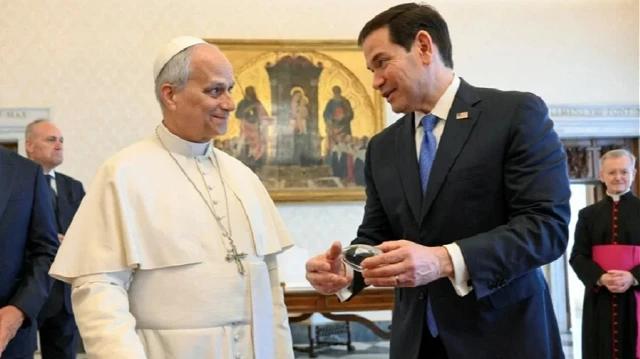
Why Rubio meets Pope Leo.
5 of 6 outlets skipped it: corriere Roma: Leo avoids “old schemes”.
18outlets compared
Same story, two versions
tap a side to read it in full
USA Today
““No matter what the administration says, this is absolutely a reset effort””Read the original ↗
USA Today
“Rubio insists his visit to the Vatican is not about making nice with the pope.”Read the original ↗
Frames the meeting as political reset versus stated humanitarian agenda.
Rubio Meets Pope Leo
President Donald Trump has been throwing broadsides at Pope Leo XIV, accusing the first American-born pontiff of “endangering” Catholics with his opposition to the Iran war, and the secretary of state has said Marco Rubio’s Vatican meeting on May 7 involves urgent matters including humanitarian aid to Cuba and the persecution of Christians. Rubio insists his visit is not about making nice with the pope, but Republican pollster Brent Buchanan, founder of the Washington, DC-based firm Cygnal, said: “It’s an unnecessary fight among a key voter group.”
In a May 4 interview with conservative radio host Hugh Hewitt, Trump accused Leo of being “OK” with Iran having a nuclear weapon, and Trump told Hewitt: “I think he’s endangering a lot of Catholics, and a lot of people.” Asked during a May 6 event in the Oval Office what message he wants Rubio to deliver, Trump said his "only message" is that Iran can't get a nuclear bomb, as the ongoing attacks could complicate any effort by Rubio to reach a détente with the religious leader who is also a head of state.
Poll Shows Disapproval
A Washington Post-ABC News-Ipsos poll published May 6 found most Americans disapprove of President Donald Trump’s comments about Pope Leo XIV, with the poll conducted April 24-28 and reporting that Pope Leo has a 25-point net favorable margin among Americans overall. The poll found 41% favorable, 16% unfavorable, and 43% saying they have no opinion of the pontiff, while Trump’s approval rating dropped to 37%, down from 45% in February 2025.
Two-thirds of Americans, 66%, said they had a positive reaction to Pope Leo asking Americans on April 7 to contact their congressional lawmakers to work for peace and to reject war, while 57% had a negative reaction to Trump posting "I don't want a Pope who thinks it's OK for Iran to have a Nuclear Weapon." Among American Catholics, 70% said they had a positive reaction to Pope Leo asking Americans to contact Congress, and 61% said they had a negative reaction to Trump’s post about the pope and nuclear weapons, and the poll also reported that 76% disapproved of Trump’s social media post threatening that "a whole civilization will die tonight" if Iran did not make an agreement with the U.S.
Public Reaction and Stakes
As Pope Leo XIV concludes his first year as the first American pope on Friday, the Guardian reported Americans shared how they feel about the 70-year-old pontiff who has increasingly found himself at odds with Donald Trump. Brock Horton, a 69-year-old retired public school teacher in San Antonio, Texas, said: “Pope Leo is bringing Jesus’s teachings forward instead of church dogma … If you can’t welcome strangers and treat everyone with love and dignity, you have no place leading anyone,” and Kelly Raghavan, a 64-year-old medical interpreter in San Diego, California, hailed the pope’s willingness to speak out.
The Guardian also reported that Trump accused the pope of “endangering a lot of Catholics” through his condemnation of the war, which has killed at least 3,400 Iranians and 13 US service members, and Trump has described the pope as “weak on crime and terrible for foreign policy” while Pope Leo dismissed the criticism by saying: “I’m not afraid of the Trump administration.” In parallel, the Washington Post-ABC News-Ipsos poll described in the Washington Post said Americans are deeply uncomfortable with recent religion-related statements by Trump and Defense Secretary Pete Hegseth, as the comments overwhelmingly criticize Trump and question his moral values and religious sincerity.