USA27 September, 20252 min read
Trump Administration Asks Supreme Court to Uphold Ban on Birthright Citizenship
This article is an automated aggregation of coverage from news outlets. Our editorials offer in-depth analysis curated by the NewsCord team.
Trump administration asks Supreme Court to uphold executive order ending birthright citizenship. Order denies citizenship to children born in the US if parents are illegal or temporary residents.

8 outlets told this the same way.
Legal Challenge to Birthright Citizenship
The Trump administration has made a significant legal move by appealing to the U.S. Supreme Court to uphold an executive order that seeks to end birthright citizenship for children born in the United States to parents who are in the country illegally or on temporary visas.
“The Trump administration has asked the US Supreme Court to uphold an executive order that ends birthright citizenship for children born in the US to parents who are in the country illegally or on temporary visas.”
This executive order, signed by President Trump at the start of his second term, challenges the long-standing interpretation of the 14th Amendment, which has traditionally granted citizenship to anyone born on U.S. soil.
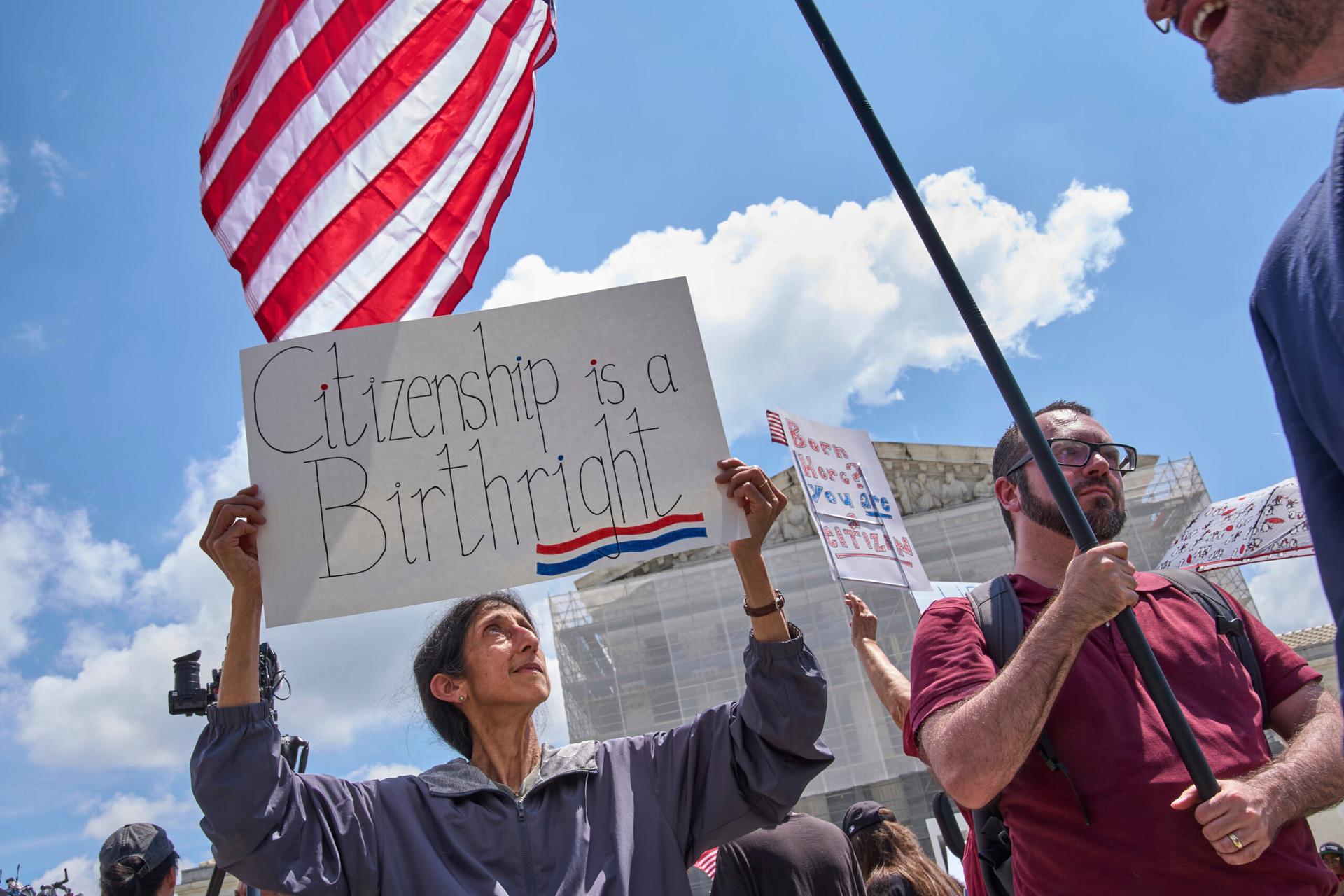
The administration argues that the amendment's clause "subject to the jurisdiction thereof" excludes children of unauthorized or temporary immigrants, a stance that has been blocked by multiple lower courts on constitutional grounds.
Legal Debate on Birthright Citizenship
The legal battle over this executive order is rooted in the interpretation of the 14th Amendment and its historical context.
The 1898 Supreme Court case US v. Wong Kim Ark is a pivotal precedent, which affirmed that children born in the U.S. to foreign parents are citizens.

The Trump administration contends that this ruling should only apply to those with permanent domicile and residence, a view that has been rejected by lower courts.
The 9th Circuit Court, for instance, ruled that the executive order contradicts the Constitution and the Wong Kim Ark precedent, emphasizing the longstanding executive practice of granting citizenship to all born on U.S. soil.
Supreme Court Immigration Impact
The potential implications of this Supreme Court decision are significant. If the court upholds the executive order, it could lead to a substantial increase in the unauthorized immigrant population, as children born in the U.S. to unauthorized immigrants would no longer be granted citizenship.
“Data shows hundreds of thousands of US-born children of unauthorized immigrants each year, and experts warn that ending birthright citizenship could increase the unauthorized immigrant population over time.”
This could also result in increased family separations, as these children could be deported alongside their parents. The Justice Department has appealed to the Supreme Court to resolve this issue in its upcoming term, with a decision expected by early next summer.
Trump's Birthright Citizenship Policy
The Trump administration's push to end birthright citizenship is part of a broader immigration policy agenda that has been a hallmark of Trump's presidency. This move has sparked significant debate and controversy, with opponents arguing that it undermines the principles of the 14th Amendment and could have far-reaching consequences for immigrant communities in the U.S. The administration's stance is seen as an attempt to reshape immigration policy and address what it perceives as loopholes in the current system.