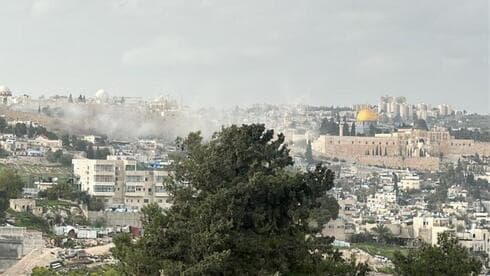
Trump and Iran Threaten Attacks on Gulf Energy Facilities as War Escalates
Key Takeaways
- Trump threatens to attack Iran's power plants if Strait of Hormuz opens in 48 hours.
- Iran warns it would strike U.S. and Israeli energy and desalination infrastructure.
- Iranian missiles strike Arad and Dimona near Israel's nuclear facility, injuring over 100.
Trump's Ultimatum
President Donald Trump issued a dramatic 48-hour ultimatum to Iran on Saturday, March 21, 2026, threatening to 'obliterate' the country's power plants if Tehran fails to fully reopen the Strait of Hormuz.
“would destroy “various POWER PLANTS, STARTING WITH THE BIGGEST ONE FIRST”
The threat was made in a Truth Social post where Trump declared, 'If Iran doesn't FULLY OPEN, WITHOUT THREAT, the Strait of Hormuz, within 48 HOURS from this exact point in time, the United States of America will hit and obliterate their various POWER PLANTS, STARTING WITH THE BIGGEST ONE FIRST!'

This ultimatum came as tensions escalated dramatically in the Middle East crisis.
Iran responded immediately through its military command, warning that any such strike would trigger attacks on US-linked 'energy, information technology and desalination infrastructure' across the region, signaling a risk of much wider conflict.
The administration of Donald Trump is reportedly weighing several options, each carrying significant risk and complexity, with no quick or guaranteed solution in sight according to The New York Times analysis.
Energy Market Crisis
The crisis has created an unprecedented disruption in global energy markets as the Strait of Hormuz, a critical waterway connecting the Persian Gulf to the world's oceans, remains effectively closed to most commercial traffic.
Approximately 20% of global oil and liquefied natural gas flows normally pass through this narrow choke point, but the situation has deteriorated severely with shipping down by about 95% — from roughly 120 daily transits to just 124 crossings in three weeks.
The economic impact has been staggering, with 24 vessel incidents reported since March 1 including 11 tankers, resulting in 8 seafarers killed, 4 missing, and 10 injured.
The consequences extend far beyond immediate casualties, as approximately 3,200 vessels remain stranded in the region, including 250 oil tankers stuck in the Gulf, representing about 5% of global tanker capacity.
This has caused ship fuel prices to surge approximately 90% while crude shipping costs have doubled, fueling global inflation fears and sending European gas prices surging as much as 35% in recent days.
Military Escalation
Military tensions have escalated dramatically with both sides demonstrating increasingly sophisticated capabilities and willingness to expand the conflict beyond immediate theater.
The United States has intensified military operations along Iran's southern coast, with US warplanes targeting missile launchers, drone facilities, and underground bunkers in an effort to neutralize Iran's ability to target ships from land.
In a significant development that demonstrates Iran's expanding military reach, the Islamic republic fired two ballistic missiles with a range of 4,000 kilometers (2,500 miles) at the US-British Indian Ocean military base at Diego Garcia, suggesting Tehran possesses missiles with longer range than previously acknowledged.
Israeli military chief Eyal Zamir confirmed Iran used a 'two-stage intercontinental ballistic missile,' noting these capabilities represent a strategic shift for Tehran.
The risk of regional escalation has been further heightened by Houthi rebels in Yemen suggesting they will respond to any escalation against Iran, including efforts to reopen the Strait of Hormuz, warning that any attempt to expand the war 'will have a negative impact on the situation in the entire region, including supply chains, energy prices and the global economy in general.'
International Response
The escalating crisis has prompted international concern and diplomatic maneuvering as nations grapple with the potential humanitarian and economic consequences.
Iran's Parliament Speaker Mohammad Baqer Qalibaf wrote on X that critical infrastructure and energy facilities in the Middle East could be 'irreversibly destroyed' should Iranian power plants be attacked, warning that oil prices would then 'rise for a long time.'

The United Arab Emirates reported facing aerial attacks after Iran warned it against allowing strikes from its territory on disputed islands near the Strait of Hormuz.
Saudi Arabia ordered Iran's military attaché and several embassy staff to leave the country as Tehran continued to strike neighbors in the Gulf.
The economic impact extends to major economies like Japan, which gets about 90% of its oil shipments via the strait that Tehran has largely closed during the war.
Japan's Foreign Minister Toshimitsu Motegi suggested that minesweeping operations could be considered if a ceasefire were established, though Japan's military actions are limited under its postwar pacifist constitution.
Meanwhile, US officials have acknowledged that energy price shocks are fuelling inflation, hitting consumers and businesses hard — a major political liability for Trump as he seeks to justify the war to the American public.
Humanitarian Impact
The crisis has created severe humanitarian challenges with approximately 20,000 people affected across the region, including seafarers, port workers, and offshore crews stranded by the shipping crisis.
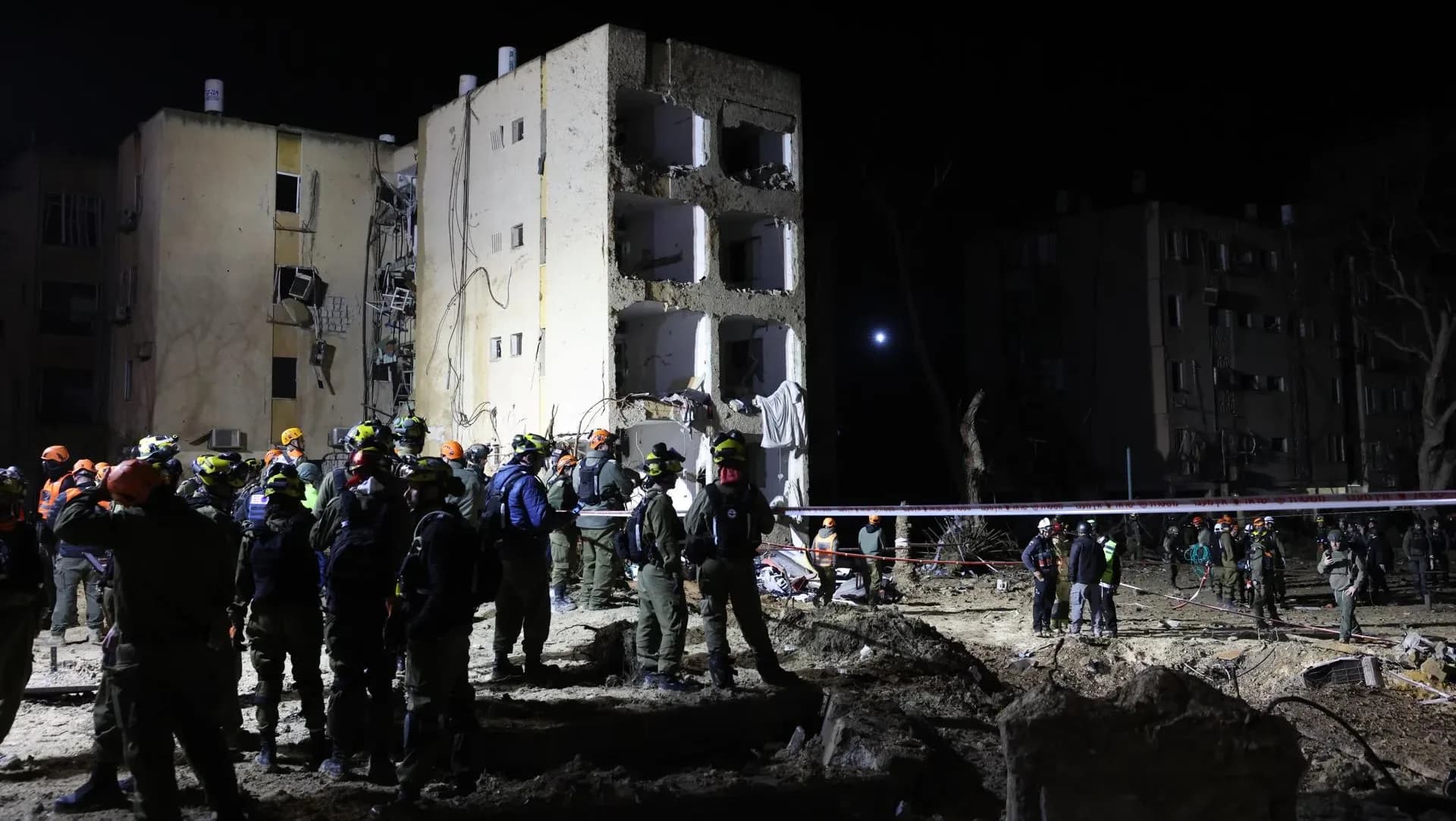
Emergency responders in Israel reported extensive damage from Iranian missile strikes on the southern cities of Dimona and Arad, where dozens of people were injured, including children.
Israeli emergency services stated that at least 84 people were wounded, with 10 in serious condition — including a five-year-old girl — and 16 in moderate condition from a direct hit by a missile launched from Iran on Saturday evening in Arad.
The strikes caused significant structural damage, with door and window frames blown off due to the impact, household items scattered across rooms, and some residential structures reportedly reduced to rubble.
At least 10 apartment buildings in Arad were severely affected, with several at risk of collapse.
The International Atomic Energy Agency (IAEA) has been monitoring the situation closely, particularly around nuclear facilities, and has reiterated calls for 'military restraint to prevent a nuclear accident' following attacks on sites like Iran's Natanz enrichment complex and Israel's Dimona nuclear research center.
More on Iran

Trump Threatens to Obliterate Iran's Power Plants If Hormuz Is Not Open
12 sources compared

Iran threatens to irreversibly destroy Gulf energy infrastructure after Trump's ultimatum
126 sources compared

Trump threatens to obliterate Iran's power plants; Iran vows retaliation
12 sources compared
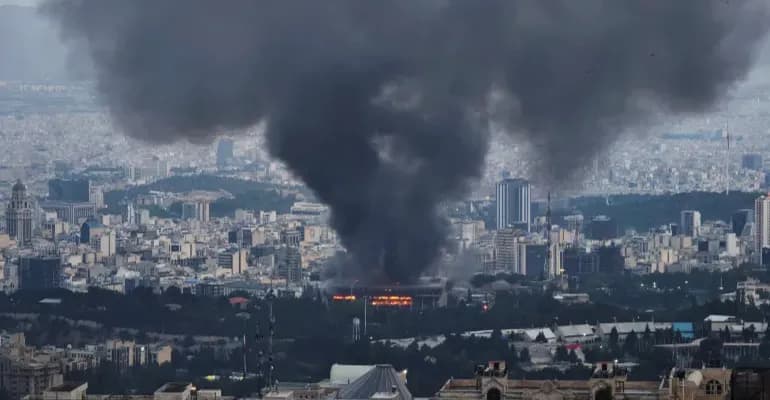
Iran missile strikes near Israel's main nuclear research center, injuring dozens
27 sources compared