Gaza Genocide01 October, 20252 min read
Trump and Netanyahu Cement Indefinite Israeli Occupation of Gaza with New ‘Peace’ Plan
Trump and Netanyahu unveiled a 20-point Gaza plan demanding Hamas disarmament and governance removal. The plan establishes an international 'Board of Peace' led by Trump and Tony Blair to govern Gaza.

41 outlets told this the same way.
Outlets did split on Israel Marks Oct. 7 Anniversary With Strikes on Gaza, Netanyahu Faces Election After Nova Tribute →
Controversial Gaza Peace Plan
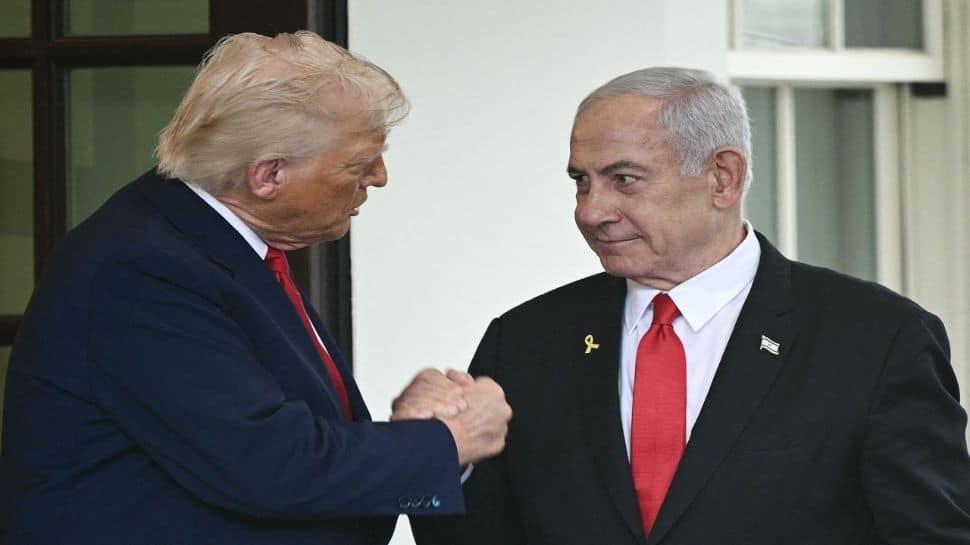
Former U.S. President Donald Trump and Israeli Prime Minister Benjamin Netanyahu have introduced a controversial 20-point peace plan.
“The article discusses a peace plan supported by President Donald Trump and Israeli Prime Minister Benjamin Netanyahu aimed at resolving the Gaza conflict.”
Critics argue that the plan cements Israel's indefinite occupation of Gaza.

The plan calls for the disarmament of Hamas and the establishment of a technocratic governance structure in Gaza.
This governance would be overseen by an international "Board of Peace" led by Trump and former UK Prime Minister Tony Blair.
The proposal effectively sidelines Hamas and the Palestinian Authority, raising concerns about its legitimacy.
There are worries that the plan could worsen the humanitarian crisis in Gaza.
Some Arab nations and other critics view the plan as a neocolonial imposition that undermines Palestinian self-determination.
They also believe it perpetuates Israeli control over Gaza.
Criticism of Gaza Security Plan
The plan has been criticized for its potential to perpetuate the status quo, with Israel maintaining a security perimeter around Gaza and continuing its military presence. Zee News (Asian) describes the plan as an ultimatum for Hamas to surrender, with the threat of escalated military action if they refuse.
The Intercept (Western Alternative) argues that the plan effectively continues the occupation under a different guise, with Israel retaining control over Gaza's security. This perspective is echoed by TheNational.scot (Western Alternative), which criticizes the plan as part of an ongoing process of genocide and occupation against Palestinians.
International Reactions to Peace Plan
The international response to the plan has been mixed, with some countries expressing cautious optimism while others remain skeptical. France 24 reports that UN Secretary-General Antonio Guterres has called on all parties to commit to the plan. The Independent notes that French President Macron and Pope Leo support the initiative.
“UN Secretary-General Antonio Guterres called on all parties to commit to the Gaza peace plan.”
However, Al-Monitor highlights criticism from Israeli Finance Minister Bezalel Smotrich, who predicts the plan will fail and lead to renewed fighting. This division reflects broader geopolitical tensions and differing priorities among international actors regarding the Israeli-Palestinian conflict.
Controversy Over Peace Plan
The plan's exclusion of Hamas from negotiations and governance has been a major point of contention. NBC News (Western Mainstream) reports that the Palestinian Authority welcomed the plan, but Hamas criticized it as an imposition.
The Conversation (Western Alternative) highlights the exclusion of Hamas as a significant barrier to peace, noting the deep mistrust between the parties. Meanwhile, Newsweek (Western Mainstream) describes the plan as envisioning Gaza as a "deradicalized terror-free zone," which critics argue ignores the complex realities on the ground and the need for genuine Palestinian representation.
