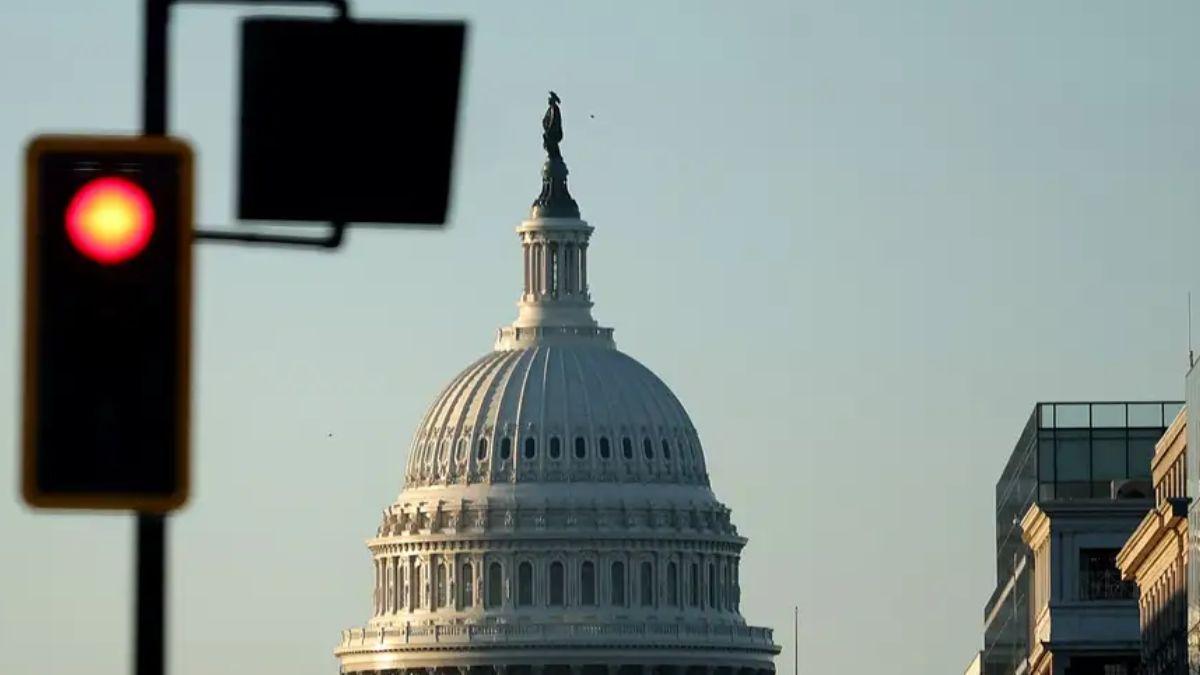
Trump Faces May 1 War Powers Deadline as Congress Debates US-Israel Attacks on Iran
Key Takeaways
- May 1 deadline; continued Iran actions risk illegality without congressional approval.
- War Powers Resolution grants 60 days, plus a 30-day wind-down window.
- Congress could authorize, constrain, or derail Iran operations; precedent shows reluctance.
May 1 legal fork
The 60-day mark of the United States and Israel’s war with Iran is approaching as May 1 nears, creating a constitutional fork in the road for U.S. lawmakers over whether they will “assert their authority – either in support or against – the conflict, or remain silent,” as Al Jazeera frames it.
“Washington, DC – The 60-day mark of the United States and Israel’s war with Iran represents a fork in the road for US lawmakers: will they assert their authority – either in support or against – the conflict, or remain silent”
Al Jazeera says the War Powers Act requires presidents to cease military action after 60 days or receive congressional authorization to legally continue, and it identifies May 1 as the threshold reached after U.S. President Donald Trump officially “notified” Congress of the US-Israel attacks on Iran, which began on February 28.

Acting director David Janovsky of the Project on Government Oversight (POGO) tells Al Jazeera, “I think ultimately the question is, does Congress want a say in what’s happening?” and adds, “Either to say you have to stop right now, or to take some ownership and exercise some oversight?”
Al Jazeera reports that Republicans control a slim majority in the Senate and the House and that political brass “has not revealed how they plan to proceed in the days ahead,” while Senate majority leader John Thune and Senator James Risch have not indicated plans to bring forward legislation to authorize the war.
The Military.com report similarly warns that “A May 1 deadline threatens to make continued military action in Iran unlawful without congressional approval,” describing the War Powers Resolution as giving presidents 60 days without congressional authorization followed by a narrow 30-day wind-down period.
Military.com adds that the clock “expires this week” and requires lawmakers to either authorize the war or force a withdrawal, setting up “a potential legal and constitutional showdown if neither happens.”
Votes and legal arguments
As the May 1 deadline approaches, the dispute is playing out through repeated attempts in Congress to force votes tied to the War Powers Resolution, with Military.com describing “the fourth failed attempt this year to challenge the Trump administration’s authority.”
On April 15, Military.com reports that U.S. Senate lawmakers voted 52-47 to block a motion led by Sen. Tammy Duckworth (D-IL) that would have required congressional approval for continued U.S. military operations tied to Iran.
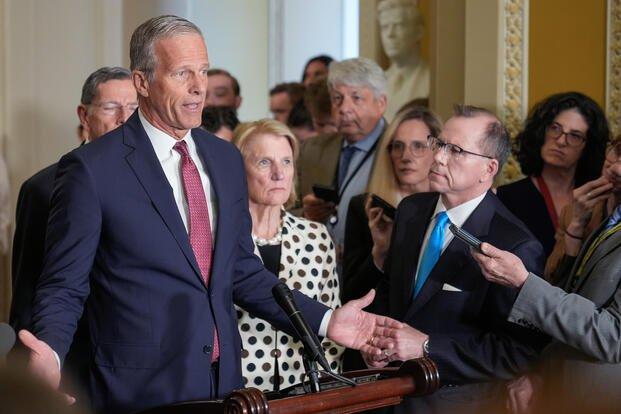
Military.com says Sen. Rand Paul (R-KY) was the only Republican to support the effort, while Sen. John Fetterman (D-PA) broke with Democrats to oppose it, and it describes the vote as exposing divisions in both parties over Congress’ role in authorizing military force.
Duckworth told Military.com, “This war is flat-out illegal. Trump didn’t have the authority to launch it in the first place, and nearly two months in, he still has not provided a reasonable justification for why we’re in this mess,” and she added, “While Republicans wrongly claim the President has 60 days to seek authorization, even that fake deadline is looming.”
The White House pushed back, with Military.com quoting White House spokesperson Anna Kelly saying, “President Trump has been transparent with the Hill since before Operation Epic Fury began, and administration officials provided over 30 bipartisan briefings for members of Congress,” and Kelly asserted, “The President’s preference is always diplomacy, and Iran wants to make a deal.”
Military.com also reports a White House official on background saying, “The administration is in active conversations with the Hill on this topic,” and criticizing efforts to limit the president’s authority as political “points” that would “only undermine the United States Military abroad.”
On the legal side, Military.com quotes ACLU director Christopher Anders saying the law “was never intended to give presidents a two-month window to wage war without approval,” and Anders adds, “It was written to bring unauthorized actions to a quick end,” while also warning that continuing operations beyond 60 days without authorization would violate the law.
Options to extend
While the War Powers Act clock is described as approaching its end, Al Jazeera’s framing of May 1 as a decisive constitutional threshold is echoed by اندبندنت عربية, which asks what options Trump has to extend the war against Iran after the 60-day period expires.
“Summary History repeats itself, for over seven decades and through the various wars the United States has fought, members of Congress have not wanted to act, and presidents have not wanted to seek authorization”
اندبندنت عربية says the war began on February 28 and that the 60-day period since that date nears its end, with the legal deadline falling on May 1 “based on the administration’s official notice to Congress in early March.”
The article describes the War Powers Act as requiring the executive branch to notify Congress within 48 hours of entering American forces into hostilities and providing for withdrawing these forces within 60 days unless Congress declares war or authorizes the use of military force, while allowing “a single 30-day extension” if the president determines a need for more time to withdraw safely.
It also lays out a constitutional interpretation divergence, stating that the Trump administration relies on the idea that the president can act alone in “truly exceptional circumstances” to defend against an attack or imminent danger, and it ties that justification to claims about Iran nearing development of a nuclear bomb by enriching uranium to high levels and developing long-range ballistic missiles.
For potential workarounds, اندبندنت عربية says Trump could argue that a ceasefire has ended the hostilities, quoting CNN’s Republican Representative Brian Fitzpatrick: “We cannot punish ceasefire agreements. We want them to sit down at the table and talk to each other.”
It also describes another option as challenging the constitutionality of the War Powers Act itself, citing Vice President J. D. Vance saying in January 2026 that “the War Powers Act is basically a ceremonial and unconstitutional law.”
The article further states that Congress has failed four times this year on votes based on the War Powers Act, and it reports a House vote “running a razor-thin 213 to 214” one day after a similar failure in the Senate, which it says effectively allowed the conflict to continue without an official mandate.
Deadline expiry dispute
As the deadline passes, عنب بلدي reports that the 60-day window that would allow Trump to wage war on Iran without Congress’s approval is supposed to end as May 1, 2026 approaches, and it cites CNN reporting that Trump is waging war “without legislative authorization.”
The article says the issue is not only the timing but also interpretation of a 1973 law enacted “despite President Richard Nixon’s veto,” and it describes the War Powers Act as providing that any use of force must automatically pause after 60 days unless Congress grants authorization.
It adds that CNN notes “Trump did not seek authorization to begin operations in Iran,” and it states that Deutsche Welle reports Trump met the deadline imposed by U.S. law by delivering his report to Congress on March 2, 2026.
عنب بلدي emphasizes that Congress noting this does not mean Congress approved the war, and it describes competing interpretations of when the 60-day countdown ends, including one view that places the start of the deadline on the day of the first attack on Iran, ending on April 29, 2026, and another view based on the official notification to Congress, ending on May 1, 2026.
The article also says the cease-fire issue remains a factor, stating there is “no consensus on whether a cease-fire freezes the countdown of the legal deadline or not.”
It then returns to precedents for bypassing the War Powers Act, saying CNN notes that in 2011 former President Barack Obama kept the United States involved in the bombing of Libya for more than 60 days without authorization by arguing U.S. forces were not directly engaged in hostilities.
The same source says the Trump administration used a similar logic in earlier operations against boats suspected of ties to Venezuelan drug-trafficking gangs, while describing the war on Iran as broader and more dangerous.
In the political fight, عنب بلدي reports that on April 16, 2026, the U.S. House of Representatives rejected a Democratic bid “to curb President Donald Trump’s authority to wage war on Iran,” citing AFP and describing a vote largely along party lines with one Republican voting for the measure, another abstaining, and a Democrat voting against it.
Impeachment and escalation risk
The constitutional dispute is also spilling into other congressional actions, with عنب بلدي reporting that Democrats announced they had filed impeachment motions against Defense Secretary Pete Hegseth, accusing him of waging war “without a declaration of war or specific congressional authorization,” according to AFP.
“Washington, DC – The 60-day mark of the United States and Israel’s war with Iran represents a fork in the road for US lawmakers: will they assert their authority – either in support or against – the conflict, or remain silent”
The same report says the effort was led by Democratic Representative Yasmin Ansari, and it places the impeachment announcement alongside the April 16 House vote that rejected a Democratic bid to curb Trump’s authority to wage war on Iran.
Before that vote, عنب بلدي quotes Democratic Representative Gregory Meeks warning, “We stand on the edge of a cliff, and Congress must act before this president drives us over,” and it characterizes his warning as describing “an intractable dispute.”
In parallel, Military.com describes the legal stakes as potentially escalating into a “constitutional clash” and shifting the fight to Congress over whether to fund the war if operations continue past the deadline without authorization.
Military.com quotes ACLU’s Christopher Anders saying the law “was never intended to give presidents a two-month window to wage war without approval,” and it adds that there is “nothing under the War Powers Resolution that allows the president to continue beyond those 60 days.”
Al Jazeera similarly describes the possibility that if Congress does not act and courts “punt on the issue,” the war could persist indefinitely “on a murky legal footing,” while also quoting Janovsky that “the courts historically have really, really tried to stay out of this kind of question.”
Al Jazeera also notes that under the War Powers Act, Trump could request a 30-day extension to complete a troop withdrawal, but that would “preclude any new offensive operations,” and it frames the onus as being on Trump to stop the war after the deadline regardless of Congress’s actions.
More on Iran
Donald Trump Posts AI Image With Rifle, Threatens Iran With “No More Mr. Nice Guy”
13 sources compared
Oil Prices Climb as Iran Proposes Reopening Strait of Hormuz With U.S. Nuclear Talks Deferred
13 sources compared

Sir Christian Turner Says U.S. Only Special Relationship Is Probably Israel
14 sources compared
U.S. Intelligence Agencies Assess How Iran Would Respond If Trump Declares Victory
13 sources compared