USA10 October, 20252 min read
Trump Forces AstraZeneca to Slash Drug Prices with Threat of 100% Tariffs
This article is an automated aggregation of coverage from news outlets. Our editorials offer in-depth analysis curated by the NewsCord team.
AstraZeneca agreed to lower drug prices for Medicaid under most-favored-nation pricing. The deal includes listing discounted drugs on the government’s TrumpRx website.

21 outlets told this the same way.
Outlets did split on Trump Interrupted by Protesters at San Antonio Rally for Ken Paxton →
Trump's Drug Pricing Agreements
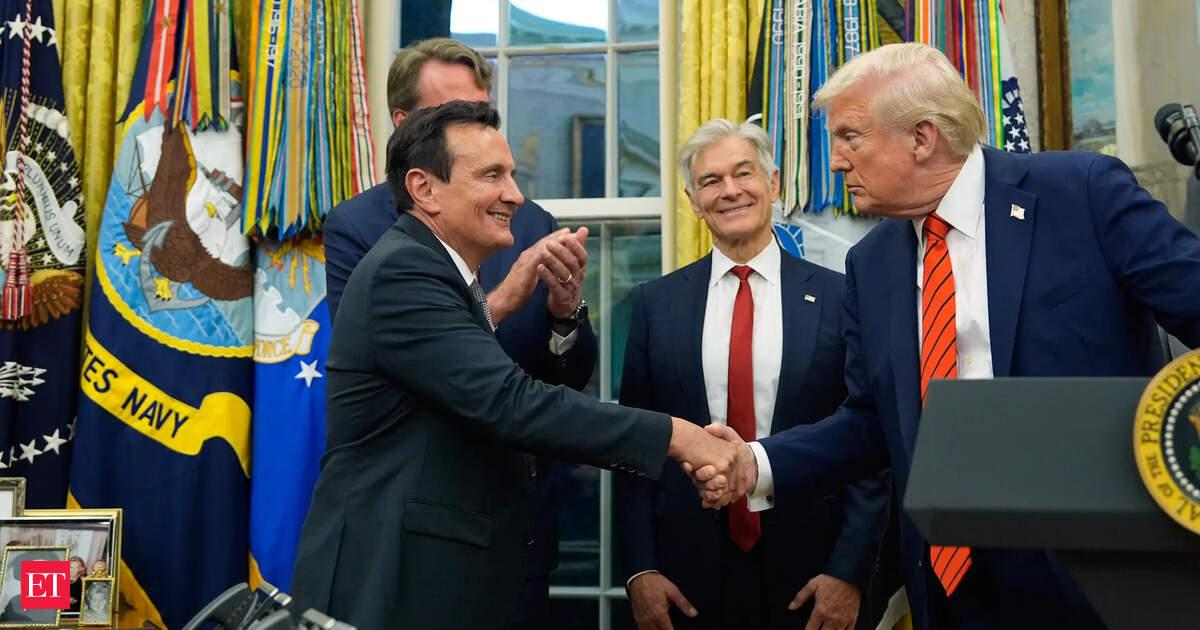
Former President Donald Trump announced a deal under which AstraZeneca became the second drugmaker to support his “Most Favored Nation” initiative. The company committed to selling to Medicaid at prices tied to the lowest paid in comparable countries and to offer direct-to-consumer discounts via the TrumpRx site.
“Both companies agreed to sell drugs to Medicaid and set prices for new medications at the lowest levels available in comparable countries.”
Multiple outlets report that the pact follows a similar agreement with Pfizer and includes participation on TrumpRx, with discounts up to 80% on some chronic-disease medicines. Trump and his aides credit sustained tariff pressure for bringing companies to the table, though the agreements’ detailed terms remain confidential and their full impact is unclear.

Trump's Tariff Strategy
Central to the story is Trump’s tariff leverage. He warned manufacturers and foreign governments that noncompliance would trigger tariffs, while publicly arguing that U.S. prices would fall and overseas prices would rise toward a middle ground.
Multiple outlets also note AstraZeneca and Pfizer received a three-year tariff reprieve, underscoring that the threat — not immediate penalties — helped secure agreements. However, the precise tariff level remains uncertain across sources; some describe generalized threats, others cite letters warning of rates as high as 200%, and no mainstream report confirms a fixed 100% tariff as the trigger.
AstraZeneca's Commitments and Benefits
AstraZeneca pledged significant price and production commitments, including discounts of up to 80% on certain drugs. The company also agreed to MFN-linked Medicaid pricing and participation in the TrumpRx program. Additionally, AstraZeneca plans a U.S. manufacturing expansion valued at roughly $50 billion.
“AstraZeneca will provide discounts of up to 80% off list prices on certain drugs, including inhalers for COPD and asthma.”
This expansion includes a $4.5 billion plant in Virginia, which is expected to create about 3,600 jobs. Multiple sources highlight that the companies received tariff reprieves, which the White House credits with helping to catalyze the deals.
Skepticism on Drug Pricing Claims
Experts and several outlets are skeptical about bold claims around the deal’s impact. The Guardian reports Trump even floated “price cuts of up to 1,000%,” which experts call illogical and false. CBS News notes Medicaid already has statutory “best price” protections and casts direct-to-patient moves as more branding than broad savings.
NewsBreak flags confidentiality and “mathematically questionable” claims. NPR documents the up-to-80% discounts but not overarching savings for most insured patients.
Media Coverage on Pfizer Deal
Coverage also diverges on numbers, timelines, and scope. WBFF touts “discounts of 50% to 100%” in a prior Pfizer deal and says Trump pushed Pfizer toward a $70 million U.S. investment. NTD News reports a much larger $70 billion figure for Pfizer research and development.
“Pfizer announced a 50% average discount on select medications and a $70 billion investment in U.S. research and development.”
Breitbart highlights a TrumpRX.gov launch in January 2026, whereas The Washington Post says “early next year.” SSBCrack adds that the negotiations were influenced by the threat of tariffs.
CBS underscores legal and structural barriers that limit sweeping price reforms. One outlet, Devdiscourse, contains no news content at all for this topic, underscoring uneven information quality.