Iran · 03 May, 2026 · 5 min read
Trump Imposes 25% Tariffs on Countries Trading With Iran, Tightening Strait of Hormuz Pressure
Executive order imposes 25% tariffs on countries that trade with Iran. Tariffs aim to cripple Iran's economy as part of an economic siege.
Trump’s claims about results of airstrikes in/around Tehran vs. counterclaims about falsity.
9 of 10 outlets skipped it: king Charles III’s Washington visit included a specific symbolic gift: a bell from the wartime submarine HMS Trump..
21outlets compared
Same story, two versions
tap a side to read it in full
Kkhabarpu
““Axios claims: In its proposal, Iran has set a one-month deadline for an agreement that includes reopening the Strait of Hormuz, ending the U.S. naval blockade, and ending the war — and only after this is achieved...””Read the original ↗
One source frames Hormuz as completely shut (hardline posture), while another claims Iran’s proposal would reopen it as part of a deal. This changes whether the conflict is portrayed as escalating unilaterally vs. negotiating an off-ramp.
Hormuz, tariffs, and pressure
Iran sits at the center of a widening web of U.S. pressure that, across multiple outlets, is described as tightening both maritime chokepoints and trade terms.
“Not A Chance Hormuz Opens”
El Mundo frames the latest phase of the “war against Iran” as producing a new acronym, “NACHO,” meaning “Not A Chance Hormuz Opens,” and it links the Hormuz risk to market mechanics and volatility in Brent crude futures.

El Mundo also says that “Through Hormuz passes 20% of the world’s oil,” and it argues that “the closure of Hormuz has highlighted the extraordinary fragility” of chokepoints that underpin global trade.
Invezz likewise calls “Strait of Hormuz disruption” the “core supply constraint (about a fifth of global flows),” and it describes Trump’s stance as “Trump displeased with Iran, jolts EU with auto tariffs.”I
DW reports that on “Monday, January 12,” Trump posted on Truth Social that “any country that trades with Iran would have to pay a 25 percent tariff on any trade with the United States.”
In parallel, اعتمادآنلاین says Trump signed an executive order authorizing tariffs on countries that import goods or services from Iran, tied to a “state of national emergency” and a mechanism to impose tariffs on those partners.
What Trump says and does
Several outlets describe Trump’s public messaging as combining dissatisfaction with Iran negotiations, claims about the Strait of Hormuz, and a broader tariff regime.
Invezz reports that Trump told reporters at the White House Friday, “They want to make a deal but I’m not satisfied with it,” and it adds, “We just had a conversation with Iran. ILet’s see what happens. But I would say that I am not happy.”
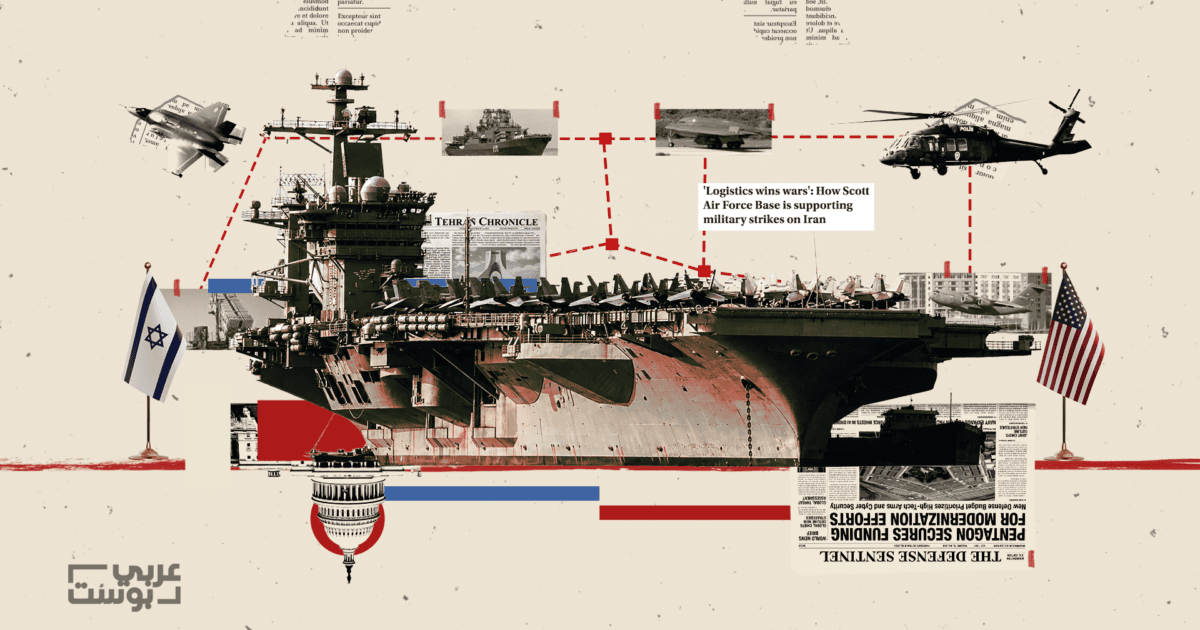
Invezz also quotes Trump describing the Strait of Hormuz as “totally shut down, it’s flawless. IIt’s 100% shut down,” and it says Trump reiterated his stance on maintaining pressure.
خبرپو, meanwhile, says Trump released a video of Friday-night airstrikes on Tehran and claimed that “many of Iran's military leaders” were killed, writing: “Many of Iran's military leaders, whom they have led, were eliminated in this broad attack on Tehran, along with many other things.”
اعتمادآنلاین provides the legal mechanism behind the economic pressure, saying Trump signed an executive order authorizing Washington to impose additional tariffs on goods of countries that import goods or services from Iran.
DW adds a specific date and framing, reporting that Trump’s Truth Social post on “Monday, January 12” threatened a “25 percent tariff” on trade with the United States for any country trading with Iran.
Iran’s proposal and the blockade
The sources also depict a negotiation dynamic in which Iran’s proposals are described as conditional and tied to maritime and naval issues.
“a new proposal to the United States via Pakistani mediators”
خبرپو says Iran delivered “a new proposal to the United States via Pakistani mediators,” and it adds that “details of the proposal remain unclear,” especially regarding “the Strait of Hormuz and nuclear activities.”
It also reports that Trump said he would not lift the blockade in exchange for reopening the Strait of Hormuz, quoting an Axios journalist: “Trump told me that he would not lift the blockade in exchange for reopening the Strait of Hormuz.”
The same outlet, in the broader thread of claims, says Axios reported that Iran’s proposal includes “reopening the Strait of Hormuz, ending the U.S. naval blockade, and ending the war,” and it states that this is tied to a “one-month deadline for an agreement” before those steps are achieved.
El Mundo, while not focused on a specific proposal, argues that “Iran would block it, simply by using insurers,” saying “It is enough to frighten Lloyd's in London and other major insurers,” and it links the mechanism to Hormuz.
Invezz adds that the disruption has “had far-reaching implications for global energy markets,” describing “hundreds of vessels stranded and shipping activity severely reduced,” and it reiterates that the Strait of Hormuz “typically handles about a fifth of global oil and liquefied natural gas flows.”I
Economic stakes and partner pressure
Beyond the immediate Strait of Hormuz disruption, the sources describe a tariff architecture intended to pressure Iran’s partners and reshape trade incentives.
Tabnak argues that the move differs from previous sanctions by tying “the trade balance of an entire country with the United States” to relations with Tehran, calling it “a high-risk strategy” designed to turn Iran from a “risky trading partner” into an “economic burden.”
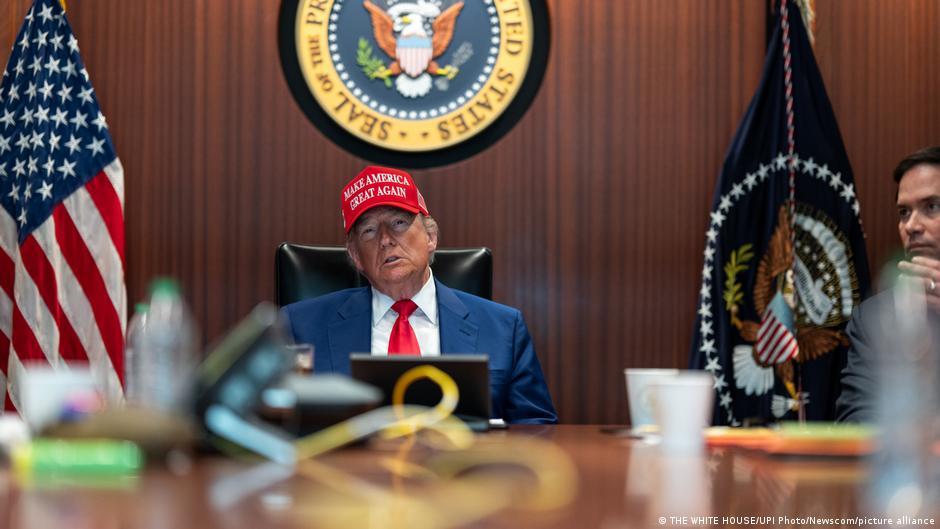
It says the new tariffs target the “competitive edge” of Iran’s partners’ export goods in the U.S. market and describes the cost of ignoring sanctions for countries like China and Turkey as elevated from “manageable legal penalties” to a “self-imposed trade war.”
Tabnak also provides specific trade-volume estimates, stating that “China” has a trade volume estimated for 2025 to be “about $14.5 billion,” and it characterizes Iran as part of China’s “Belt and Road strategy.”
DW supplies a different but concrete set of partner numbers, reporting that Iran traded with “147 countries” according to “World Bank data for 2022,” and it lists China, Iraq, the United Arab Emirates, Turkey, and Germany as main partners.
DW also provides Germany-specific figures, saying Germany’s exports to Iran from January to November 2025 fell by “25 percent to 871 million euros,” while imports rose by “1.7 percent to 217 million euros,” and it adds that China bought “roughly 90 percent of Iran's oil that is subject to sanctions.”
Domestic politics and escalation risk
The Iran pressure campaign is also portrayed as feeding into domestic political calculations and broader escalation concerns.
“it cost him the election. What a mess.”
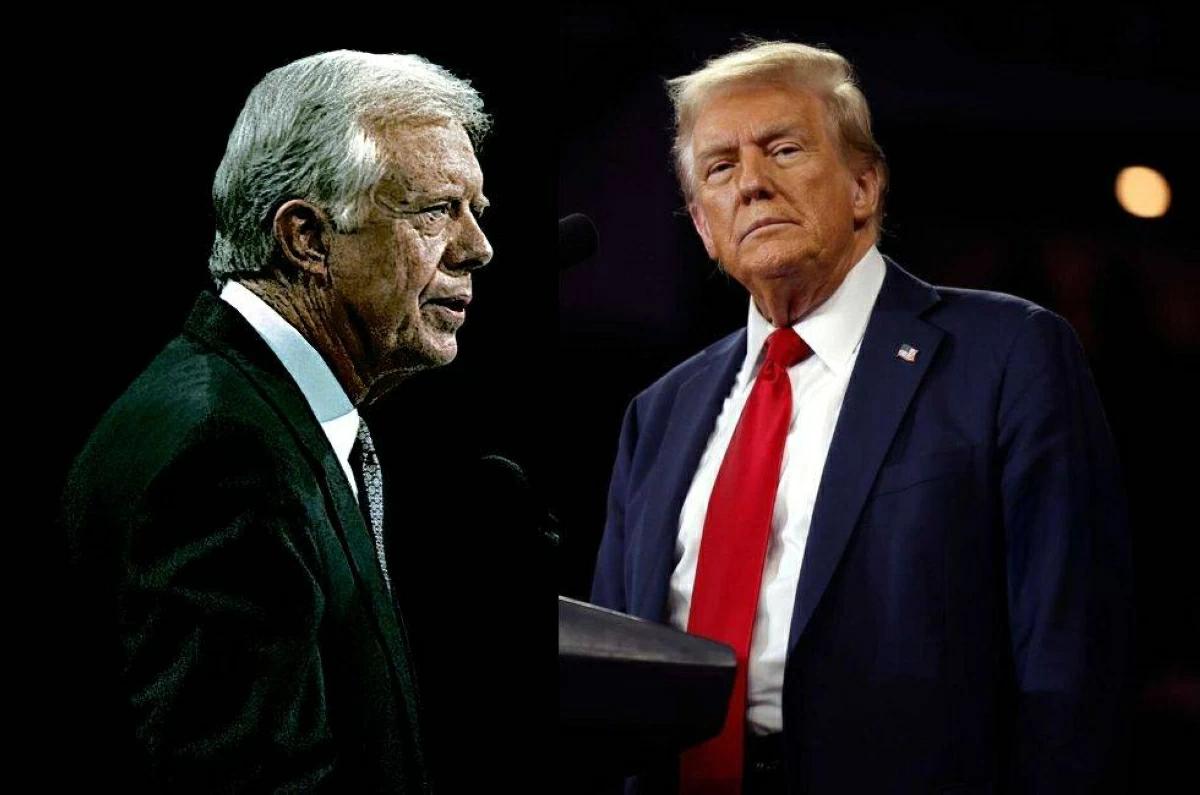
صحيفة الخليج links Trump’s war in Iran to fears of repeating Jimmy Carter’s political fate, quoting Newsweek and the Wall Street Journal framing that Trump recalled the “1979 Iran hostage crisis” and warned that “it cost him the election. What a mess.”
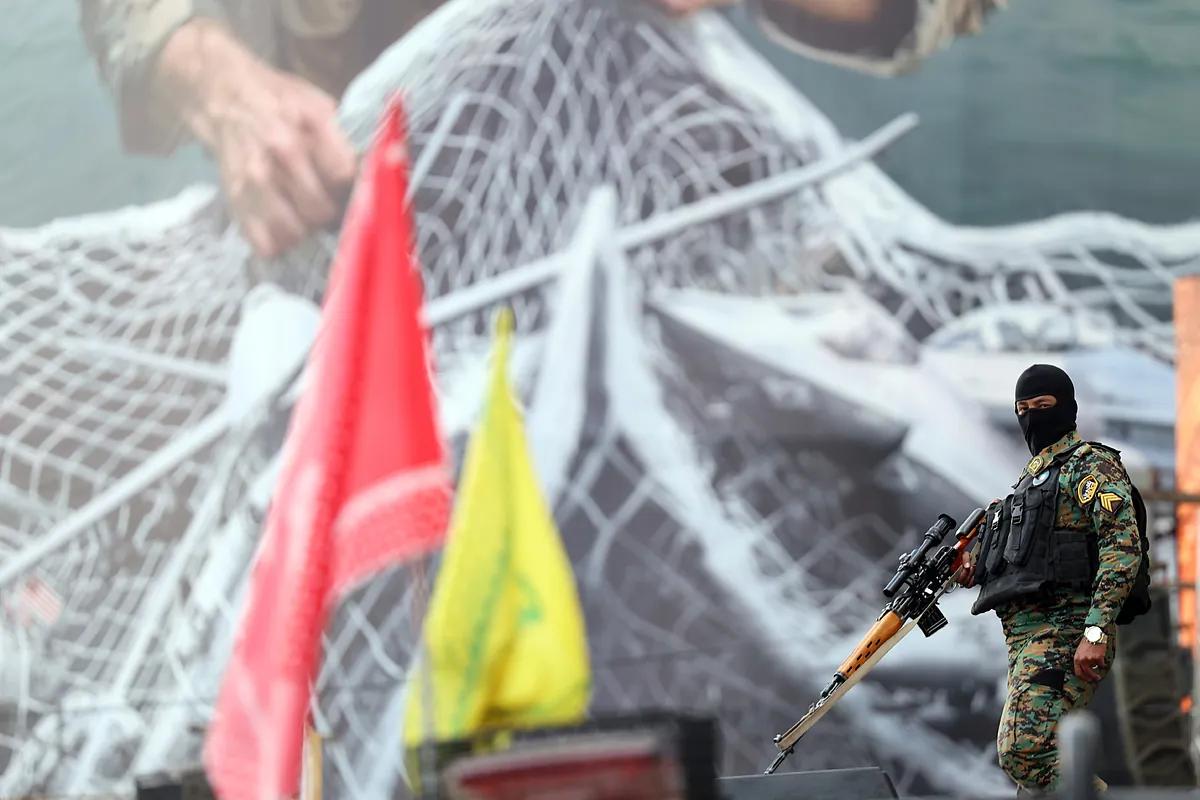
It also includes polling figures from Real Clear Politics, stating “only 40.5% of Americans are satisfied with Trump’s performance as of April 22,” while “57.7% are dissatisfied,” producing “a net negative rating of -17.2.”
The same article says “41.1% have a positive view of him, while 55.7% have a negative view, yielding a net negative rating of -14.6,” and it describes a growing willingness to separate personal feelings from presidential performance.
In a separate thread, El Mundo argues that “The TACO depends on Trump’s mood. The NACHO is structural,” and it warns that “Closing choke points is relatively easy for adversaries who are willing to cut risks,” tying the Hormuz threat to political consequences.
DW adds a security and repression context, saying the tariff threat came “in the wake of nationwide protests against the Iranian regime,” and it reports that “these protests have left hundreds dead” and “according to some reports, thousands.”