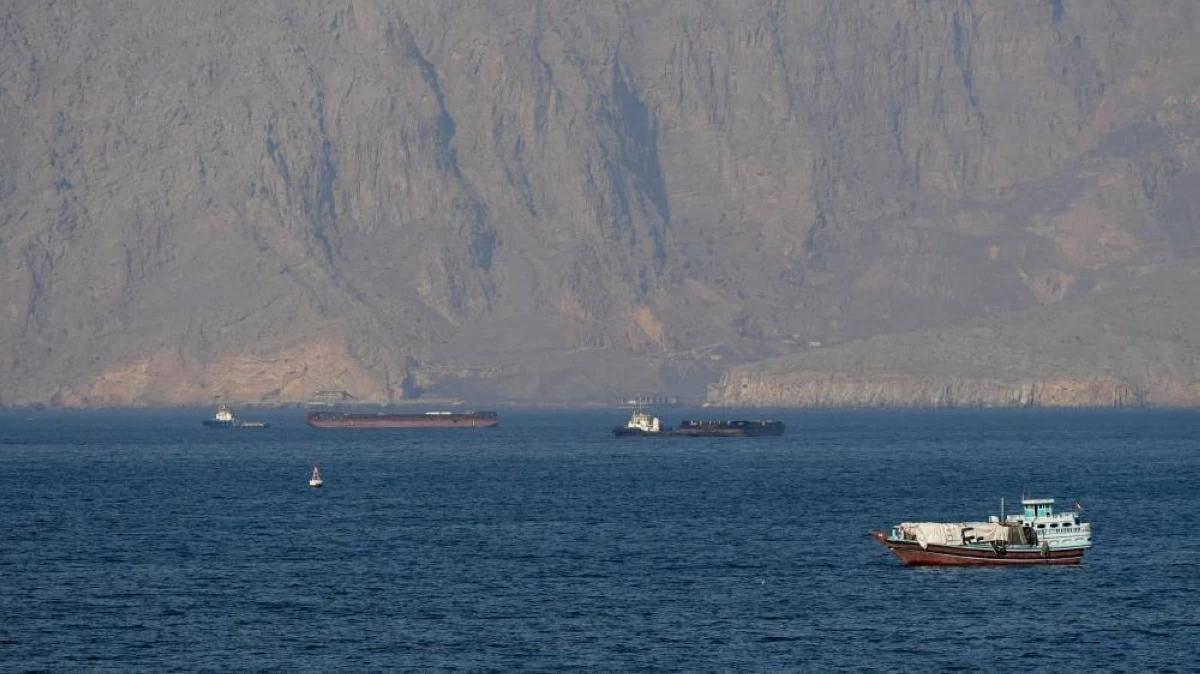
Trump Launches Project Freedom Monday To Guide Stranded Ships From Strait Of Hormuz
Key Takeaways
- Trump announced US-led effort to guide stranded ships from Strait of Hormuz starting Monday.
- UKMTO said a bulk carrier near Sirik was attacked by small craft; all crew safe.
- The attack occurred around 11 nautical miles west of Sirik near the Strait of Hormuz.
Project Freedom at Hormuz
President Donald Trump said the United States will launch an effort on Monday to “guide” stranded ships from the Iran-gripped Strait of Hormuz, a move he described as beginning with “Project Freedom” on Monday morning.
“Attack on a vessel near the Strait of Hormuz and warnings of escalating maritime risks”
The Associated Press reported that the initiative would involve guided-missile destroyers, more than 100 aircraft and 15,000 service members, while the Pentagon did not immediately answer questions about how they would be deployed.
Trump framed the effort as humanitarian, writing “They are victims of circumstance,” and calling it a gesture “on behalf of the United States, Middle Eastern Countries but, in particular, the Country of Iran.”
In the same AP account, Trump warned that “If, in any way, this Humanitarian process is interfered with, that interference will, unfortunately, have to be dealt with forcefully.”
Iran quickly denounced the plan as a ceasefire violation, with AP reporting that Iran’s state-run IRNA news agency called Trump’s announcement part of his “delirium.”
AP also reported that Ebrahim Azizi, head of the national security commission of Iran’s parliament, said on X that any interference in the strait would be seen as a ceasefire violation.
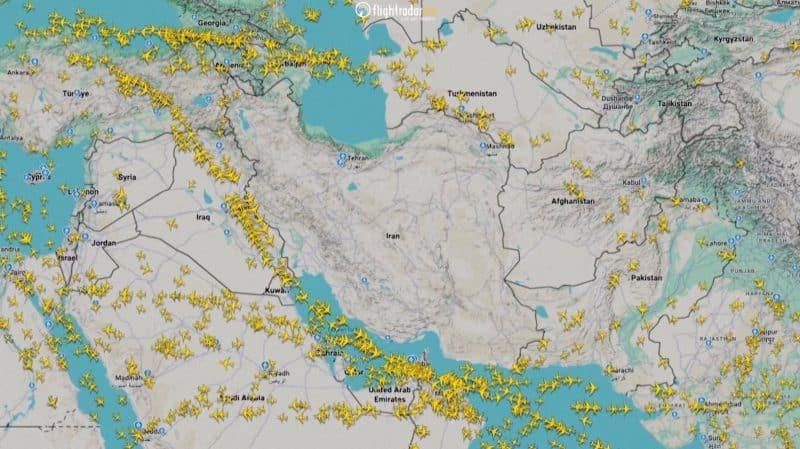
The AP account tied the situation to Iran’s “effective closure of the strait,” imposed after the U.S. and Israel launched the war on Feb. 28, and said ships and seafarers have been stuck in the Persian Gulf since the war began.
Sirik attack and competing accounts
As Trump’s “Project Freedom” plan was announced, a separate incident near the Strait of Hormuz underscored the risks for commercial shipping.
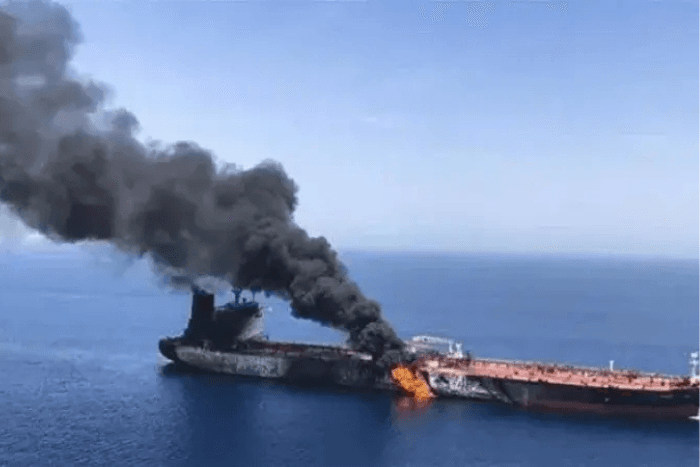
AP reported that “a cargo ship near the Strait of Hormuz said it was attacked by multiple small craft,” citing the British military’s United Kingdom Maritime Trade Operations center, and said the attack occurred off Sirik, Iran, east of the strait.

The UKMTO account was echoed in other reporting: the investingLive item said a northbound bulk carrier was attacked by multiple small craft “approximately 11 nautical miles west of Sirik, Iran,” and that “All crew were reported safe and no environmental impact was recorded.”
Ukrinform similarly stated that the incident occurred “11 nautical miles west of the Iranian city of Sirik,” and quoted that “The Master of a northbound bulk carrier has reported being attacked by multiple small craft.”
In contrast, Iran’s semi-official Fars news agency offered a different explanation, saying the ship “was not seized and that the Iranian navy stopped it to check documents as part of supervisory procedures,” according to the investingLive and Global Banking & Finance Review items.
AP reported that Iran denied an attack and said a passing ship had been stopped for a documents check as part of monitoring, while semiofficial Iranian outlets Fars and Tabnak reported the denial.
The competing narratives—UKMTO’s attack report versus Iran’s document-check framing—were presented as central to the uncertainty surrounding what happened to the vessel near Sirik.
Ras al-Khaimah VHF warnings
Alongside the Sirik incident, multiple outlets described another episode involving radio warnings near Ras al-Khaimah, in the United Arab Emirates, close to the Strait of Hormuz.
“Trump says the US will ‘guide’ stranded ships from the Strait of Hormuz, starting on Monday Trump says the US will ‘guide’ stranded ships from the Strait of Hormuz, starting on Monday DUBAI, United Arab Emirates (AP) — The United States will launch an effort on Monday to “guide” stranded ships from the Iran-gripped Strait of Hormuz, President Donald Trump said, giving few details about what could be a sweeping attempt to help hundreds of vessels and some 20,000 seafarers”
AP reported that the British military monitor said Sunday that ships near Ras al-Khaimah, “the northernmost emirate in the United Arab Emirates and close to the strait,” reported receiving radio warnings to move from anchorages.
AP added that “It was not clear who sent the VHF messages,” and said the situation was under investigation.
The investingLive item similarly said that “a separate incident on the same day saw vessel masters near Ras Al Khaimah, UAE, directed via VHF broadcast to move from their anchorages,” and that UKMTO logged it separately and said it was under investigation.
Al Jazeera net also described the Ras al-Khaimah reports, saying ship masters received “instructions via radio transmission to move from their moorings,” without giving reasons, and that UKMTO asked ships to continue reporting suspicious activity.
In the AP account, the Ras al-Khaimah episode was presented as part of a broader pattern of risk for shipping in and around the strait, occurring while Iran’s effective closure and the war’s disruption continued.
The AP report also noted that Iranian patrol boats are “small, nimble and hard to detect,” and that the threat level in the area remains critical.
Iran’s proposal and ceasefire posture
AP reported that Iran was reviewing the U.S. response to its latest proposal to end the war, citing Iran’s judiciary Mizan news agency and Foreign Ministry spokesman Esmail Baghaei.
In that AP account, Baghaei said, “at this stage, we have no nuclear negotiations,” and the report said Iran’s proposal wants other issues resolved within 30 days and aims to end the war rather than extend the ceasefire.
AP also said Trump spoke hours after Iran said it was reviewing the U.S. response, and that Trump made clear these are not nuclear negotiations.
The AP report described the fragile three-week ceasefire as “appears to be holding,” while also noting that the strait’s threat level remains critical.
The AP account further said Trump on Saturday was reviewing Iran’s proposal but expressed doubt it would lead to a deal.
In the same AP narrative, it described Iran’s nuclear program and enriched uranium as the central issue in tensions with the U.S., while stating that Tehran would rather address it later.
Fox News and the Washington Examiner also referenced Trump’s engagement with Iran’s peace proposal, with Fox quoting Ali Nikzad saying, “What is certain is that we will not step back from the Strait of Hormuz, and it will not return to its pre-war state.”
What happens next for shipping
The sources depict immediate operational consequences for vessels transiting the corridor, with UKMTO advising caution and reporting suspicious activity while authorities investigate.
Multiple outlets quoted the UKMTO language that “Vessels are advised to transit with caution and report any suspicious activity to UKMTO, while authorities investigate,” including Fox News and the Washington Examiner.
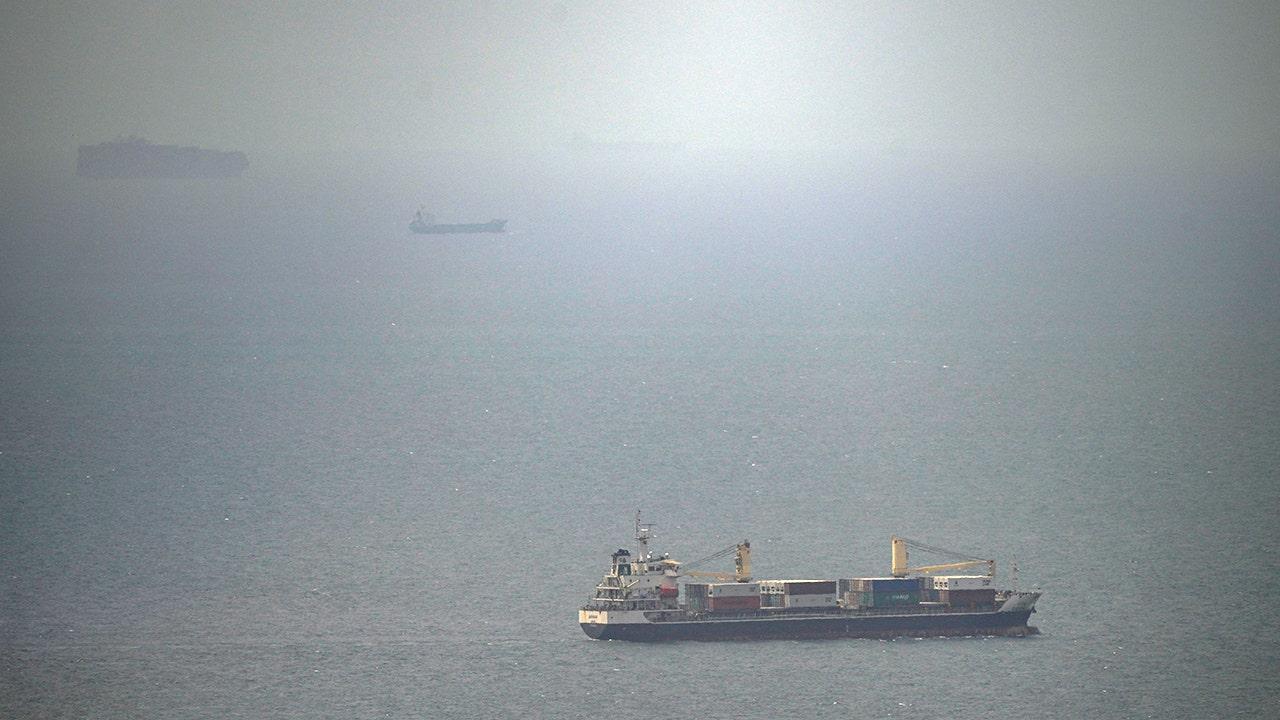
The AP account also described how Iran’s effective closure of the strait has shaken global markets, with ships and seafarers stuck in the Persian Gulf since the war began and crew members describing watching intercepted drones and missiles explode over the waters.
AP said many sailors come from India and other countries in south and southeast Asia, and described running low on drinking water, food and other supplies.
In parallel, the investingLive and Global Banking & Finance Review items said the strait traffic remains significantly reduced and that mine reports persist in and near the traffic separation scheme, while sporadic GNSS interference continues.
The investingLive item also said that “Merchant vessels in the wider Gulf of Oman and Arabian Sea have been advised to maintain prudent standoff distances from naval units,” and that blockade enforcement activity was reported in the area.
With “Project Freedom” scheduled to begin on Monday, the combination of the Sirik attack report, the Ras al-Khaimah VHF warnings, and the ongoing mine and GNSS issues described in the sources sets the stage for heightened scrutiny of any attempt to move ships through the restricted waterways.
More on Iran
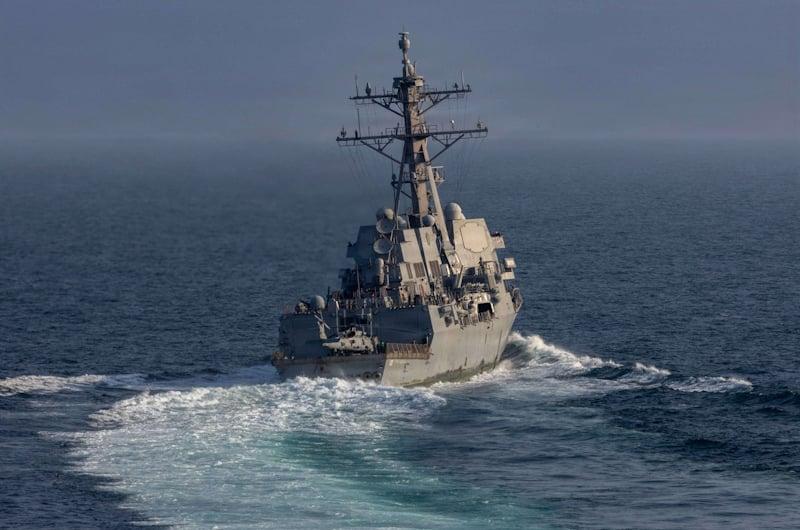
Iran Claims Two Missiles Hit U.S. Frigate Near Jask; Washington Denies
15 sources compared

Iran Warns U.S. Forces Will Be Subjected To Attack In Strait Of Hormuz
37 sources compared
Iran Blocks Strait of Hormuz, Disrupting Shipping as U.S. Launches Project Freedom
13 sources compared
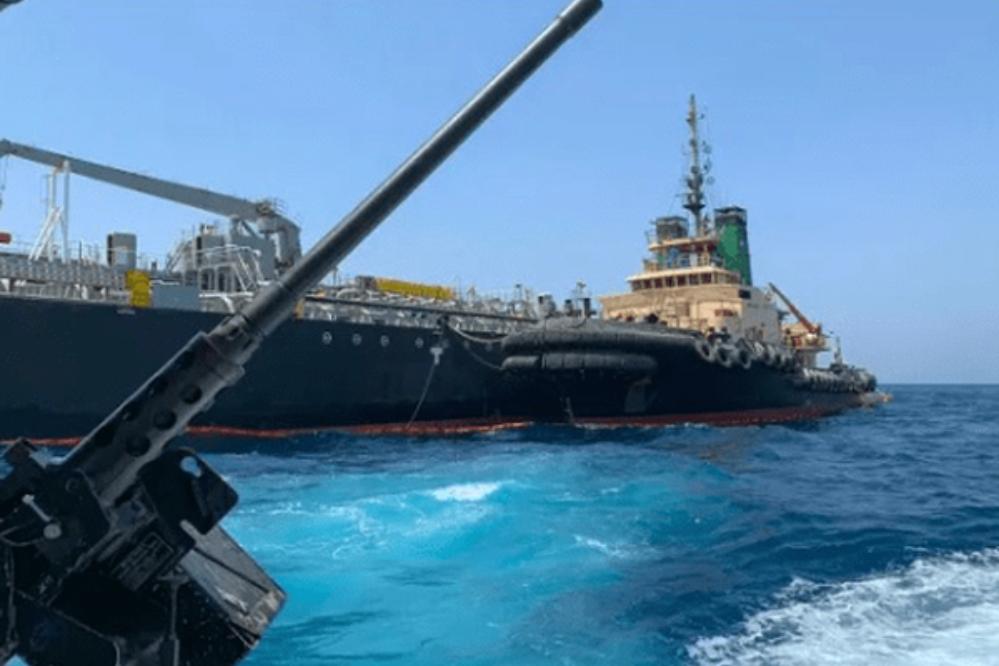
Donald Trump Says U.S. Will Help Guide Stranded Ships Through Strait of Hormuz Monday
18 sources compared