Technology and Science16 April, 20269 min read
Trump Nominates Dr. Erica Schwartz to Lead CDC, Setting Up Senate Confirmation Fight
Trump nominates Erica Schwartz, former deputy surgeon general, to lead the CDC. Schwartz is a Coast Guard rear admiral with public health leadership background.
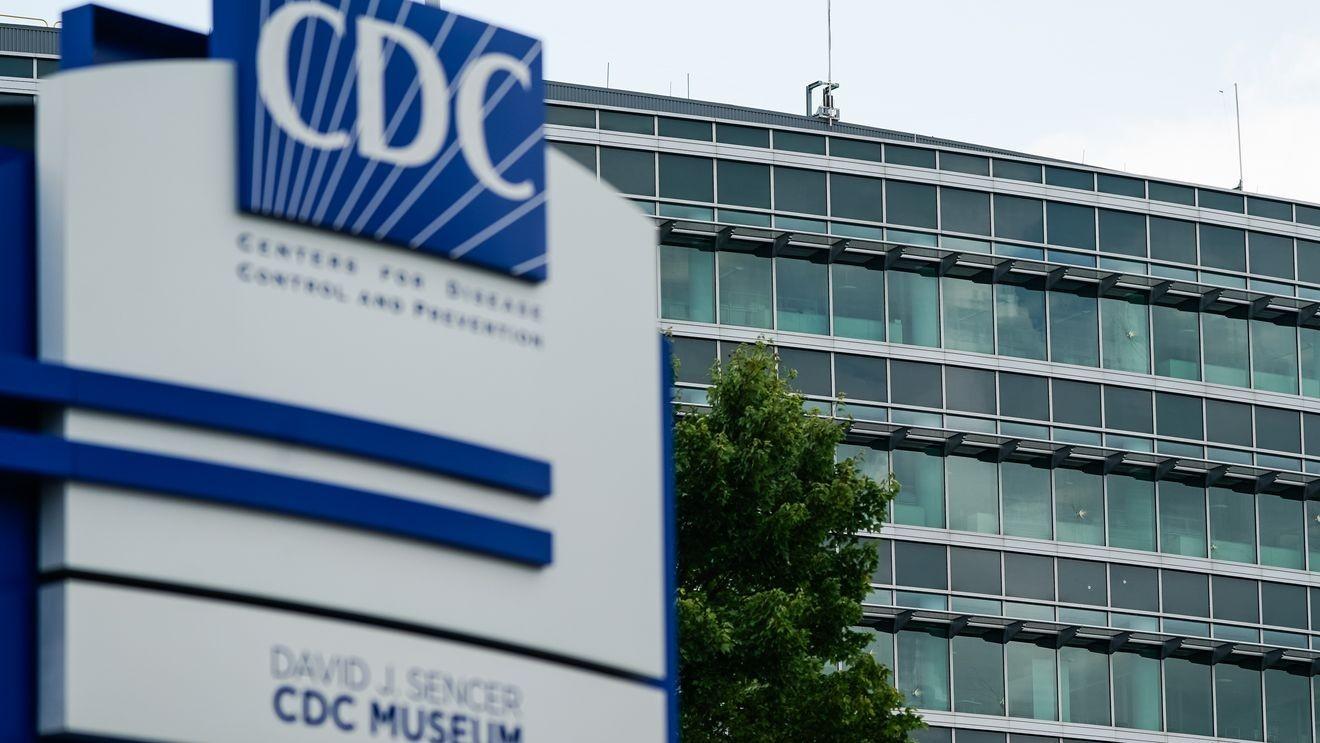
Trump’s CDC nomination
President Trump announced Thursday that he is nominating Dr. Erica Schwartz to run the Centers for Disease Control and Prevention, setting up another Senate confirmation fight for the nation’s public health agency.
CBS News reported that Schwartz “served as Mr. Trump's deputy surgeon general during his first term” and is a Coast Guard rear admiral, and it said she received her medical degree from Brown University and also holds a law degree from the University of Maryland.

NPR likewise said Trump nominated Schwartz, who “served as deputy surgeon general in his first administration,” to serve as the next director of the CDC, and it quoted Trump’s Truth Social praise: “She is a STAR!”
CNN described the White House search as driven by a single requirement, telling readers that a White House official said, “We just need someone who’s not crazy.”
Multiple outlets tied the nomination to a broader effort to stabilize the CDC after a year of leadership upheaval, with CNN saying the choice is aimed at bringing stability after “a year of near-constant upheaval that has decimated morale.”
The nomination also comes with additional executive appointments: CBS News said Trump is naming Sean Slovenski to be CDC deputy director and chief operating officer, and Dr. Jennifer Shuford to be CDC deputy director and chief medical officer, while NPR added that Dr. Sara Brenner would become senior counselor for public health to Health and Human Services Secretary Robert F. Kennedy Jr.
The CDC director role nominee requires Senate approval, and NPR said the CDC is currently led by Dr. Jay Bhattacharya in an acting capacity, with Bhattacharya also serving as director of the National Institutes of Health.
Credentials and prior roles
Schwartz’s nomination is anchored in a long record of federal medical and military service that multiple outlets detailed, including her education and her work overseeing health operations in the Coast Guard.
CBS News said Schwartz “is a Coast Guard rear admiral” and that she currently serves as the Coast Guard's “director of health, safety and work-life,” overseeing “the branch's system of 41 clinics and 150 sick bays.”

NPR added that Schwartz is a retired Rear Admiral in the U.S. Public Health Health Service Commissioned Corps and a board-certified preventive medicine physician, and it said she has a medical degree from Brown University, a law degree from the University of Maryland, and a master's in public health from the Uniformed Services University, or USU.
STAT reported that Schwartz received her medical degree from Brown University in 1998 and completed a Masters of Public Health degree from the Uniformed Services University of the Health Sciences in 2000, and it said she was admitted to the bar in the District of Columbia.
The outlets also described Schwartz’s role in the Trump administration’s response to the Covid-19 pandemic, with STAT saying she “was also involved in the Trump administration’s response to the Covid-19 pandemic.”
NPR and CBS News both emphasized that Schwartz previously served as deputy surgeon general, and CBS News said she “has also instituted anthrax and smallpox vaccination policies, overseen disaster responses and responded to the Ebola crisis.”
Scientific American similarly said Schwartz led “anthrax and smallpox vaccination campaigns” at the Coast Guard and helped craft “HIV and biological weapons response policies,” while also describing her as “the principal expert on pandemic influenza.”
Support and skepticism collide
The nomination immediately drew praise from some figures who worked with Schwartz, while others raised concerns about how she would operate under Health and Human Services Secretary Robert F. Kennedy Jr.
STAT quoted David Mansdoerfer, a former senior Department of Health and Human Services official, praising Schwartz as “a great pick,” and it said he told STAT that Schwartz would “definitely understand the culture of CDC, of the employees that are [also] commissioned corps officers.”
STAT also reported that Jerome Adams, who served as surgeon general during the first Trump administration, echoed that sentiment and posted on X that he personally selected Schwartz as his No. 2, writing: “If allowed to follow the science without political interference,” she “she'll excel.”
NPR included praise from Admiral Brett Giroir, who said, “Rear Admiral Schwartz is really an outstanding person in all regards,” and it quoted Georges Benjamin, head of the American Public Health Association, saying the organization welcomes her nomination and that “Things she's said have clearly been based on good science.”
But STAT also captured skepticism from Debra Houry, who told STAT that while it was good to see someone with crisis experience, Schwartz would still be answering to Kennedy, saying, “Kennedy hasn’t changed.”
CNN added that some mainstream public health experts were unconvinced by the nomination’s qualifications, quoting Dr. Amesh Adalja saying, “However, the issue is not her qualifications — it’s the environment that she’s being asked to work in,” and it warned that if Kennedy remains, it would be “window dressing.”
The criticism also came from vaccine-focused political voices, with CNN quoting Toby Rogers declaring on X that Schwartz’s appointment would be “a slap in the face to the medical freedom base,” and STAT quoting Aaron Siri, who wrote on X that the choice was a “disaster” and said, “This agency does not need another cheerleader for industry; it needs a regulator over industry.”
Vaccine policy and agency turmoil
Several outlets tied Schwartz’s nomination to the CDC’s recent history of conflict over vaccines and leadership instability, describing how the agency has been operating without a confirmed director for much of the second term.
NPR said the CDC has been “without a confirmed leader for all but a month of Trump's second term,” and it reported that the CDC is currently led by Dr. Jay Bhattacharya, who took over as CDC lead in February and is expected to continue during Senate confirmation.

CNN described the CDC’s prior year as marked by “a traumatic shooting, abrupt leadership changes and a shattering of its image,” and it said the agency has been in turmoil after “a year of near-constant upheaval.”
Scientific American added that the CDC had an incident in which “a gunman fired nearly 500 bullets at its headquarters, killing a police officer,” and it said “As late as this past March, the bullet holes remained in CDC windows.”
The vaccine-policy backdrop is also central to the nomination’s stakes, with Los Angeles Times reporting that Health Secretary Robert F. Kennedy Jr. had promised not to change the nation’s vaccination schedule but then said he was going to investigate the childhood vaccine schedule and attempt a “substantial rewrite of vaccine recommendations for kids,” with some efforts put on hold by a federal judge.
Time Magazine reported that Kennedy “has instituted dramatic changes to national vaccine policies for children and removed the CDC’s independent group of advisors,” replacing them with “handpicked choices who hold more vaccine-skeptical views,” and it said “A judge has stayed the vaccine changes, which included no longer requiring yearly flu or COVID-19 shots for most children.”
Scientific American said questions over the CDC’s vaccine decision-making will likely figure heavily in Senate hearings, and it described that Kennedy fired Susan Monarez “than a month into her term last August,” after she allegedly pushed back against Kennedy’s plan to overhaul vaccine policies.
How outlets frame the same pick
While the core facts of the nomination are consistent across outlets, the reporting diverges in emphasis—some foreground Schwartz’s credentials and crisis experience, while others foreground the political environment and the vaccine-policy conflict.
CBS News highlighted Schwartz’s operational oversight, saying she oversees “the branch's system of 41 clinics and 150 sick bays,” and it described her as having “instituted anthrax and smallpox vaccination policies” and “responded to the Ebola crisis,” while also noting that National Institutes of Health Director Dr. Jay Bhattacharya has been serving as acting CDC director.

NPR similarly emphasized her qualifications and management potential, quoting Admiral Brett Giroir’s praise that “Her academic training and intellect is second to none,” and it included Georges Benjamin’s view that the administration has identified “someone who is highly qualified.”
Scientific American framed the nomination around evidence-based science and the vaccine decision-making questions, quoting Georges C. Benjamin saying, “We look forward to working with Dr. Schwartz to ensure we use the best science and evidence to improve the nation’s health,” while also recounting the CDC’s turmoil and the “nearly 500 bullets” incident.
CNN, by contrast, centered the political balancing act and the environment, quoting Dr. Amesh Adalja that the issue is “not her qualifications — it’s the environment,” and it described the White House’s internal search requirement as “We just need someone who’s not crazy.”
The Los Angeles Times placed the nomination in the context of Kennedy’s vaccine schedule changes and the federal court response, noting that some efforts were “put on hold recently by a federal judge,” and it described the CDC’s leadership churn from David Weldon to Susan Monarez to acting leadership under Jay Bhattacharya.
Time Magazine also linked the nomination to the vaccine policy rewrite, saying Kennedy removed the CDC’s independent group of advisors and that “A judge has stayed the vaccine changes,” while it described Schwartz as facing Senate confirmation after “nearly eight months without an official director” for the CDC.
What happens next
The nomination’s immediate next step is Senate consideration, and multiple outlets described how Schwartz would inherit an agency still dealing with staffing and morale problems while leadership remains in flux.
NPR said the CDC director role nominee requires Senate approval and that Bhattacharya is expected to continue during the Senate confirmation process, which could take several months.
NPR also reported that the next CDC director will inherit an agency in turmoil and a staff demoralized by “major cuts to staffing, budget and programs last year,” and it quoted Health Secretary Robert F. Kennedy, Jr. at a budget hearing saying the new proposed leadership team “is really going to be able to revolutionize CDC and get it back on track.”
Scientific American added that Schwartz would take the reins after a year of tumult that included resignations of multiple leadership members and the “nearly 500 bullets” incident, and it said it is unclear how she might guide the agency’s public health approach.
STAT described the confirmation challenge as uncertain, saying “It remains to be seen whether Schwartz can muster sufficient support in the Senate to be confirmed,” while also noting that she has “no discernible public record opposing vaccinations,” which could smooth her journey through confirmation.
CNN described the political context as tied to midterm elections and the White House’s desire to rein in HHS, saying the move is “the latest sign of how significantly Trump aides have sought to rein in a Health and Human Services Department led by Robert F. Kennedy Jr.” and it said the move has “already shaken the MAHA faithful.”
Across the coverage, the consequences of the nomination are framed through the CDC’s role in public health and the vaccine-policy conflict, with Scientific American stating that questions over vaccine decision-making will likely figure heavily in Senate hearings and with Los Angeles Times reporting that federal courts have begun blocking elements of the administration’s vaccine policy changes.