USA16 August, 20263 min read
Trump Orders Ford-Class Carrier Island Moved Forward, Faces Billions In Redesign Costs
This article is an automated aggregation of coverage from news outlets. Our editorials offer in-depth analysis curated by the NewsCord team.
Trump orders return to steam catapults, redesigning Ford-class carriers. Redesign could add billions in costs and delay completion.

Retro redesign debate
President Donald Trump’s reported push to reshape the US Navy’s next-generation aircraft carriers is driving a review of whether to relocate the Ford-class “island” command tower farther forward toward the middle of the ship, similar to World War II-era carriers.
The Washington Post reported on August 15 that the Navy is assessing the feasibility of moving the island, and US officials cited by the report warned the change could require “billions of dollars in redesign costs” and cause “substantial delays.”
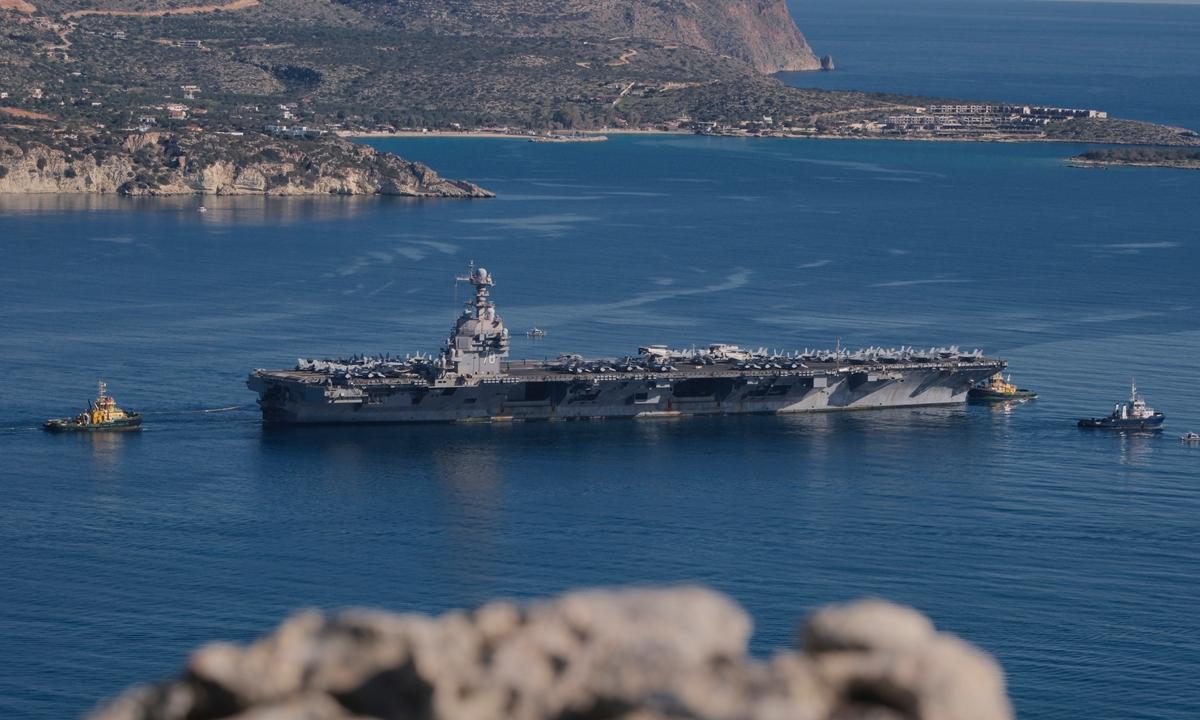
The review comes days after Trump signed a national security memorandum directing the Pentagon and Navy to develop a plan within 60 days to replace the Electromagnetic Aircraft Launch System (EMALS) with steam catapults and to replace the Ford-class carriers’ Advanced Weapons Elevators with hydraulic systems, beginning with the future USS Doris Miller, or CVN-81.
Reuters reported that Trump has repeatedly criticized EMALS as “too complex” and “not as effective as steam catapults,” while the Navy selected EMALS in 2009 and said it would lower overall lifecycle costs and require less maintenance than steam catapults.
As of March 2026, Reuters cited Pentagon documents saying the USS Gerald R. Ford had conducted 36,863 EMALS launches, underscoring how far the program has already progressed.
Lawmakers and analysts react
Rep. Ted Lieu (D-Calif.) accused Trump of pushing a multibillion-dollar redesign of the Navy’s newest aircraft carriers to satisfy personal aesthetic preferences, posting on X that the plan “will never happen” and that House Democrats would kill the effort if they retake the chamber in the November midterms.
Lieu’s statement came hours after The Washington Post reported the Navy was evaluating whether to move the command tower farther forward, and Newsweek described the proposed island shift as a “major redesign” that would be “very disruptive,” quoting Bryan Clark of the Hudson Institute.
Clark told the Washington Post that the shift was technically possible but far from simple, saying, “You could change it but it’s very disruptive,” while Newsweek reported that Navy officials said the island was moved toward the rear for operational reasons including reducing turbulence during landings and improving safety.
Newsweek also reported that Trump’s national security memorandum directed the Pentagon and Navy to develop a plan within 60 days to replace EMALS and Advanced Weapons Elevators on the USS Doris Miller with steam catapults and hydraulic systems.
In parallel, Global Times reported that Chinese military affairs experts argued the island’s aft position is tied to flight-deck efficiency and landing safety, with Zhang Junshe saying moving the island farther aft creates more space around the catapults for aircraft parking and handling.
Costs, timelines, and risks
The dispute over carrier design is being framed in cost and schedule terms, with the US Congressional Budget Office estimating in April that Nimitz-class carriers typically took seven to eight years to build while Ford-class ships are currently taking roughly 10 to 11 years. In a separate assessment released this month, the CBO estimated that future Ford-class carriers under the Navy’s 2027 shipbuilding plan could cost about $22 billion apiece, and the Korean-language report also said the Navy plans to build up to 10 Ford-class carriers over the next 40 years. Global Times reported that General Atomics warned against changing course on the Doris Miller, saying nearly 50 percent of production related to the system has already been completed and that a switch now would create significant cost, schedule and integration risks.
Newsweek reported that the company said catapult and arresting gear production for the vessel is roughly 50 percent complete and that abandoning the system now would create “significant cost, schedule, and integration risks,” while also citing a contract worth nearly $1.2 billion in 2023 related to the carrier’s launch and recovery systems. Beyond engineering, the stakes extend to when the Navy can field ships, with the Global Times account quoting Song Zhongping warning that the first four Ford-class carriers have either entered service or are already in different stages of construction, leaving “very little room for fundamental changes to their overall designs.”