Full story
Trump orders drill cuts
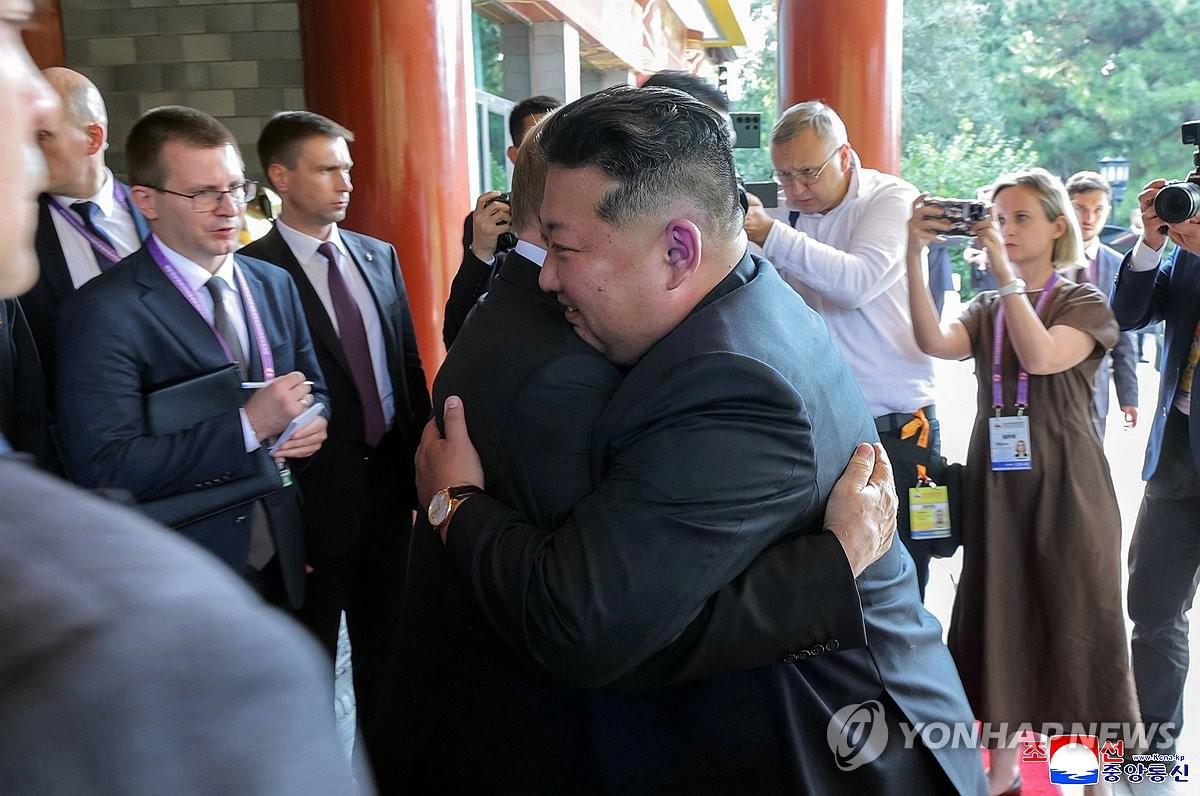
President Donald Trump ordered the Pentagon to “substantially reduce” joint military exercises with South Korea, citing his “very good relationship” with North Korean leader Kim Jong Un and complaining that the drills are costly and hostile to North Korea.
“Trump added that it was too late to cancel the drills, so he had ordered Secretary of Defense Pete Hegseth to “substantially reduce” them.”
Trump said it was too late to cancel the exercises, which were due to start on Monday, and he directed Secretary of Defense Pete Hegseth to “substantially reduce” them.

South Korea’s Ministry of Defence said the exercises would “proceed as previously notified and scheduled,” while the annual Ulchi Freedom Shield drills were scheduled to run for 11 days from August 17 to 27 and involve 18,000 South Korean soldiers.
The BBC reported that a Reuters team at the scene counted at least 28 bodies laid out in a nearby schoolyard, and that the factory’s main exit was locked when the fire broke out.
North Korea has long criticized the drills as rehearsals for an invasion, and a spokesperson for North Korea’s Ministry of Foreign Affairs said on Friday that US-Japan-South Korea military cooperation is turning into a nuclear alliance.
Reactions and competing frames
In his Truth Social post, Trump wrote that “These exercises are not only costly, with much of these costs paid for by the United States of America (as usual!), but send a signal that is totally inappropriate and hostile,” and he linked the decision to South Korea’s refusal to join US denuclearization efforts for Iran.
South Korea’s presidential Blue House said it would continue diplomatic consultations on US-Korea military cooperation related to the Strait of Hormuz while reviewing Trump’s comments, and it said it hoped the friendly relationship between US and North Korean leaders would lead to meaningful dialogue.
Leif-Eric Easley, a professor at Ewha Womans University in Seoul, warned that “Scaling them back can damage alliance coordination, slow the process of South Korea taking on greater responsibility for its own defense, and weaken deterrence against possible conflicts in Asia,” while CNN reported that it was unclear whether the drills were pared down.
The Guardian quoted a North Korea expert, Lim Eul-chul of Kyungnam University, saying “The North will only view it as meaningful if the joint exercises are cancelled in their entirety rather than scaled back.”
CNN also reported that South Korea’s Joint Chiefs of Staff told CNN that Ulchi Freedom Shield began on Monday as planned, and that the drills were scheduled to run for 10 days.
What’s at stake next
The dispute over the drills is unfolding alongside North Korea’s missile activity, with BBC saying it comes after North Korea this month conducted ballistic missile tests banned by the United Nations, and with Al Jazeera noting Pyongyang denounced the latest drills as a provocation that heightens tensions on the Korean Peninsula.
“It comes after North Korea this month conducted ballistic missile tests banned by the United Nations.”
BBC reported that Trump said it was “too late to cancel” as the US and South Korea were due to start their annual military exercises on Monday, while NBC said the drills known as Ulchi Freedom Shield were scheduled to last until Aug. 27 and were “proceeding as planned.”
The stakes for deterrence were highlighted by Easley’s warning that scaling back could weaken deterrence against possible conflicts in Asia, while the Guardian reported that military officials from both countries warned that Kim Jong-un’s regime was learning new battlefield tactics from the Ukraine war.
The Guardian also said the scenario would reflect “drones, GPS disruption [and] cyber attacks,” and it quoted Col Ryan Donald saying “They’ve taken those lessons they learned there and brought them back to North Korea, that changes the DPRK capability,” linking the drills’ design to North Korea’s battlefield experience.
Meanwhile, the South Korean government said it hopes the friendly relationship between the leaders of the United States and North Korea will lead to meaningful dialogue, and it said it would continue working with the US on details related to the drills and the “maintenance of firm combined defense posture.”