Full story
Trump cuts UFS role
On Aug. 17, President Donald Trump ordered the Pentagon to “substantially reduce” U.S. participation in the 10-day Ulchi Freedom Shield (UFS) 2026 exercise with South Korea, which was set to run through Aug. 27 after Pyongyang reanudó las pruebas de misiles balísticos prohibidas por las resoluciones de las Naciones Unidas.
“send a signal that is totally inappropriate and hostile”
Trump said the drills were costly and “send a signal that is totally inappropriate and hostile” to North Korea, which he described as “unthreatening and respectful” during his time in the White House.

South Korea’s defense ministry said the exercise would “proceed as previously notified and scheduled,” while the BBC reported that the 11-day event was expected to involve about 18,000 South Korean soldiers alongside U.S. forces.
The reduction order came hours before the exercise began, and the Pentagon official cited by Task & Purpose said the Defense Department is “actively working on executing the Commander-in-Chief’s directive,” without providing further details.
Dialogue hints and disputes
Trump defended the decision in the White House, telling reporters that Kim had responded to his request for dialogue and was “very positive,” while Stars and Stripes reported that he provided no further details.
In the same period, Trump linked his displeasure to Seoul’s refusal to join U.S. action against Iran, saying he recently asked the South Korean president if Seoul “would like to give us a little hand,” but Lee said, “No thanks.”
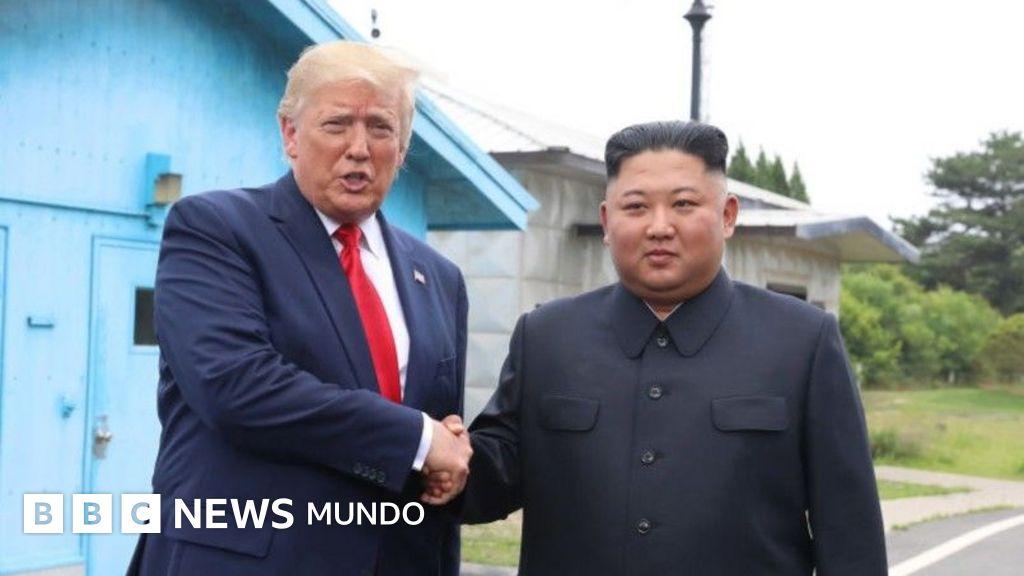
The Guardian reported that South Korea’s presidential Blue House said it was reviewing Trump’s post and “hopes that the friendly relationship between the US and North Korean leaders will lead to meaningful dialogue,” while also saying the allies would continue coordinating on combined defense posture and military exercises.
North Korea’s reaction, as described by the BBC and Al Jazeera, included denouncing the drills and framing them as rehearsals for an invasion, with Al Jazeera adding that Pyongyang said it would respond to a “new level of threat” with a “new level of deterrent.”
Readiness and alliance stakes
The exercise is described as a combined, joint, all-domain, and interagency operating environment, with Task & Purpose saying it began Monday and is set to run through Aug. 27 and that it involves roughly 18,000 South Korean troops and thousands of American personnel.
“drones, GPS disruption [and] cyber-attacks”
RFI reported that South Korean military authorities confirmed the exercises continue as planned, and it said the annual maneuvers are expected to mobilize 18,000 South Korean soldiers and 28,500 American forces stationed in the country.
The Guardian said military officials from both countries warned that Kim Jong-un’s regime is learning new battlefield tactics from the Ukraine war, and it quoted Col Ryan Donald saying the scenario would reflect “drones, GPS disruption [and] cyber-attacks.”
RFI also quoted Lt Gen Scott Alexander Winter, deputy commander of the United Nations Command in South Korea, saying “these exercises are broader and better than ever,” and it framed the drills as demonstrating member-state commitment even amid security challenges in Europe and the Middle East.