
President Trump Delays Strikes on Iran's Nuclear Plants for Five Days Amid Talks.
Key Takeaways
- Trump delayed strikes on Iran's energy infrastructure for five days.
- Trump called the talks productive, signaling progress toward ending the war.
- Iran denied talks, Tehran officials say no negotiations underway.
Trump's Announcement
President Donald Trump announced on Monday, March 23, 2026, that he would delay strikes on Iranian power plants and energy infrastructure for five days.
“Oil above $100 as conflicting claims emerge on US-Iran talks The price of Brent crude oil rose back above $100 a barrel as the direction of the US-Israel war in Iran remained unclear”
He claimed that the United States and Iran had engaged in 'very good and productive conversations regarding a complete and total resolution of our hostilities in the Middle East.'
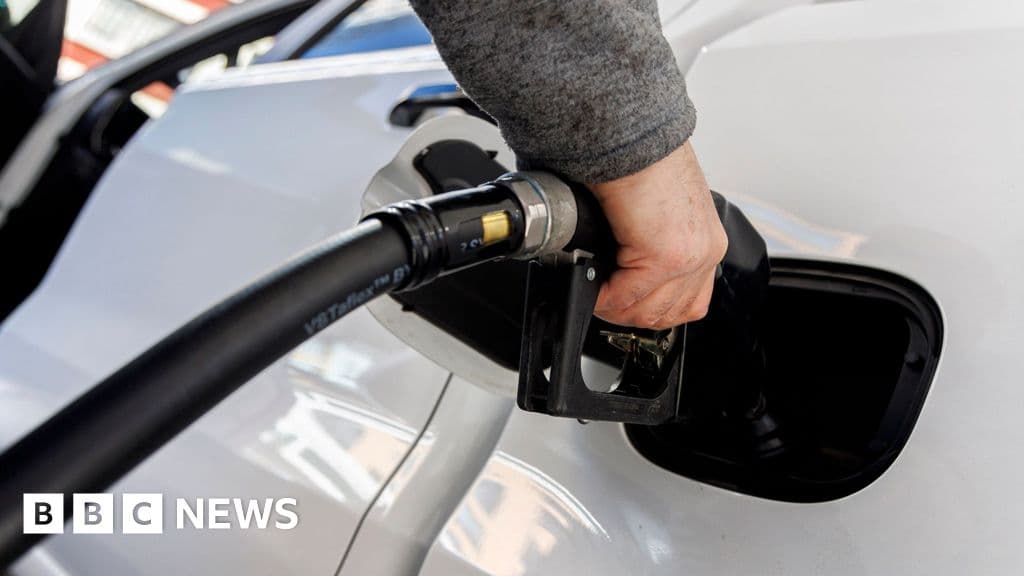
The announcement came hours before a self-imposed deadline for Iran to reopen the Strait of Hormuz.
Trump had threatened to 'obliterate' Iranian power plants if the waterway was not reopened.
He stated that special envoys Steve Witkoff and Jared Kushner conducted discussions with a 'top person' on the Iranian side.
Trump claimed 'major points of agreement' on issues including Iran halting uranium enrichment and the U.S. removing enriched uranium.
Iran's Denial
Iranian officials universally rejected Trump's claims of ongoing negotiations.
Multiple sources confirmed that no talks had taken place between Tehran and Washington.

Iranian Parliament Speaker Mohammad Bagher Ghalibaf posted that 'no negotiations have been held with the U.S.'
He called Trump's claims 'fake news used to manipulate financial and oil markets.'
Iran's Foreign Ministry dismissed Trump's statements as 'part of efforts to reduce energy prices and buy time.'
The ministry emphasized that 'there is no dialogue between Tehran and Washington.'
The Islamic Revolutionary Guard Corps characterized the announcement as 'psychological operations.'
State media portrayed Trump's move as a sign of hesitation rather than de-escalation.
Market Reactions
Trump's announcement triggered immediate market reactions.
“- Friendly fire killed an Israeli civilian along the border with Lebanon yesterday, the Israeli military found following an examination of the incident”
Crude oil prices tumbled significantly as investors responded to the prospect of de-escalation.
Brent crude benchmark fell more than 7% to trade below $99 per barrel.
WTI slid 8% to $90 per barrel, representing substantial drops from earlier in the day.
Stock markets also rebounded, with major indices rising more than 2% following Trump's Truth Social post.
The International Energy Agency's executive director warned that the current energy crisis is worse than the 1973 and 1979 oil crises.
He described it as 'very severe' and stated that the global economy is 'facing a major, major threat.'
Despite the price drops, Iran has effectively closed the Strait of Hormuz, maintaining pressure on global energy markets.
Military Context
Despite diplomatic maneuvering, military preparations continued on both sides.
The U.S.-Israeli war with Iran entered its fourth week.

U.S. military reinforcements were largely in place by the end of the five-day window.
Three Marine expeditionary units, including a 2,500-strong force aboard the USS Tripoli, were expected to arrive within days.
Iran's Defense Council threatened to deploy mines to block the entire Persian Gulf if Iranian coasts are attacked.
They stated that 'any enemy attempt to attack Iranian coasts or islands will lead to all access routes and communication lines in the Persian Gulf and coasts being mined.'
The Islamic Revolutionary Guard Corps vowed to respond in kind to any attacks on Iranian power plants.
They warned they would target Israeli energy infrastructure and power plants of regional countries hosting U.S. bases.
International Reactions
International reactions mixed cautious optimism with deep skepticism.
“An excavator clears rubble from destroyed residential buildings in northern Tehran on March 23”
British Prime Minister Keir Starmer and President Trump discussed the Strait of Hormuz crisis in a phone call.

Both agreed that reopening the waterway was 'essential to ensure stability in the global energy market.'
A top UAE official criticized 'major' Arab and Islamic nations for failing to support Gulf Arab countries.
The official stated that 'in this absence and incapacity, it is unacceptable later to speak of the decline of the Arab and Islamic role.'
NATO Secretary General Mark Rutte expressed confidence that the alliance would be able to reopen the strait.
He noted that 'the secret nature of the military operation required NATO countries to take time to calibrate their response.'
Iran's semi-official Fars News Agency reported that third countries were acting as potential mediators.
Tehran maintained that any initiatives should 'be referred to Washington.'
More on Iran

President Trump says talks underway to end war with Iran; Iran denies talks.
15 sources compared

President Donald Trump threatens to obliterate Iran's energy infrastructure after 48-hour Strait of Hormuz deadline.
10 sources compared
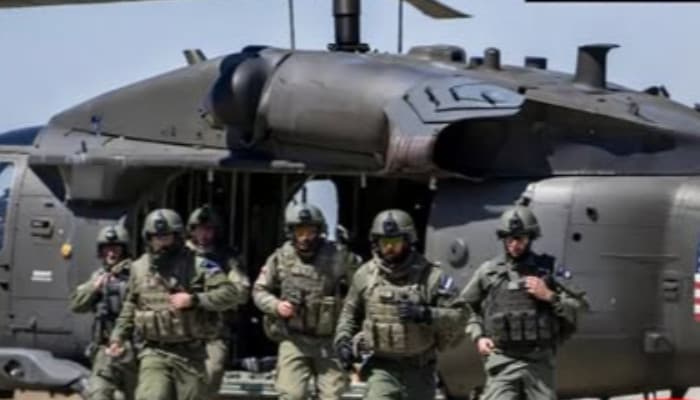
US to deploy thousands more soldiers to the Middle East
64 sources compared

President Trump Says Iran Offered Deal; Pakistan Is Ready to Host US-Iran Talks
27 sources compared