Full story
20% Toll Proposal
President Donald Trump proposed that the U.S. impose a toll on the Strait of Hormuz for providing safe passage to vessels traveling through the battle-ridden waterway, with the U.S. to be “reimbursed” at a rate of 20 percent for being the “guardian” of the strait.
The Hill reported that it was unclear how the U.S. would implement the “unprecedented toll,” and it noted that Secretary of State Marco Rubio previously said such a move would be a “violation” of international law.
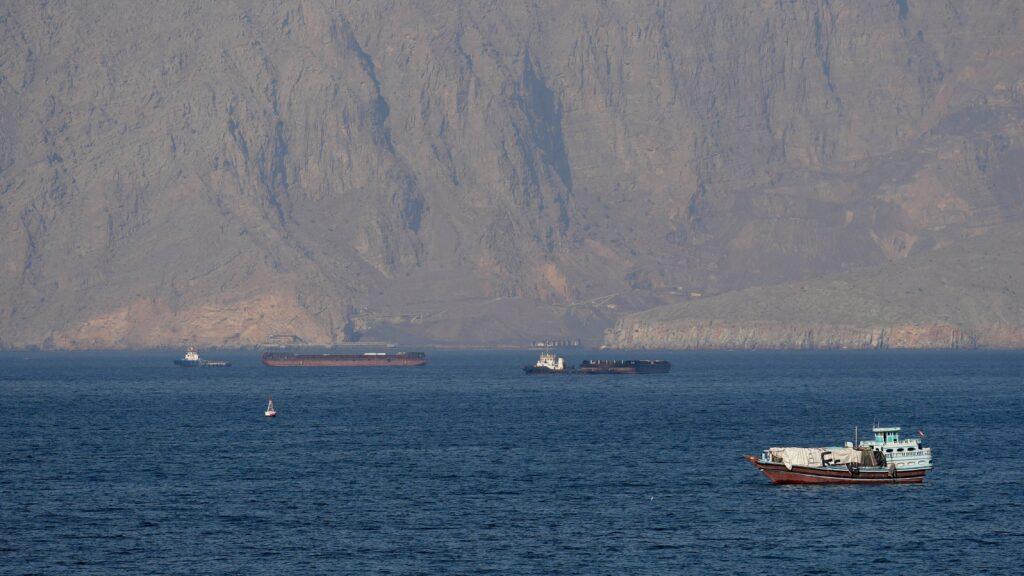
CNBC said the proposed 20% levy could backfire by further reducing dwindling traffic, and it cited shipping executives warning that the Strait of Hormuz has already “ground to a halt again in recent days.”
CNBC also reported that BIMCO estimated the cost for a Very Large Crude Carrier at around $27 million per voyage, based on a calculated fee of 20% of cargo value using the average Dubai, United Arab Emirates, crude price of $89 per barrel between March and June.
The Hill added that Trump referenced the Panama Canal as precedent, while noting that Panama can legally charge tolls because its canal is an artificial waterway and Panama owns and runs the canal.
Drop and Replace
The Seattle Times said Trump walked back his statement and decided to replace the 20% United States Reimbursement Fee with “Trade and Investment Deals that the various Gulf States will be making into the United States,” after months of public insistence from his own administration that any such fees would violate international law.
In the same account, Trump told reporters in the Oval Office that “kings and emirs” of Gulf allies had called him and persuaded him to allow them to invest in U.S. companies instead of paying the fees, and he said, “I don’t think anybody should be able to charge a fee for the strait.”
CNBC reported that the temporary ceasefire deal the U.S. and Iran signed in mid-June prohibited Tehran from imposing any charges on commercial ships passing through the strait, while Trump suggested commercial vessels attempting the transit must pay the U.S. as compensation for guaranteeing safe passage.
CNBC quoted Hapag-Lloyd saying it was “fundamentally wrong” to charge tolls for passage through international waters, and it said the firm argued that tolls for the Suez Canal or Panama Canal are different because they reflect major infrastructure investments.
CNBC also quoted Jakob P. Larsen, BIMCO’s chief safety and security officer, saying the increased cost would constitute “a further disincentive to transiting the Strait” unless outweighed by a significant reduction in the threat from Iran.
What’s at Stake
CNBC said vessel traffic through the Strait of Hormuz fell sharply on Sunday, with Kpler data showing just 14 ships crossing the waterway, including four crude tankers, compared with 37 vessels a week earlier.
The Hill reported that Iran has attempted to exert control over the waterway, and it said multiple international reports allege Tehran has charged an unofficial toll of $2 million for “safe passage” through the Strait after laying mines underwater.
The Hill also said Iranian Foreign Minister Abbas Araghchi floated charging an official toll at a cheaper rate than Trump’s proposed 20% fee, writing on X, “POTUS is absolutely right. Whoever provides secure and safe passage of commercial vessels through the Strait of Hormuz should be compensated for this service,” and adding, “We will be fair,”.
CNBC reported that the European Community Shipowners' Association told CNBC its priority was the safety of seafarers and restoring “free and safe passage” of shipping, and it quoted Sotiris Raptis saying, “Freedom of navigation is a cornerstone of the law of the sea, which makes no provisions for tolls to be levied on ships moving through the Strait.”
New York Post said Trump’s proposed 20% toll could generate nearly $200 billion annually in revenue, and it quoted Brandon Daniels, CEO of Exiger, saying the annual volume of international commerce in the strait was between $880 billion and $970 billion before the war.