USA07 October, 20253 min read
Trump Refuses to Drop Tariffs on Canadian Steel and Aluminum in Trade Talks with Carney
This article is an automated aggregation of coverage from news outlets. Our editorials offer in-depth analysis curated by the NewsCord team.
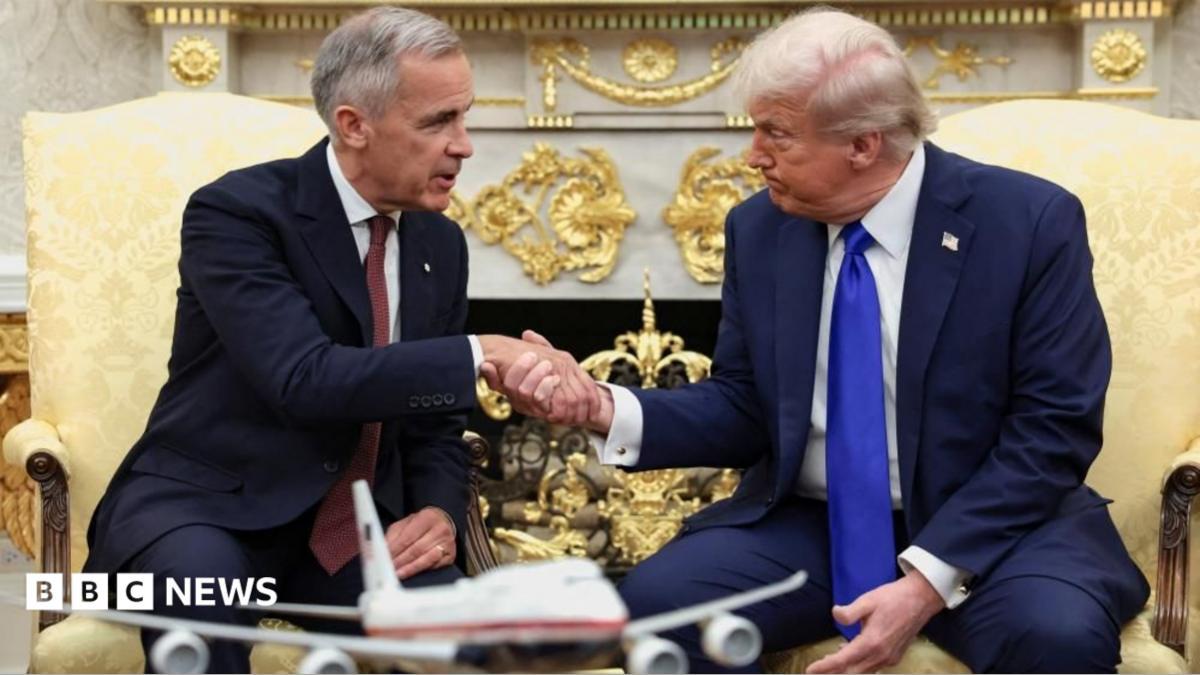
Trump maintains 50% tariffs on Canadian steel and aluminum under Section 232. Trump and Carney held a second Oval Office meeting with no trade deal reached.
6 outlets told this the same way.
Canada-U.S. Trade Tariff Talks
In Washington talks between Canadian Prime Minister Carney and former U.S. President Donald Trump, the core sticking point remained U.S. tariffs on Canadian metals—particularly steel and aluminum.
“Despite hopes, no major tariff deal is expected from the meeting, which serves more as a private dialogue to address trade and other bilateral issues.”
These tariffs stayed in place as the meeting produced no major tariff breakthrough.

National Post reports the session as a private dialogue with “no major tariff deal” expected and notes that tariffs already extend beyond steel and aluminum to copper, auto parts, and even newly announced duties on heavy trucks.
Local Western outlet 650 CKOM underscores how these sector-specific Section 232 measures have bitten into a deeply intertwined $2.5-billion-a-day trading relationship.
Asian outlet Mint situates the moment in a broader bilateral arc, highlighting close security and cultural ties but also past tensions.
CBC’s coverage emphasizes on-the-ground political dynamics around the visit and negotiation posture in Ottawa and Washington.
Together, these accounts indicate the tariffs remain intact during the Carney–Trump exchange, even as both sides frame the relationship as vital and multi-layered.
Overview of Metal Tariffs Dispute
On the metals dispute itself, 650 CKOM reports that Section 232 duties are as high as 50% on steel and aluminum and mentions talk of potential relief—to 25% or via tariff‑free quotas—yet National Post signals no immediate breakthrough, indicating the tariffs effectively remain. CBC adds that Carney “does not see a dead end,” projecting optimism about a deal despite the lack of movement in this round. The broader tariff picture extends beyond metals into auto parts and copper, according to National Post, even as the average U.S. tariff on Canadian goods is just 5.6%—underscoring how sector‑specific measures, rather than across‑the‑board rates, are at the heart of the friction.
Political Dynamics of Canada-US Talks
The political theater around the talks also influenced media coverage. National Post reports that Trump described the relationship as a mix of conflict and respect, promising that Canadians would be pleased. CBC recounts Trump revisiting the provocative “51st state” remark and notes the contrasting demeanors in the Oval Office.
“Trump described the relationship as a mix of natural business conflict and mutual respect, expressing optimism that Canadians will be pleased with the outcome.”
Mint, looking back further, reports claims that Trump had once threatened to buy or annex Canada. Mint also notes Canadian concessions such as dropping counter‑tariffs and scrapping a proposed digital services tax targeting U.S. tech firms. These elements illustrate how rhetoric, optics, and past flashpoints overshadowed the tariff standoff, even as both sides tried to project control.
Canada-U.S. Trade and Security
Beyond tariffs, the relationship’s strategic depth featured prominently. Mint emphasizes Canada’s role in U.S. energy and critical‑mineral security, supplying roughly 60% of U.S. crude‑oil imports and 85% of electricity imports. Canada is also the largest foreign supplier of steel, aluminum, uranium, and key minerals to the U.S.
650 CKOM details Canada’s sizable inputs to U.S. national security supply chains. National Post adds that business leaders want to preserve the current framework and that both sides are preparing for the 2026 CUSMA review. CBC underscores that Ottawa won’t abandon supply management, highlighting Canada’s red lines that sit alongside the metals dispute.

North American Trade Talks Update
Looking ahead, National Post suggests the meeting’s value lies in groundwork for the 2026 CUSMA review and managing tensions rather than an immediate metals reprieve. CBC relays Carney’s message that, despite the stalemate, he sees no dead end. 650 CKOM warns that a U.S. threat to terminate the agreement with six months’ notice would severely damage North American relations, even as the outlet flags possible paths to tariff relief such as tariff‑free quotas.
“Overall, the visit is seen as a step toward managing ongoing trade tensions and laying groundwork for future negotiations rather than achieving immediate breakthroughs.”
Mint underscores that trade remains central to a wider effort to stabilize and deepen economic and security ties. In short, the round ended with tariffs intact and talks continuing—no rollback now, but an open lane for future adjustments if both sides converge.